


Todas las subastas / Arte Antiguo / Yamanaka Kodō · Kuchi-e · Bungei Kurabu 1901 ·...

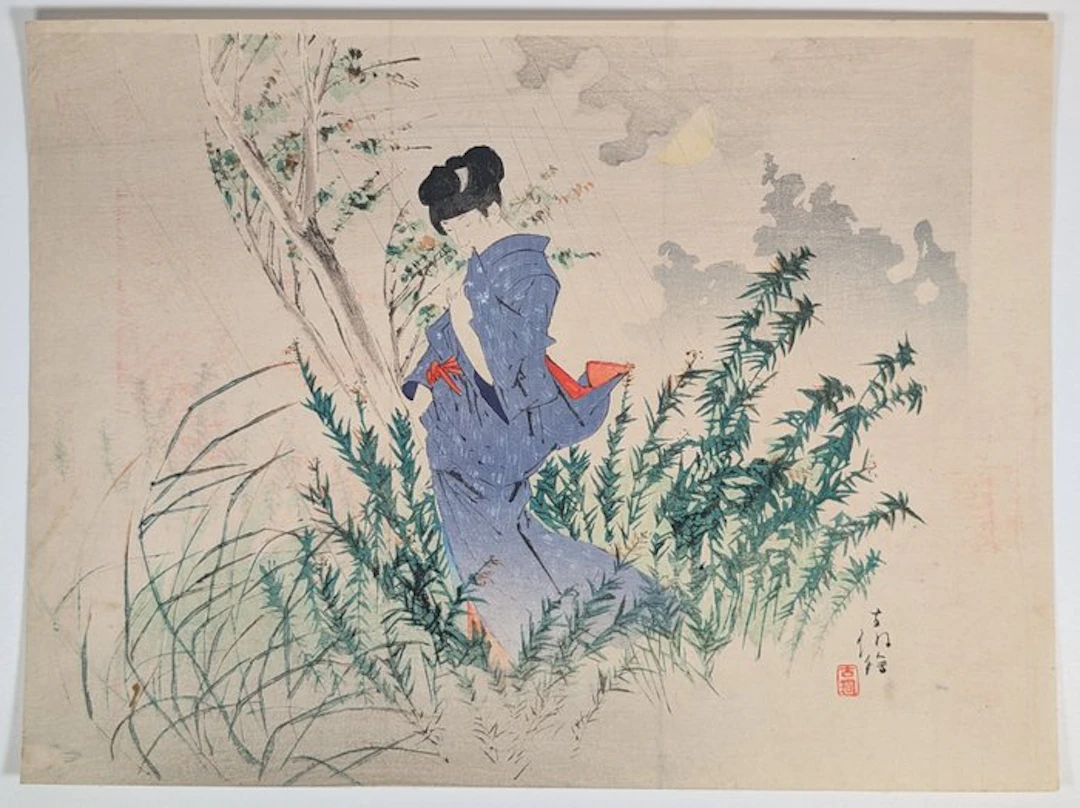
山中古洞 — YAMANAKA KODŌ (1869–1945) A Late Autumn Shower (Katashigure), kuchi-e frontispiece Technique: Woodblock print (mokuhanga), polychrome, on Japanese washi Date: 1901 (Meiji 34) Period: Meiji era Published in: Bungei Kurabu (文芸倶楽部) literary magazine, Vol. 7, No. 16, Hakubunkan, Tokyo Format: Kuchi-e, yoko-e (landscape orientation), approx. 22 × 29 cm Signature: Signed Kodō (古洞), with red artist's seal, lower right Condition: The colors and impression are well perserved. A light backing. Minor soiling! Very good overall Description: This frontispiece was made in 1901 for the novel "Katashigure" (A Late Autumn Shower), printed in the literary magazine Bungei Kurabu. A shigure is the sudden, short rain shower of late autumn and early winter, a classic seasonal theme in Japanese poetry and painting. The design shows a young woman caught in such a shower among wind-blown autumn grasses, biting the sleeve of her kimono, with a pale sun behind grey clouds. The print is reproduced in Helen Merritt and Nanako Yamada's standard reference "Woodblock Kuchi-e Prints: Reflections of Meiji Culture" (p. 109), and impressions are held in the Ackland Art Museum and the Honolulu Museum of Art. The date matters. Until the end of 1901, Bungei Kurabu frontispieces were drawn to illustrate the story they accompanied. From 1902 onward they were mostly independent bijin pictures with no link to the text. This print belongs to the last year of the narrative frontispiece in the magazine. THE ARTIST Yamanaka Kodō was born in Tokyo in 1869 as Satō Shō and was later adopted into the Yamanaka family. He studied with Tsukioka Yoshitoshi, Kumagai Naohiko and Arihara Kogan, and joined the Yomiuri Shinbun as an illustrator in 1896. Around 1900 he began designing kuchi-e for the publisher Hakubunkan. In 1901, the same year as this print, he co-founded the artists' group Ugōkai together with Kaburaki Kiyokata and Ikeda Terukata. That year he also published the woodblock book "Sansui-chō" (Notebook of Mountains and Waters) with Kobayashi Bunshichi. Later he designed bijin-ga for the publisher Watanabe Shōzaburō in the 1920s and 1930s, and in 1941 wrote "Sashi-e setsuyō", an illustration manual that scholars still use as a source on the kuchi-e artists of his generation. THE KUCHI-E TRADITION Kuchi-e are single-sheet woodblock prints that were folded and bound into the front of Japanese novels and literary magazines, from the 1890s until the early Taishō period. They continue the ukiyo-e tradition, often with carving and printing finer than Edo-period work. Bungei Kurabu, published by Hakubunkan from 1895, was the leading magazine for these prints, and its frontispieces were designed by artists such as Mizuno Toshikata, Takeuchi Keishū, Kaburaki Kiyokata and Kodō himself. Because they were bound into magazines, most kuchi-e carry one or two fold lines.
Estimación:€150
Ir a la subastaVer todos los artículos deCatawikioArte Antiguo
Estimación:
€150
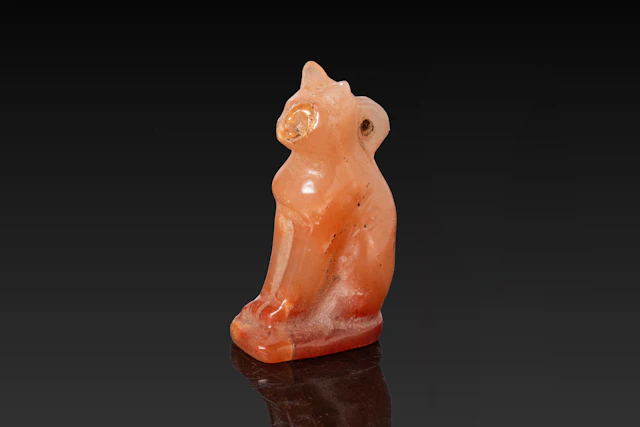
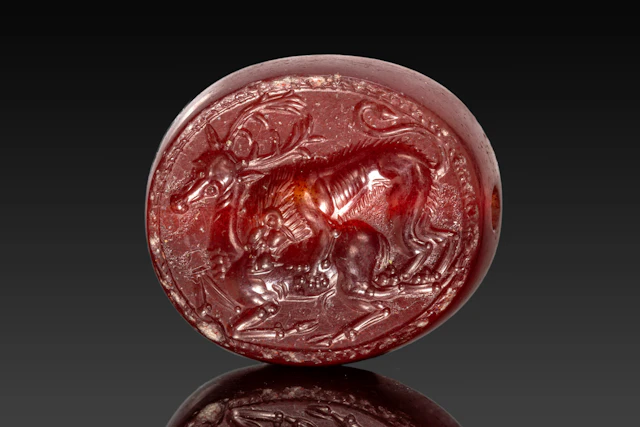
ETRUSCAN CARNELIAN STAMP SEAL WITH A LION ATTACKING A STAG
06/21/2026

€5,796.91
Est.: €5,773.91
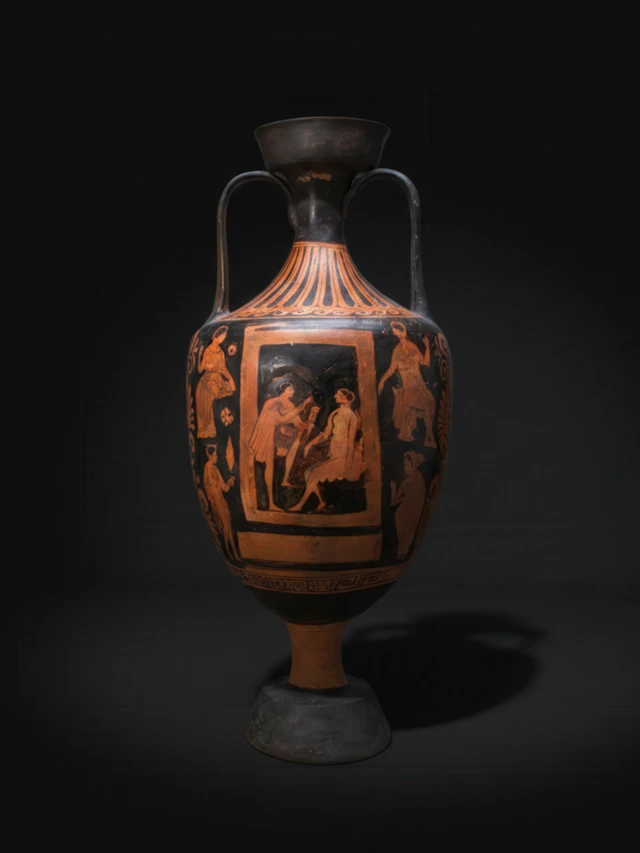
LARGE APULIAN RED-FIGURE AMPHORA WITH NAISKOS SCENE AND ALTAR
06/21/2026
€6,376.6
Est.: €5,773.91

OCT 27 | 4:00 PM
¡Lleva tu subasta a coleccionistas de todo el mundo!
Publica ahoraAl suscribirte, aceptas la política de privacidad. Cancela tu suscripción en cualquier momento.
Barnebys HQ
Brahegatan 10
BOX 5038
114 37 Stockholm
