


Todas las subastas / Arte Antiguo / Western Asiatic Bronze Plaque with Figural Repoussé Decoration - 15 cm

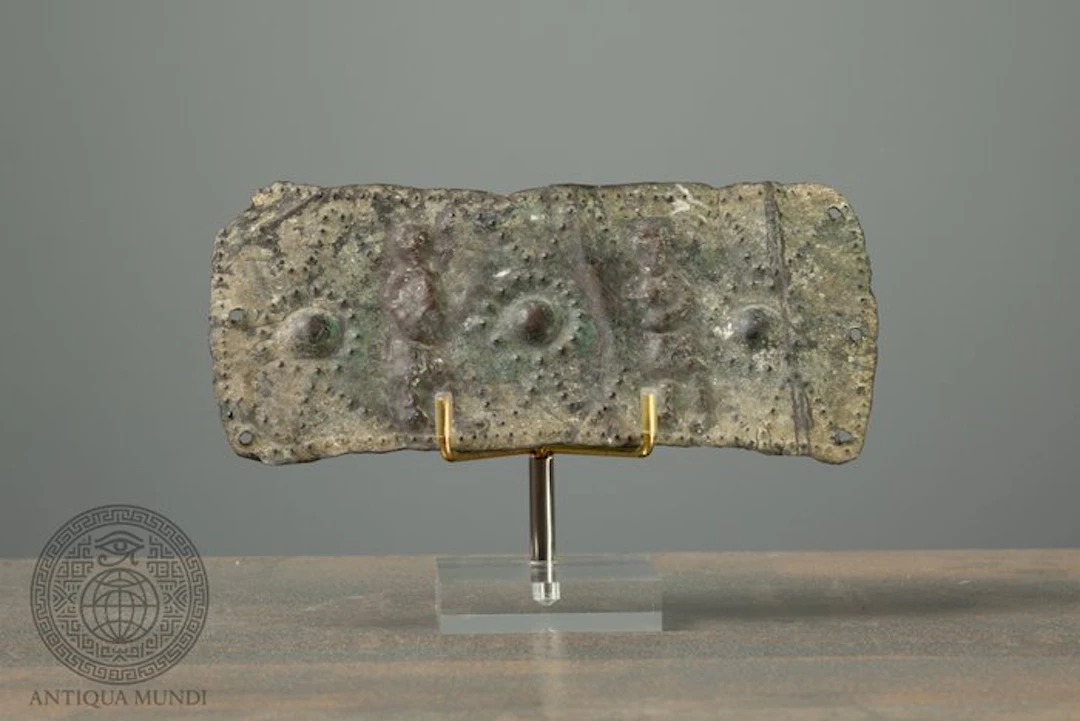
An unusual ancient Luristan bronze plaque with figural repoussé decoration, attributed to the Early Iron Age, circa 9th–7th century BC. The thin sheet of bronze is approximately rectangular in form, with slightly irregular edges and a densely decorated surface. Its most striking feature is a figural composition with two anthropomorphic figures, surrounded by raised bosses, punched dots and additional ornamental elements. The relief decoration was predominantly produced in repoussé technique, with the thin bronze sheet worked from the reverse in order to create the raised figures and decorative elements visible on the front. The two human figures occupy the central area of the composition. Both are highly stylised and represented with prominently raised heads and bodies. Despite considerable age-related surface alteration, their general forms remain clearly recognisable. A precise identification of the figures as particular deities, heroes or mythological characters cannot be established with certainty. They are therefore best described simply as anthropomorphic figures within a figural or possibly mythological composition. Decoration Several larger hemispherical bosses are positioned between and around the figures. The surrounding surface is enriched with numerous smaller raised and punched dots, some arranged in rows or groups. Together they create a dense decorative field characteristic of the highly ornamental treatment seen on a number of Western Iranian bronze sheet objects. The combination of figural imagery, raised bosses and punched decoration gives the relatively small plaque a remarkably rich and complex appearance. Construction and Original Function Several perforations along the edges are still preserved. These holes strongly suggest that the bronze sheet was originally attached to another material, most probably an organic support such as leather, wood or textile. Decorated bronze sheets with similar attachment holes are known among Luristan metalwork and could form part of equipment, belts, coverings or other composite objects. Larger examples are also known as decorative elements associated with quivers and related equipment. Because the present object survives as a relatively small and apparently fragmentary plaque, its precise original function cannot be established. It is therefore most appropriately described as a decorative fitting or fragment of an equipment appliqué, rather than definitively as a quiver plaque. Manufacture The reverse provides particularly clear evidence of the ancient manufacturing technique. The raised figures and bosses visible on the front correspond to recessed negative forms on the reverse, demonstrating that the decoration was hammered from thin bronze sheet rather than cast in solid relief. The surface was subsequently refined by punching and additional working to create the smaller decorative details. This combination of repoussé and punched decoration is well represented among sheet-bronze objects associated with the metalworking traditions of Luristan and the western Iranian Zagros region. Typology and Dating Figurally decorated bronze plaques and sheet fittings form part of the wider repertoire traditionally associated with the so-called Luristan bronzes of Western Iran. Related bronze sheets include figural and animal imagery combined with raised bosses, punched borders and repeated geometric ornament. Important comparative material includes decorated Luristan quiver plaques and other bronze sheet fittings preserved in major museum collections. Such objects demonstrate the use of repoussé figural decoration and perforated edges for attachment to an underlying support. Comparable material is generally attributed to the Early Iron Age of Western Iran, although individual examples vary considerably in size, decoration and function. On stylistic and technical grounds, a dating of the present plaque to approximately the 9th–7th century BC appears plausible. This attribution is typological. In the absence of a documented archaeological find context, a more precise date or identification of the original object to which the plaque belonged should remain open. Surface and Patina The bronze displays a strongly developed ancient surface with green, brown and dark grey to almost black patination. Mineral accretions, oxidation and areas of encrustation are visible across the surface. The varied patina emphasises the relief character of the figures, bosses and punched decoration. The reverse clearly reveals the repoussé manufacturing technique, with the raised decoration of the front appearing as corresponding recessed forms. The reverse also shows remains of adhesive from a former mounting or display arrangement. These adhesive residues are later additions and are not part of the ancient surface. Condition Fragmentary, with substantial ancient surface preservation. The outer edges are irregular and show small losses, chips and age-related deterioration. Several of the original attachment perforations remain preserved. The repoussé figures and principal decorative elements remain clearly recognisable despite areas of corrosion and surface wear. Finer details have been partially reduced by age-related abrasion and oxidation. The surface displays green, brown and dark patination, mineral deposits and encrustations. Remains of adhesive from an earlier mounting are present on the reverse. No attempt has been made to remove these residues in order to avoid unnecessary intervention to the ancient surface. No obvious extensive modern restoration is identifiable from the photographs. Please examine all photographs carefully, as they form an integral part of the condition description. Provenance Formerly in the Madeleine & Erich Dammann Collection, Germany. Acquired during the collectors’ extensive travels between 1950 and 1970. The collection is documented in Germany by 1970 through historical photographs of the family residence and subsequently remained in continuous family ownership. The objects were acquired privately during the collectors’ travels. As was customary for private purchases made at local markets during the 1950s and 1960s, purchase receipts or invoices were generally neither issued nor requested. Historical photographs and biographical documentation relating to the Dammann Collection are available and support the long-standing provenance of the collection.
Estimación:€600
Ir a la subastaVer todos los artículos deCatawikioArte Antiguo
Estimación:
€600
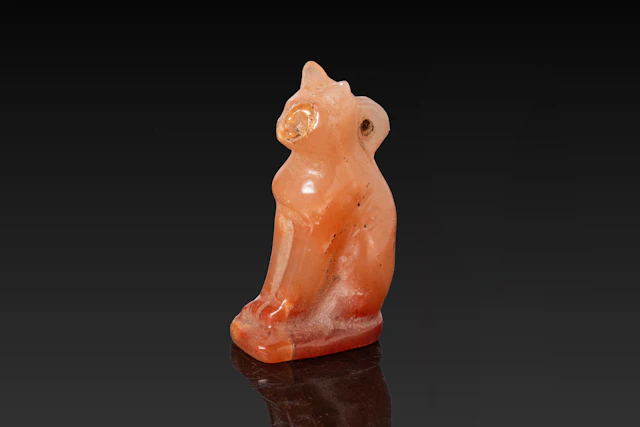
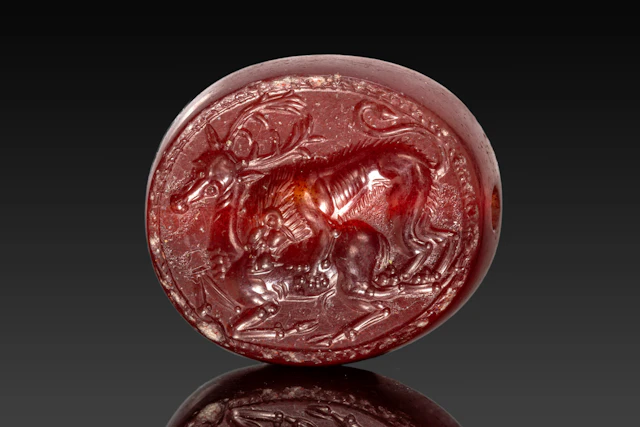
ETRUSCAN CARNELIAN STAMP SEAL WITH A LION ATTACKING A STAG
06/21/2026

€5,796.91
Est.: €5,773.91
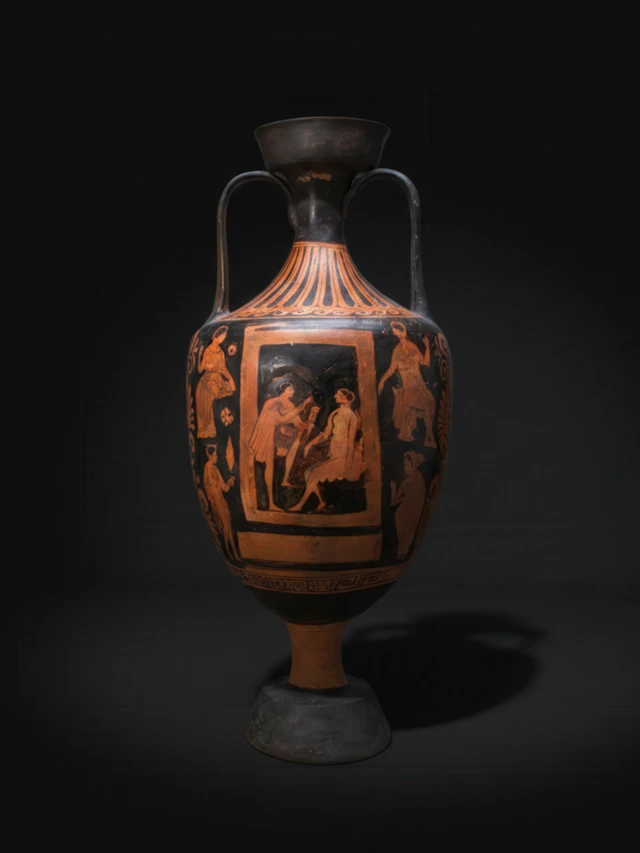
LARGE APULIAN RED-FIGURE AMPHORA WITH NAISKOS SCENE AND ALTAR
06/21/2026
€6,376.6
Est.: €5,773.91


OCT 27 | 4:00 PM
¡Lleva tu subasta a coleccionistas de todo el mundo!
Publica ahoraAl suscribirte, aceptas la política de privacidad. Cancela tu suscripción en cualquier momento.
Barnebys HQ
Brahegatan 10
BOX 5038
114 37 Stockholm
