


OCT 27 | 4:00 PM

Todas las subastas / Arte, Pintura & obra gráfica / The Temptation of Saint Anthony David Teniers d. J.

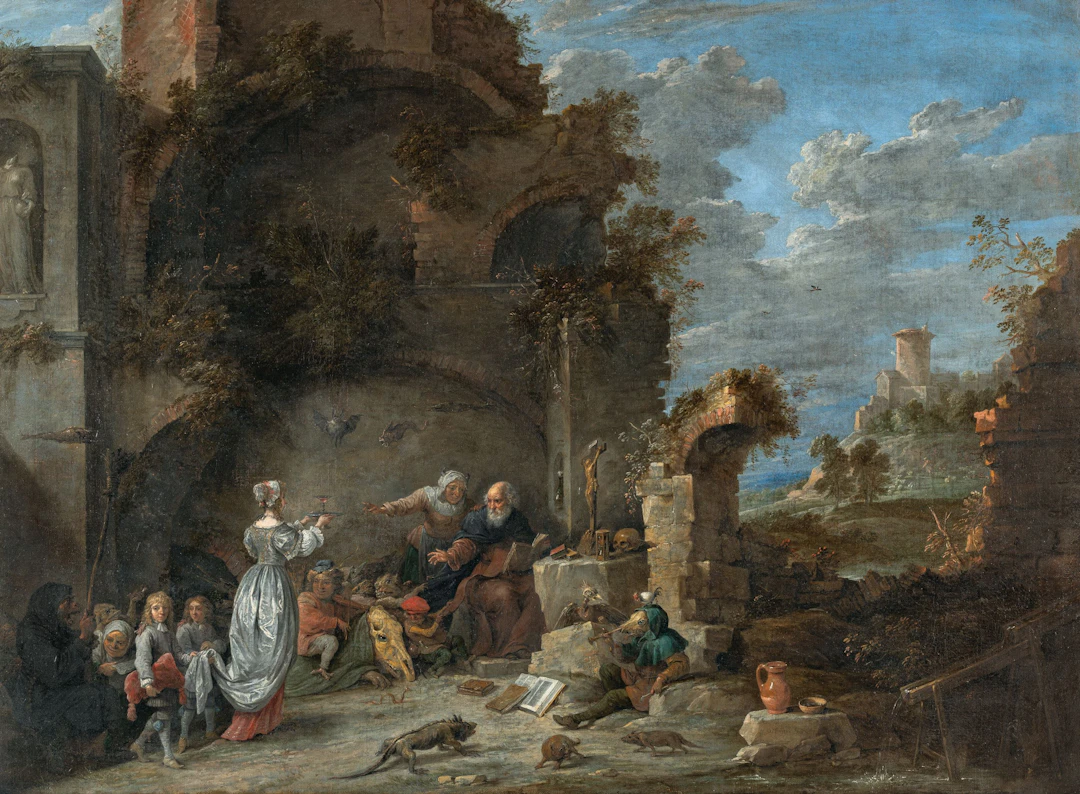
Blending the legend of a saint, fantastical hauntings and finely observed genre painting, David Teniers the Younger unfolds a whole world on a small scale in his *The Temptation of Saint Anthony*. Amidst overgrown ruins, the aged hermit sits poring over his books. A crucifix and a skull allude to devotion and transience, yet the world around Anthony has been thrown into disarray: grotesque hybrid creatures, part-human and part-animal, crawl across the floor, making music and harassing the saint. The uncanny blends with the comical – the demons seem less terrifying than eccentric, at times even downright comical. It is precisely this tongue-in-cheek transformation of the religious theme into a highly entertaining visual narrative that is characteristic of Teniers’ depictions of Saint Anthony. The actual temptation takes the form of a surprisingly elegant figure approaching the saint. A young woman approaches from the left and hands Anthony a glass of red wine. At first glance, nothing about her appearance is reminiscent of the demonic creatures that populate the scene. On the contrary: with her light-coloured, exquisite dress, the wide, shimmering skirt, the fashionably puffed sleeves and her carefully styled hair, she appears like a lady from the high society of Teniers’ own time. It is only within the context of the scene that her role becomes clear: beauty, wine and worldly pleasures become temptations in their own right. Teniers thus brings the centuries-old legend of the saint directly into the everyday world of his viewers. Similar depictions of Saint Anthony by the artist also show the temptress as a fashionably dressed young woman holding a glass of wine, whose demonic nature is often revealed only through small, grotesque details. The group at her feet is rendered with particular finesse. Two young pages accompany this elegant figure and are equally carefully dressed in the fashion of the 17th century. Their presence lends the lady’s appearance a courtly air: for a moment, one might think one were witnessing a distinguished visit. Yet alongside her crowd the strangest of creatures – long-nosed, beak-like beings with animal feet, tiny monsters and grotesque musicians. Reality and fantasy merge without any visible boundary. Teniers relishes these contrasts with obvious pleasure. One discovers the picture bit by bit: the demon in the guise of an old woman, the strange animals on the floor, the musical creatures and the small flying monsters in the half-light of the mural. This theme occupied Teniers for decades and occupies a special place within his extraordinarily diverse body of work. In doing so, he draws on a Dutch pictorial tradition stretching from Hieronymus Bosch through Pieter Bruegel the Elder to Jan Brueghel. However, he translates this fantastical world of demons into his own visual language. Motifs from his peasant parlours, tavern scenes and rural genre scenes find their way into his religious depictions; even the devils sometimes behave like the drinking, music-making or quarrelling figures in his scenes of everyday life. In Teniers’ work, the originally religious subject matter increasingly takes on the character of genre painting. It is not horror or moral seriousness that takes centre stage, but the narrative appeal of the scene: subtle humour, a delight in the grotesque and a seemingly inexhaustible enthusiasm for ever-new, imaginative details. Our painting dates from Teniers’ Brussels period in the 1670s, that is, the mature phase of an artist who had long been counted amongst the most successful Flemish painters of his generation. He had moved to Brussels as early as 1651, where he became court painter and curator of the famous art collection of Archduke Leopold Wilhelm. His work at court brought him into direct contact with high-calibre collections and an aristocratic audience; at the same time, his genre painting became increasingly refined, incorporating scenes of fashionable social life. Against this backdrop, the elegant appearance of the seductress with her young companions takes on a special charm: the world of courtly appearance and the fantastical realm of the legend of Saint Anthony converge within a very confined space. It is noteworthy, however, that Teniers by no means tells the story solely through the figures. The landscape plays a significant part in the painting’s impact. The heavy, half-ruined architecture opens abruptly to the right into the distance. Behind dark walls, a vast, undulating landscape appears, dotted with isolated buildings beneath a sky of high dynamicity. The warm light of the fading day glances off the vegetation and catches on the edges of the old ruins. Reddish and golden reflections make individual bricks, protruding sections of wall and plants glow, whilst other areas are already sinking into deep shadows. Above the landscape lies a cool sky streaked with mighty clouds, whose blue contrasts with the earthy browns, greens and ochres of the foreground to create a surprising sense of vastness. The play of light lends the picture an unusually poetic, natural atmosphere. The demonic remains confined to the dark ruin and the foreground, whilst behind it a peaceful world, filled with evening light, opens up. Teniers was not only one of the most significant genre painters of 17th-century Flanders, but also a highly sensitive landscape painter; atmospheric landscapes form an important part of his mature work. Here, the interplay of shadow and light, near and far, the grotesque and the observation of nature creates an almost fairy-tale-like atmosphere. Thus, the particular appeal of this ‘Temptation of Saint Anthony’ lies precisely in the juxtaposition of apparent opposites. Devotion meets burlesque haunting; the timeless legend of the saint meets 17th-century fashion; grotesque fantasy creatures meet closely observed human types; dark walls meet a luminous evening sky. Teniers does not turn this into a gloomy vision of horror, but rather into a witty and extraordinarily finely rendered visual world in which the great qualities of his painting unfold. | 1610 Antwerpen - Brüssel 1690 | 15.-18. Jahrhundert | Gemälde | Nummer: 26x1610 | Provenance: Privatsammlung, Nordrhein-Westfalen (seit mehreren Generationen in Familienbesitz).
Estimación:€55,000
Ir a la subastaVer todos los artículos deKarl und FaberoArte, Pintura & obra gráfica
Estimación:
€55,000
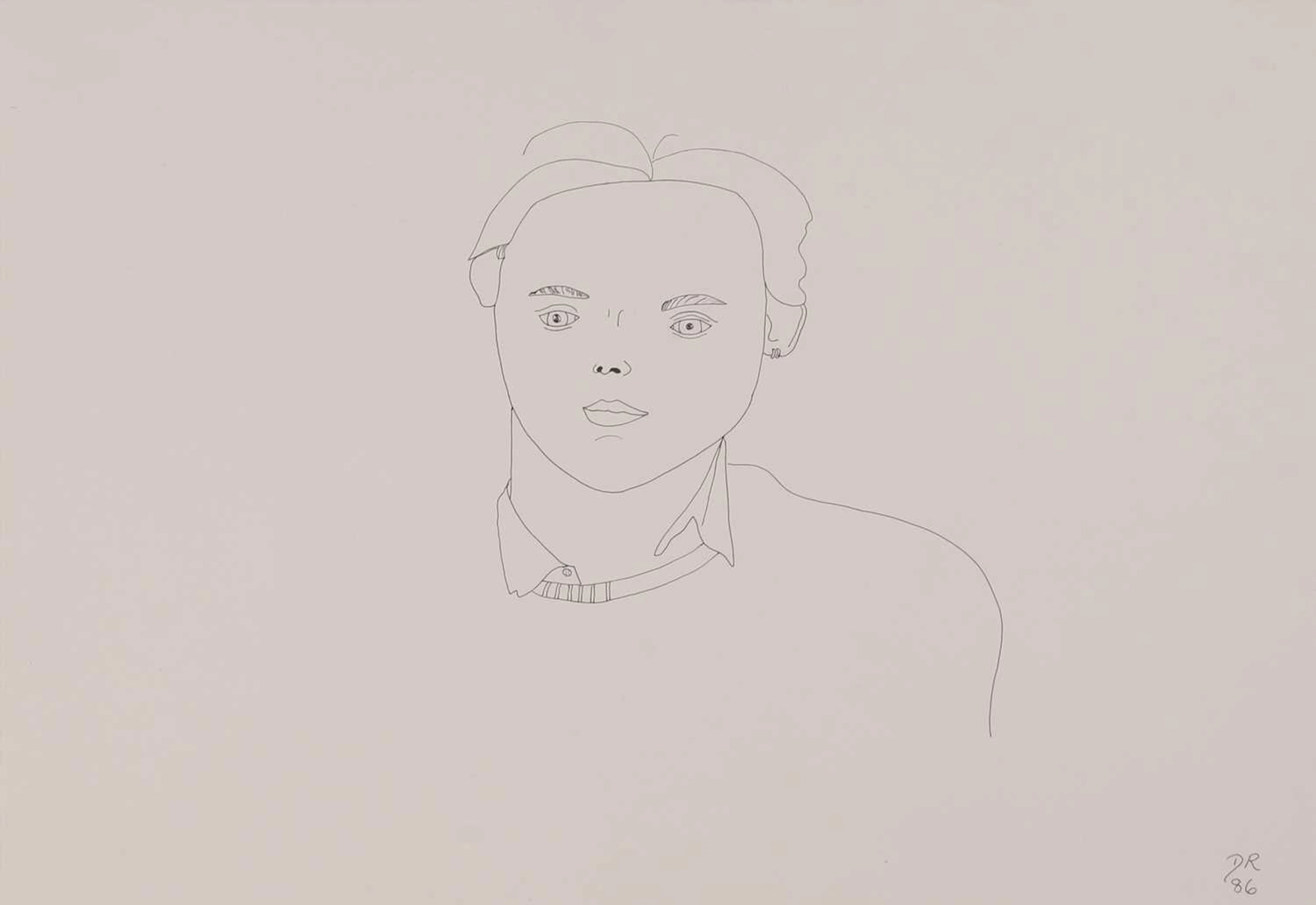
▲ David Robilliard (British, 1952-1988) A portrait of a man
10/07/2026

€1,179.8
Est.: €1,759.95
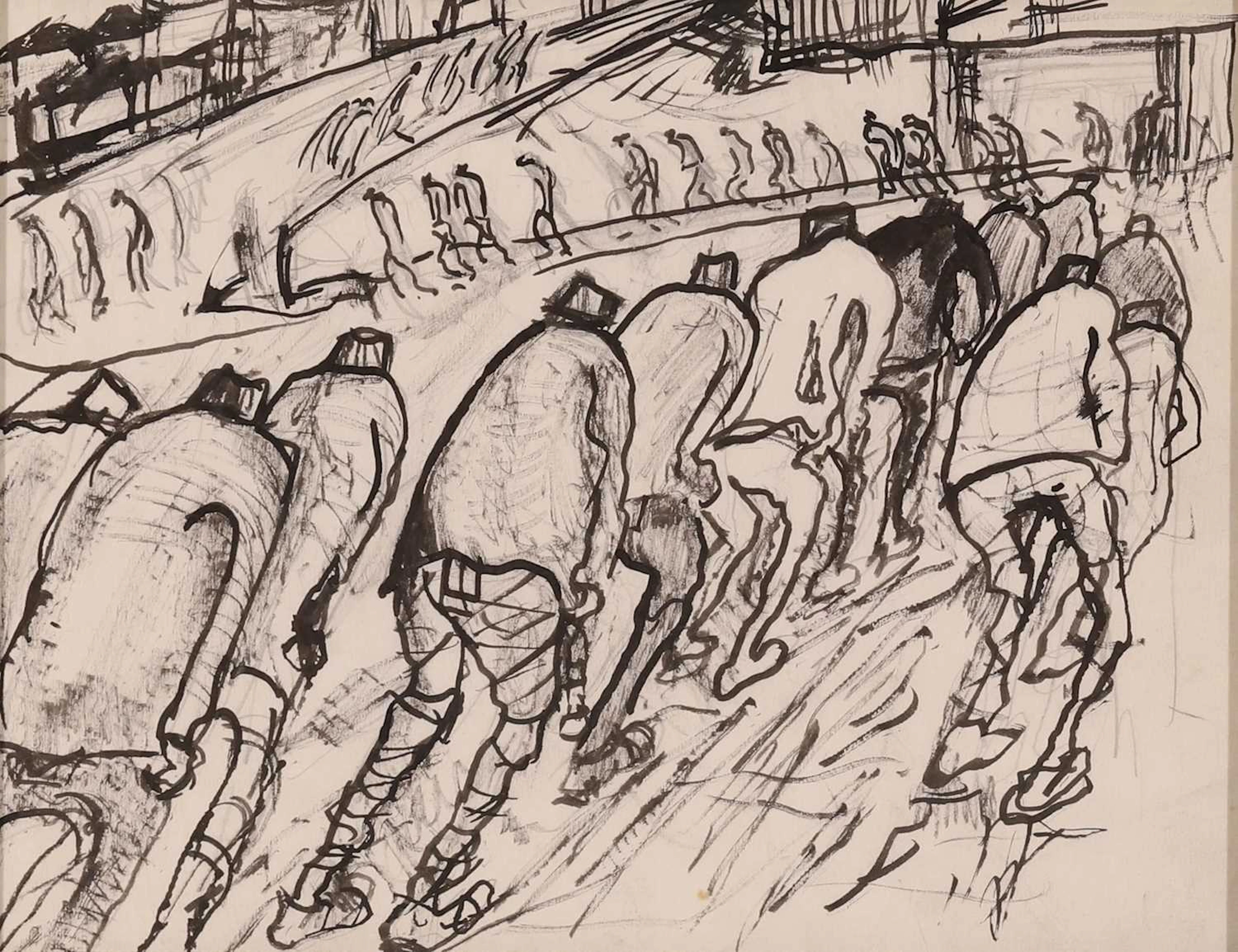
Tom McGuinness (British, 1926-2006) A sketchbook of figure studies
10/07/2026
€1,179.8
Est.: €938.64
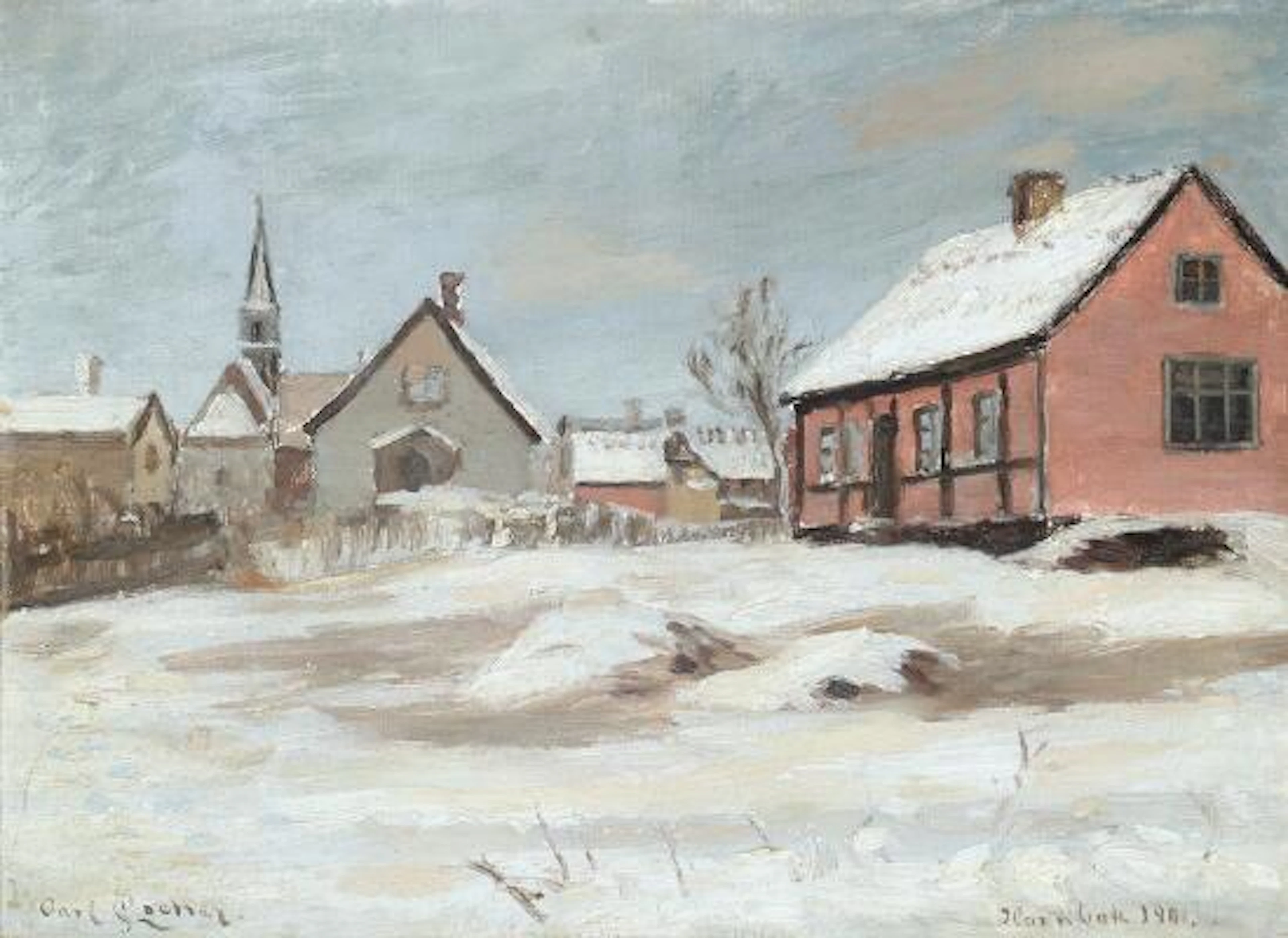
Carl Locher: A snowy day in Hornbæk. Signed and dated Carl Locher
10/05/2026

€2,073.54
Est.: €2,675.34
OCT 27 | 4:00 PM
¡Lleva tu subasta a coleccionistas de todo el mundo!
Publica ahoraAl suscribirte, aceptas la política de privacidad. Cancela tu suscripción en cualquier momento.
Barnebys HQ
Brahegatan 10
BOX 5038
114 37 Stockholm
