





Todas las subastas / Libros, mapas, papel & manuscritos / S. Agostino - Opuscola Plurima [Confessioni di S. Agostino] - 1489

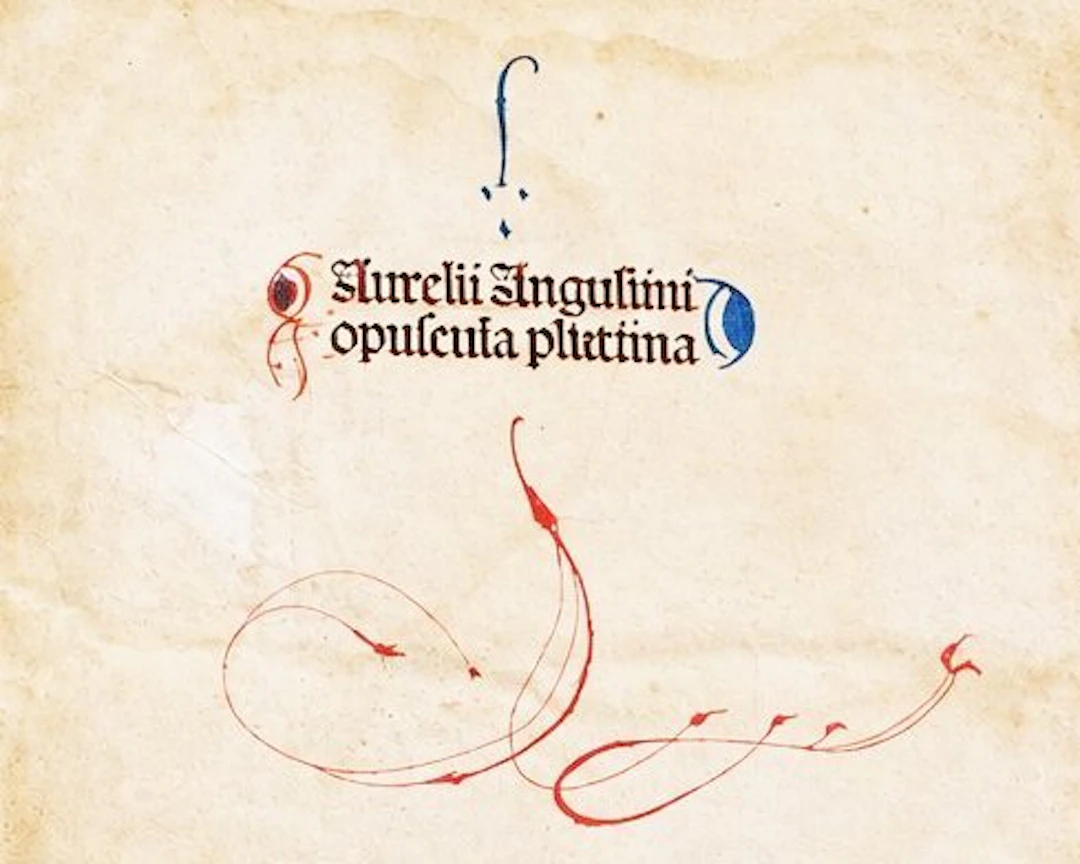
A 1489 INCUNBLUM OF SAINT AUGUSTINE: CONFESSIONS, MEDITATIONS AND DOZENS OF SHORT WORKS IN ONE RUBRICATED VOLUME Imponente incunabolo del 1489 dedicato a sant’Agostino, stampato a Strasburgo da Martin Flach. The collection gathers a vast corpus of brief works, including the Confessiones, the Meditationes, and numerous theological, moral, and spiritual texts. The copy is entirely rubricated, with initials and paragraph marks added by hand in red and blue, in keeping with a book-trade tradition still strongly tied to manuscript culture. Numerous ancient marginal annotations testify to intense and prolonged reading over time. An extraordinarily fascinating volume, placed in the midst of the fifteenth-century typographic revolution and preserved in a suggestive parchment binding finished by hand. ABSTRACT This important 1489 edition gathers numerous Opuscula attributed to Saint Augustine, alongside texts now recognized as pseudo-Augustinian and works by other medieval authors. Among the most significant cores are the Confessiones, the Meditationes, the De doctrina christiana, the De vita et moribus clericorum, the De vera religione, the De disciplina christiana, the De agone christiano, the De caritate, the De contemptu mundi, and numerous moral, ascetic, and pastoral texts. The work thus constitutes a sort of vast spiritual summa intended for reading, meditation, and theological study, highly representative of Augustine’s fortune in late medieval Europe. WHY TO BUY The main point of interest is the nature of the edition itself: it is an incunable from 1489, printed in one of the great typographic centers of fifteenth-century Europe. The volume also preserves rich manual rubrication in red and blue, with large initials and paragraph marks highlighting the transition from manuscript culture to the new typographic culture. Of particular fascination are also the numerous ancient marginal annotations, which document the book’s real use over the ensuing centuries. The presence of a manuscript-recovered parchment binding adds further historical and visual value to the exemplar. MARKET VALUE Augustinian incunabula show highly variable quotations depending on completeness, edition, rarity, rubrication, provenance, and condition. In this case, the early date, the author’s prestige, Martin Flach’s printing, the extended rubrication, and the presence of ancient annotations positively influence the value. For an exemplar like the one described, an indicative antiquarian range can be placed around €8,000–9,000, with possible higher results at auctions specializing in incunabula, patristics, or the history of printing. PHYSICAL DESCRIPTION AND CONDITION Light parchment binding, with spine raised and boards covered with ancient parchment manuscript recovered leatherwork, on which large portions of manuscript text are still visible. Text in two columns, in Gothic type. Extended contemporaneous rubrication in red and blue, with initials, titles, paragraph marks, and decorative interventions added by hand. Numerous ancient marginal manuscripts. A possession inscription appears on preliminary leaf a2. The gathering f and e are bound out of order. First and last portions of the volume show traces of ancient humidity. In old books with a multigenerational history, a few imperfections may be present, not always noted in the description. This listing includes AI Visuals. Please refer to the original photographs to verify the object’s actual condition. The images are an integral part of the description. Pp.: (2); 12nn; 534; (4). FULL TITLE AND AUTHOR Opuscula plurima. Strasbourg, Martin Flach, 1489. Aurelius Augustinus. [S. Agostino] CONTEXT AND SIGNIFICANCE In the fifteenth century, Saint Augustine represented one of the most important theological authorities in the Latin West. His works were foundational for religious formation, preaching, monastic spirituality, and university study. Collections like this allowed access in a single volume to a vast selection of doctrinal, moral, and contemplative texts. The volume also testifies to a crucial moment in the history of the book: although printed with movable type, it preserves many elements of the manuscript tradition, in particular the manual rubrication and the personalization of the initials. The copy thus shows especially clearly the transition from medieval manuscript to printed book. BRIEF BIOGRAPHY OF THE AUTHOR Aurelius Augustinus was born in Tagaste in 354 and died in Hippo in 430. A philosopher, theologian, and bishop, he was one of the central figures of Latin Christianity and one of the most influential authors in Western culture. After a long intellectual and spiritual search, told in the famous Confessiones, he converted to Christianity and later became Bishop of Hippo. Among his major works are the Confessiones, De civitate Dei, De doctrina christiana, and De Trinitate. His reflections on grace, sin, freedom, memory, time, and history exerted a decisive influence on medieval and modern theology. PRINTING HISTORY AND CIRCULATION The edition was printed in Strasbourg in 1489 by Martin Flach, a typographer active in one of the most important centers of early European printing. Strasbourg played a fundamental role in spreading movable-type typography from the latter half of the fifteenth century and quickly became a major hub for producing theological, legal, and humanist texts. Collections of Augustinian works were especially well suited to the new printing technology because they allowed a vast corpus of texts previously transmitted in numerous separate manuscripts to be concentrated in a single volume. The 1489 edition thus belongs fully to the incunabular phase of Augustine’s printed transmission. BIBLIOGRAPHY AND REFERENCES Incunabulum strasburghese of 1489 printed by Martin Flach and dedicated to the collection of Saint Augustine’s Opuscula. The corpus includes authentic works, pseudo-Augustinian texts, and contributions by other medieval authors traditionally associated with Augustinian spirituality. Among these are works attributed or linked to Anselm, Guigo the Carthusian, Caesarius of Arles, Honorius of Autun, Fulgenzio, Gennadius, Pelagius, and other authors of patristic and monastic tradition. The exemplar is of particular interest for its manual rubrication, ancient marginal annotations, and the recovered manuscript parchment binding.
Estimación:€7,500
Ir a la subastaVer todos los artículos deCatawikioLibros, mapas, papel & manuscritos
Estimación:
€7,500
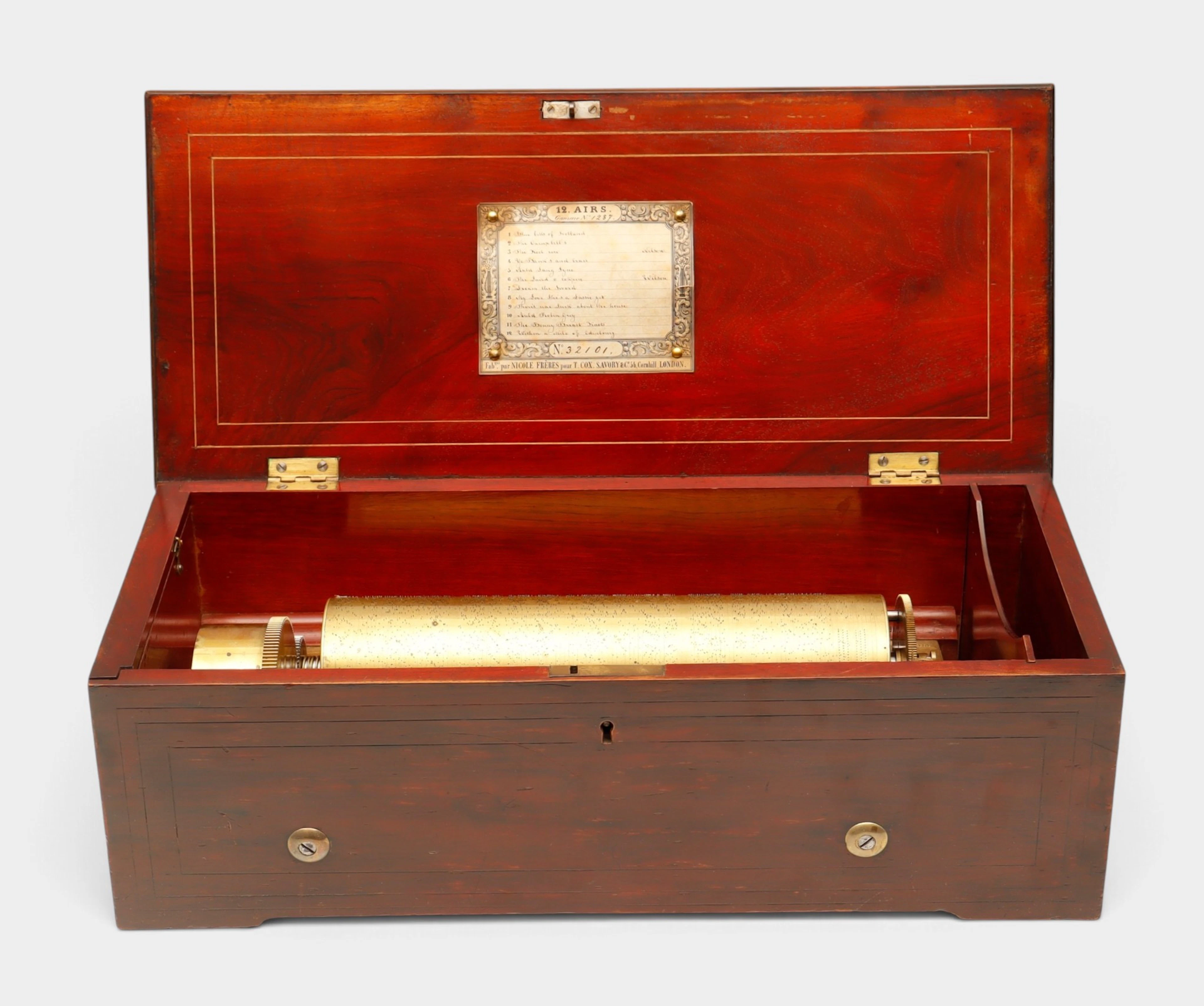
Caja de música suiza de doce canciones de Nicole Frères, hacia 1848-1852.
10/22/2026
€1,350
Est.: €1,300
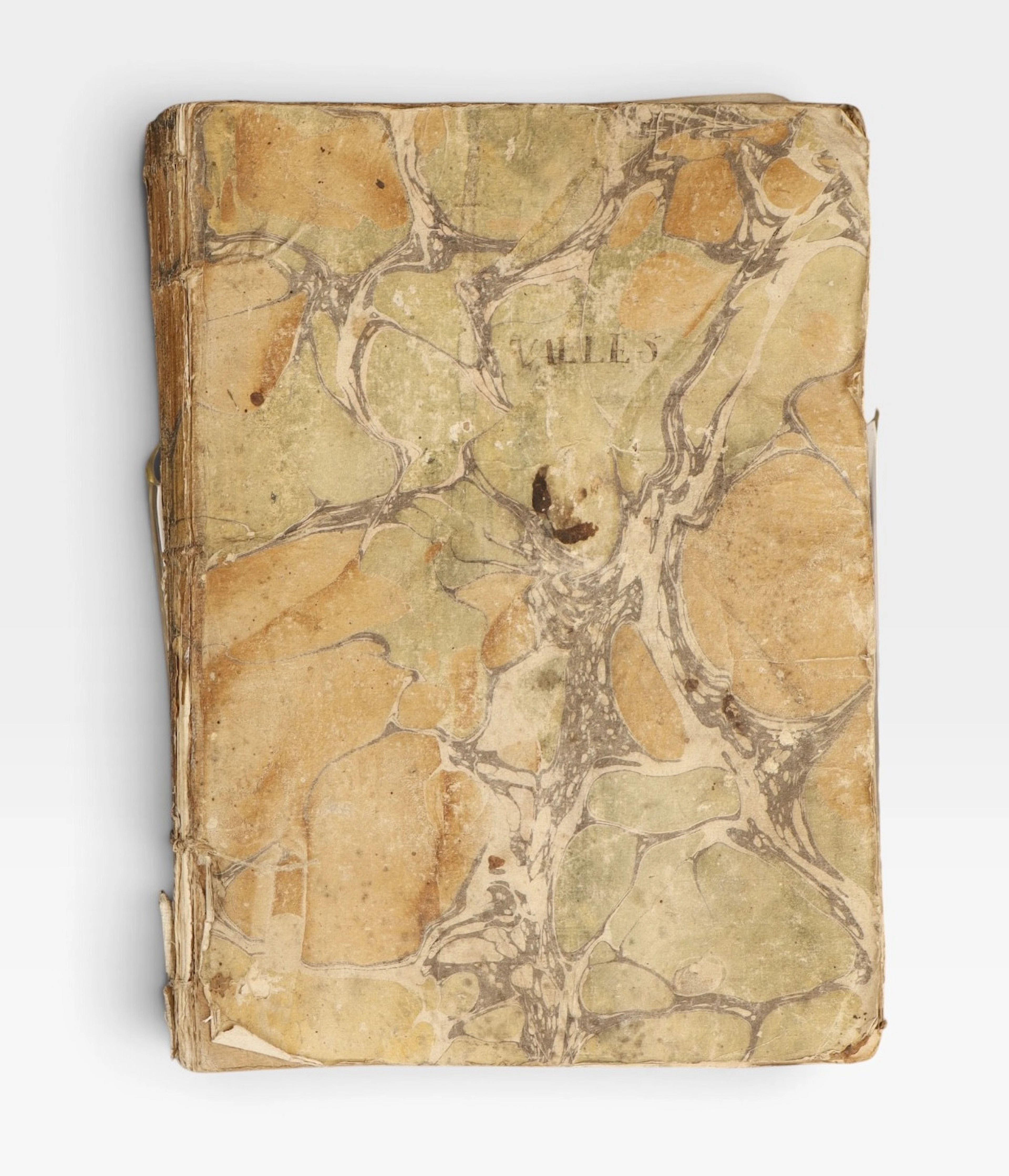
Guerra de la Independencia, Cataluña, 1808-1809.
10/22/2026
€130
Est.: €140


OCT 27 | 4:00 PM
¡Lleva tu subasta a coleccionistas de todo el mundo!
Publica ahoraAl suscribirte, aceptas la política de privacidad. Cancela tu suscripción en cualquier momento.
Barnebys HQ
Brahegatan 10
BOX 5038
114 37 Stockholm
