S.A. - Atto di Compravendita - 1702
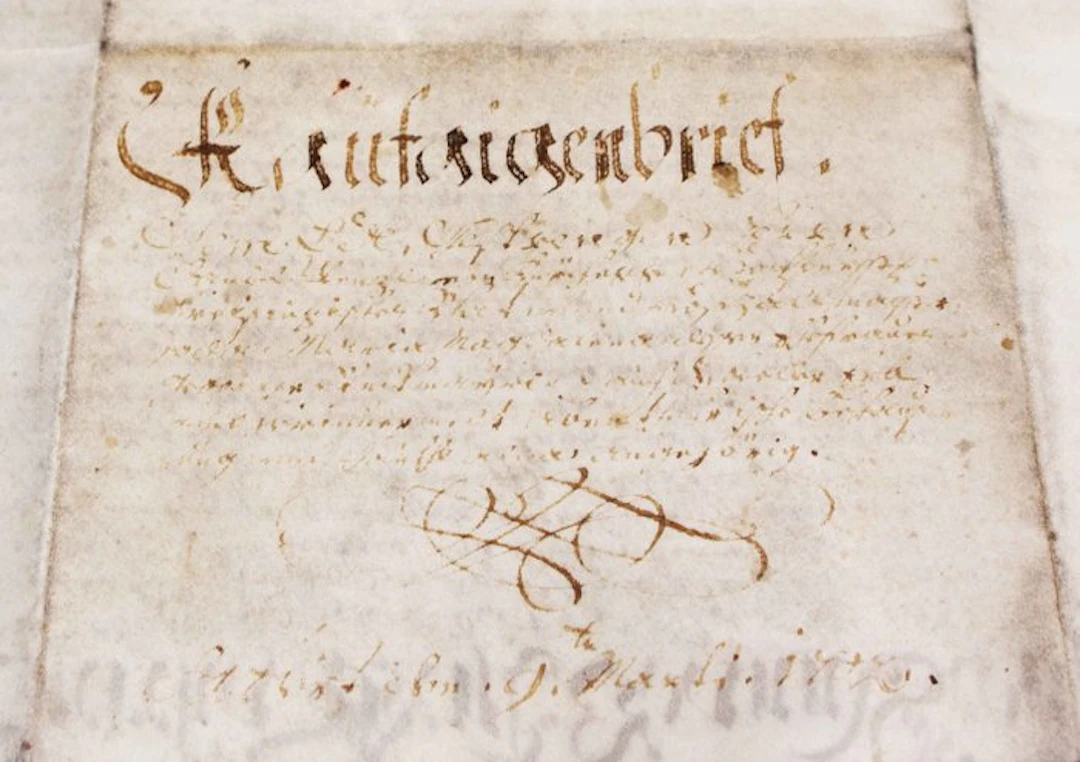
AN UNPERFORATED FRAGMENT OF BAROQUE HISTORY - FAMILY LITIGATION AND INHERITANCE Elegant handwritten document on parchment dated March 1702, relating to a deed of sale entered into between Maria Theresia (Weyl) and Johann Georg Tiegler. The item constitutes a significant testimonial of the documentary culture of German-speaking Europe at the beginning of the 18th century, when the legal validity of a contract depended not only on its textual content but also on its formal presentation. The imposing calligraphic header, executed in elaborate ornamental Gothic script, dominates the surface of the sheet and gives the document a strong aesthetic presence. The dense lines of handwritten text attest to the notarial and administrative activity of the era, while the prepared cuts for the missing pendant seal recall the original authentication function. In addition to its historical-legal interest, the document possesses notable decorative and paleographic value, representing a well-preserved example of the refined German calligraphic tradition of the early 1700s. WHY TO BUY An intact fragment of baroque history saved from the oblivion of time, characterized by hypnotic ornamental Gothic handwriting. A paleographic artwork imbued with the bureaucratic secrets of 18th‑century German administration, perfect for elite collectors. It preserves the visual authenticity of an old private agreement protected by the enduring durability of parchment. MARKET VALUE Manuscript documents on parchment from the early 18th‑century German area are relatively common, but pieces featuring large ornamental calligraphic headings and good preservation are more sought after. Particularly decorative pieces, with autograph signatures, complete notarial formulations, and strong aesthetic impact can reach values between 400 and 800 euros. PHYSICAL DESCRIPTION AND CONDITION Text laid out on numerous lines in brown ink with a wide ornamental calligraphic header in decorative Gothic script. Present is a handwritten signature and the reverse text relating to the accompaniment of the deed. In the lower margin are visible the cuts originally intended for the application of the missing pendant seal. Parchment with physiological folds from ancient archiving, light undulations, and signs of time. Historically folded. In ancient documents with a multi-century history, some imperfections may be present and not always noted in the description. TITLES & AUTHORS Deed of sale between Maria Theresia (Weyl) and Johann Georg Tiegler. German-speaking area, March 1702. S.A. CONTEXT AND SIGNIFICANCE In the Holy Roman Empire, the notarial document represented one of the fundamental tools for regulating economic and patrimonial life. Deeds of sale like this certified transfers of goods, property, or rights through codified and locally recognized legal formulas. Of particular interest is the calligraphic component: the monumental header serves not only an aesthetic function but immediately identifies the official nature of the document, bestowing authority and visibility. These acts are today important sources for the social, economic, and genealogical history of Central Europe, allowing reconstruction of family relationships, economic transactions, and administrative practices of the early 18th century. BIOGRAPHY OF THE SCRIBE The actual author of the document is not identified. Acts of this type were generally drafted by notaries, clerks, or professional scribes specialized in producing legal documents. The quality of the writing and the elaborate header testify to advanced calligraphic training typical of professionals employed in civil chancelleries of the German-speaking area. HISTORICAL AND DOCUMENTARY CONTEXT At the beginning of the 18th century parchment continued to be used for documents of particular legal and patrimonial importance, despite the growing diffusion of paper. Its greater durability guaranteed long-term preservation of the most important acts. The presence of the cuts for the pendant seal confirms the official nature of the document and its inclusion in the legal and administrative procedures of the time. Similar specimens are today preserved in civil and state archives of Central Europe and constitute a valuable testimony to Baroque legal culture. BIBLIOGRAPHY AND REFERENCES Bischoff, Bernhard, Paläographie des römischen Altertums und des abendländischen Mittelalters, Berlin. Muzerelle, Denis, Vocabulaire codicologique, Paris. Clemens, Raymond – Graham, Timothy, Introduction to Manuscript Studies, Cornell University Press. Keller, Hagen, Schriftlichkeit und Lebens praxis im Mittelalter, München. Staatsarchive deutscher Länder, collections of parchment deeds from the 17th–18th centuries. Deutsche Digitale Bibliothek, sections dedicated to Deeds and Manuscripts. Österreichisches Staatsarchiv, repertories of notarial acts and patrimonial documents from the modern era. Marburger Repertorium Deutschsprachiger Handschriften. Manuscripta Mediaevalia, database of documents and manuscripts of the German-speaking area. Auction catalogs from Christie’s, Sotheby’s, Reiss & Sohn and Zisska & Schauer relating to European parchment documents of the 17th–18th centuries.
Estimación:€400
Ir a la subastaVer todos los artículos deCatawikioLibros, mapas, papel & manuscritos