
Todas las subastas / Etnográfica / RARE Herkimer Diamond — 5.30 carats Exceptional clarity...

RARE Herkimer Diamond — 5.30 carats Exceptional clarity...
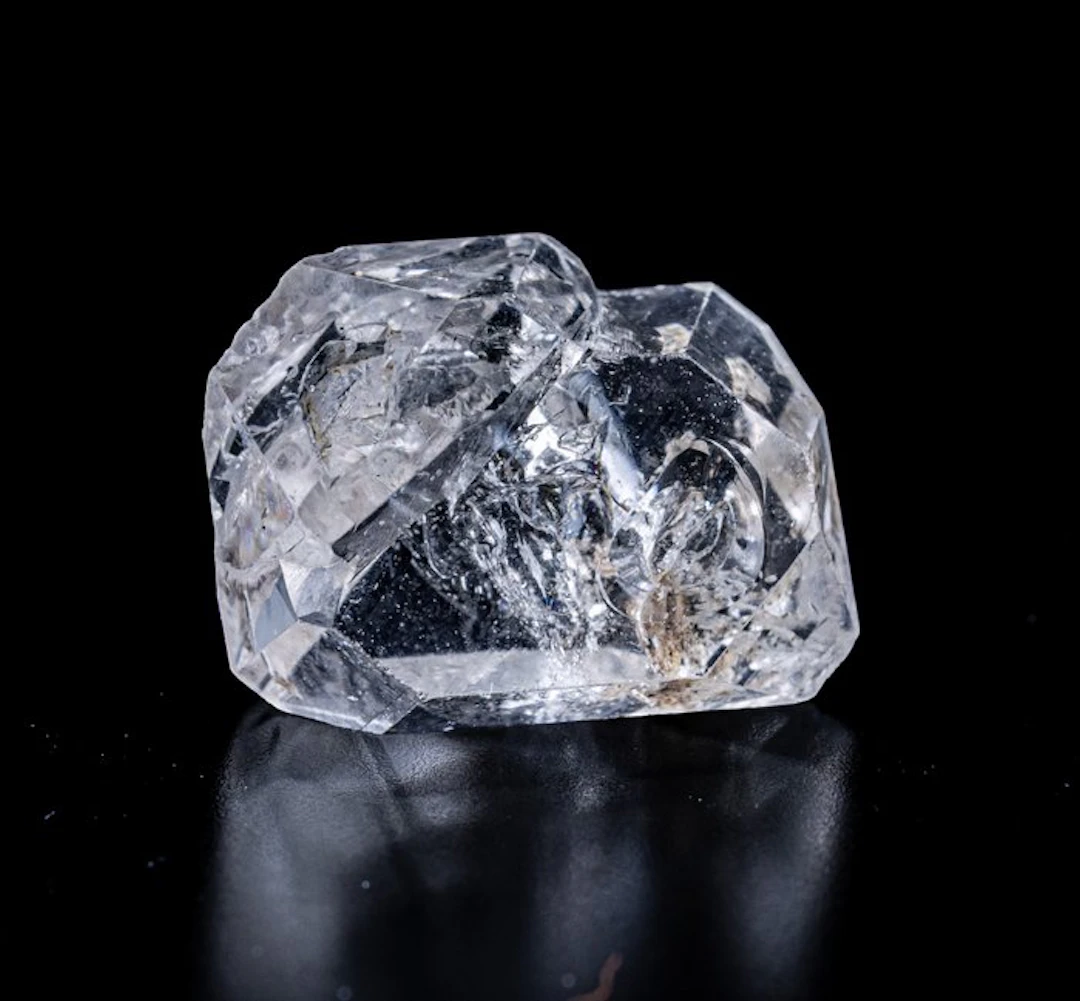
Exceptional natural Herkimer diamond, 5.30 carats, a collectible piece particularly remarkable for the complexity of its architecture, its transparency and its extraordinary internal richness. The crystal displays a very expressive morphology, with broad natural faces surrounding a true internal crystalline landscape: play of mirrors, growth planes, veils, visible cavities and three-dimensional structures superimpose at the heart of the stone. One of the most fascinating zones forms a curved, almost circular structure, perfectly highlighted by the crystal’s transparency and giving the specimen an instantly recognizable identity. Each change of angle reveals a new depth and completely transforms its appearance. The formation of such a complex piece results from a succession of geological phenomena that occurred during its growth, traces of which are now imprisoned inside the crystal. Despite its dimensions of only a few millimeters, it thus constitutes a true miniature mineral archive, particularly interesting under magnification. The historical name “Herkimer Diamond” here designates a rare bidirectional-terminated quartz specimen, sought for its natural geometry, its brilliance and the exceptional complexity that some crystals can exhibit. Characteristics - Collection name: Herkimer Diamond - Mineral nature: Natural bidirectional-terminated quartz - Origin: Pakistan - Weight: 5.30 carats - Dimensions: 13 × 11.5 × 5.1 mm - Morphology: Natural crystal with bidirectional growth - Color: Colorless - Transparency: Transparent to locally translucent due to internal structures - Luster: Very bright vitreous - Faces: Natural, geometric and highly reflective - Internal structure: Very complex, rich in growth planes, veils and three-dimensional structures - Major peculiarity: Extremely expressive internal architecture with a remarkable curved structure visible - Interest: Mineral collection, crystallography, observation under magnification and macrophotography An extraordinary internal architecture The dominant feature of this piece is unquestionably its extraordinary internal complexity. Unlike a perfectly clear crystal whose interest lies mainly in optical purity, this one contains a sequence of structures that literally tell the different stages of its development. Transparent zones serve as natural windows to its heart. Behind them appear bright planes, reliefs, microstructures and several reflective surfaces that seem to hang inside the crystal. The result possesses remarkable depth. At certain angles, the stone seems almost entirely transparent. A few degrees further, its interior becomes an extremely bright assembly of silvery reflections. An intriguingly intricate internal structure One of the most distinctive features visible on this specimen is this almost circular curved formation located in its inner part. It visually creates a loop or relief structure surrounded by many reflective surfaces. Without in-depth gemological analysis, it would be imprudent to assign a precise nature to each of these structures. It is precisely their natural complexity that makes the piece so interesting: they are the visible witnesses to the phenomena that occurred during its crystallization. Under a magnifier or macro lens, this area becomes particularly spectacular. A true miniature crystal landscape With only 13 mm in its greatest dimension, the specimen contains an astonishing level of detail. Its interior gives almost the impression of observing a three-dimensional landscape enclosed in a transparent envelope. The different planes overlap at several depths. Some become bright when they intersect direct light, while others nearly disappear. It is enough to slowly rotate the crystal to progressively reveal details previously invisible. This richness makes the piece particularly interesting for collectors who value specimens with real personality rather than mere uniform transparency. A spectacular natural morphology The exterior of the crystal perfectly complements its internal architecture. Its large natural faces produce very clear reflections and give certain areas an almost faceted appearance. The edges define a compact and balanced silhouette, while the different terminations contribute to the geometric aspect characteristic of this crystal family. This geometry is not the result of human sizing. It corresponds to the natural organization of the crystal during its growth. It is precisely this natural ability to spontaneously produce such structured forms that has long fueled the fascination that bidirectional crystals hold for collectors. The complexity of bidirectional growth For a crystal to express a termination at each of its ends, it must benefit from growth conditions that allow it to develop with enough space around it. This freedom of growth leads to a morphology different from that of a crystal whose one end remains directly attached to the matrix. The presence of a well-expressed bidirectional morphology is thus one of the most sought-after characteristics of this type of specimen. Here, it is accompanied by another important feature: the crystalline envelope allows an exceptionally rich internal history to be observed. A geological history preserved in the crystal A crystal does not appear instantly. Its formation corresponds to a progressive process during which matter organizes according to a determined crystalline structure. Conditions in the environment can evolve during growth: fluid composition, temperature, pressure, space availability or crystallization rate. These variations can leave traces. Growth planes, small inclusions, natural fractures healed or other internal structures then become witnesses to the different stages the crystal has traversed. On this piece, this history is particularly visible. Its interior is not homogeneous: it seems composed of several successive levels, giving the impression of observing different generations of structures imprisoned within each other. Why is it called the “Herkimer Diamond”? The expression “Herkimer Diamond” has a special history in connoisseur mineralogy. Historically it is associated with the famous bidirectional-terminated crystals from Herkimer County and neighboring regions of New York State. Their great transparency, intense brilliance, and especially their naturally very geometric morphology earned them this historical comparison with diamond. Over time, this particular aesthetic became extremely well known in the world of collectible crystals. Specimens with bidirectional morphologies resembling this shape are however found in other parts of the world. That is why the specimen’s true geographic origin is explicitly indicated in its characteristics, regardless of the historical name used to describe this type of crystal. A piece revealed under light This specimen particularly deserves observation under several orientations. With directional light, some faces become true mirrors while others remain transparent. Light then penetrates the crystal and meets its many internal structures, causing a succession of reflections and sparkles. Under magnification, the experience becomes even more impressive. Details invisible to the naked eye progressively appear and allow exploration almost layer by layer of the specimen’s interior. It is also a piece particularly suitable for mineral macrophotography, where its internal complexity can be revealed at a scale well above its actual dimensions. A specimen for the discerning collector This crystal brings together several particularly appealing features: an unusually expressive natural morphology, good transparency, bright faces and especially an exceptionally complex internal architecture. It is not simply a piece to be viewed frontally. Its interest lies precisely in its ability to continually change its appearance when manipulated under light. At 5.30 carats for 13 × 11.5 × 5.1 mm, it constitutes a remarkable miniature for a collection, compact enough to reveal its details under magnification while possessing an internal structure immediately visible to the naked eye. A singular and spectacular piece, a true natural crystal microcosm whose complexity, depth and play of light make it a specimen of choice for a demanding mineral collection. General Terms of Sale – MineralsOpals: At MineralsOpals, your satisfaction is a top priority. All orders are handled with the utmost care, from stone selection to final shipment. - Shipping & timing: Dispatch within 1 to 3 business days, usually the day after the order. Shipped Monday to Friday (excluding weekends and holidays). Each package is sent via La Poste with tracking number provided. Careful packaging: each stone is protected individually, then placed in a secure rigid carton. - Guarantee & customer service: 100% of shipments are guaranteed: if there is an issue, we always find a solution. You buy with complete confidence: full refund, replacement or courtesy gesture in case of loss or proven problem. If you have a question, doubt, or specific request, you can contact me at any time, I’m happy to respond as soon as possible. Trust & commitment Each stone is photographed with care to reflect its natural beauty. You benefit from personalized tracking. My goal: to offer you a reliable, humane and transparent purchasing experience. Thank you for your support. Feel free to browse our no-reserve auctions to discover other exceptional products and follow us to stay informed about our new offers.
Estimación:€1
Ir a la subastaVer todos los artículos deCatawikioEtnográfica
Estimación:
€1
Artículos similares


Resultados de subastas para artículos similares
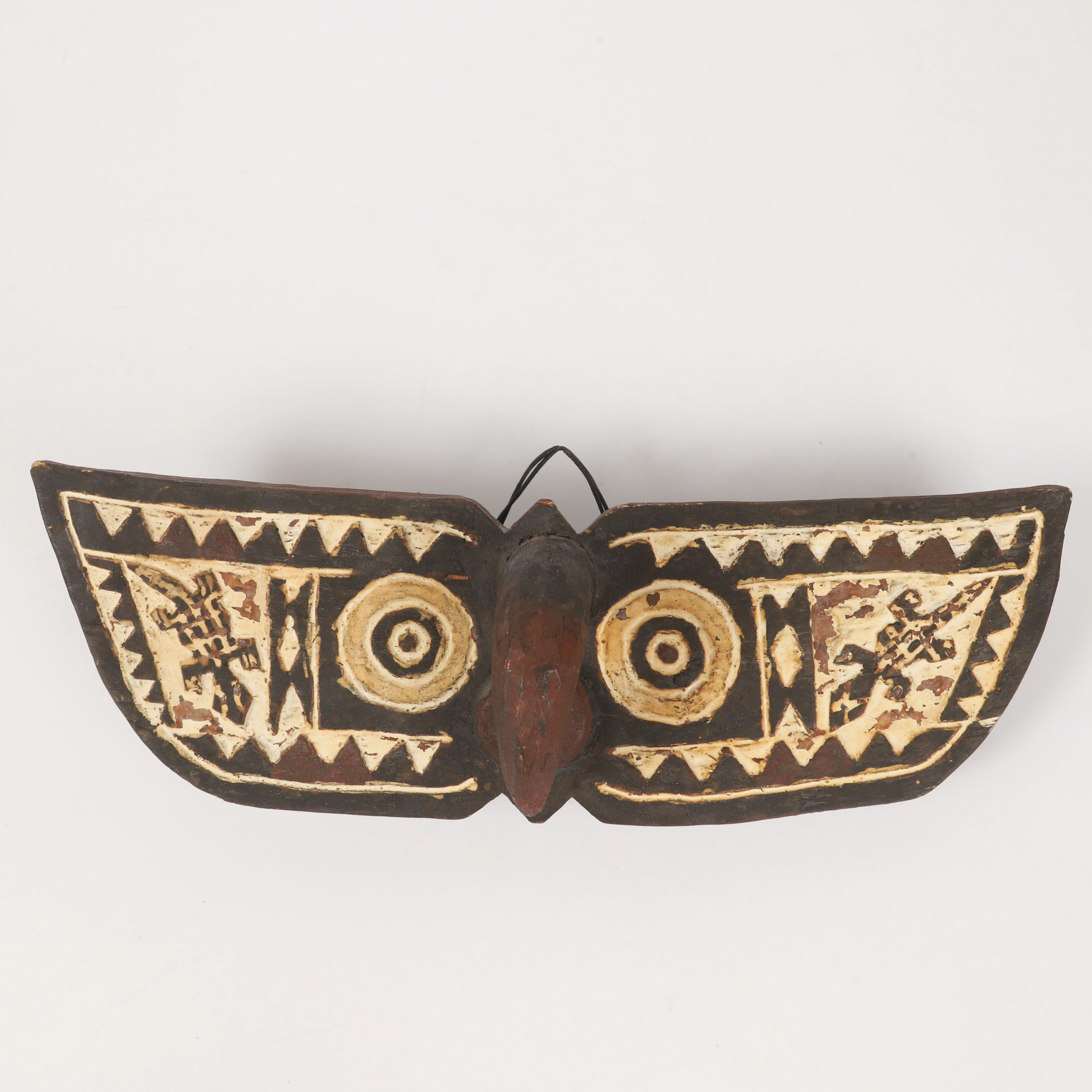

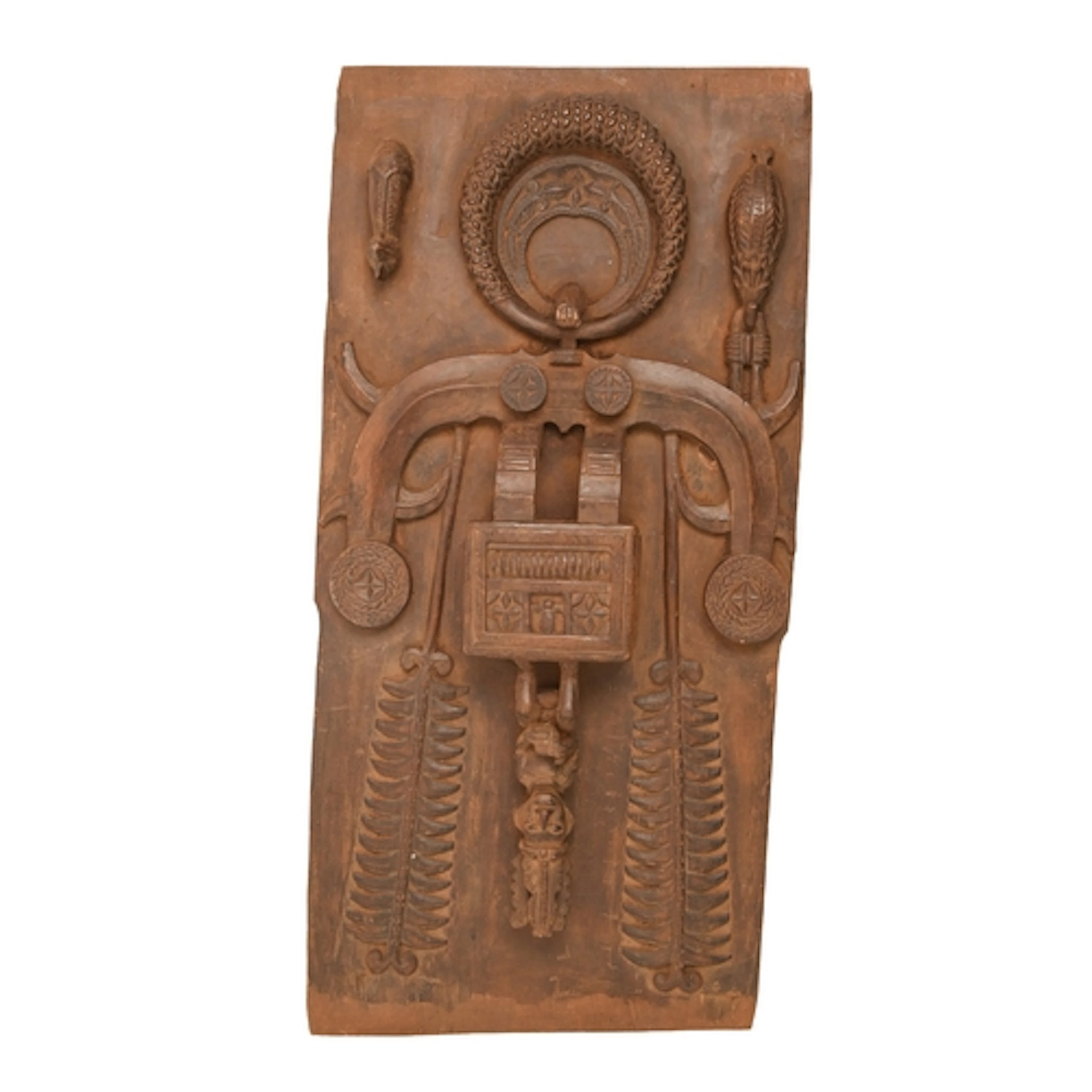
An Indonesian carved wooden ancestor sculpture, Adu Zatua, O...
10/06/2026

€165.16
Est.: €233.23
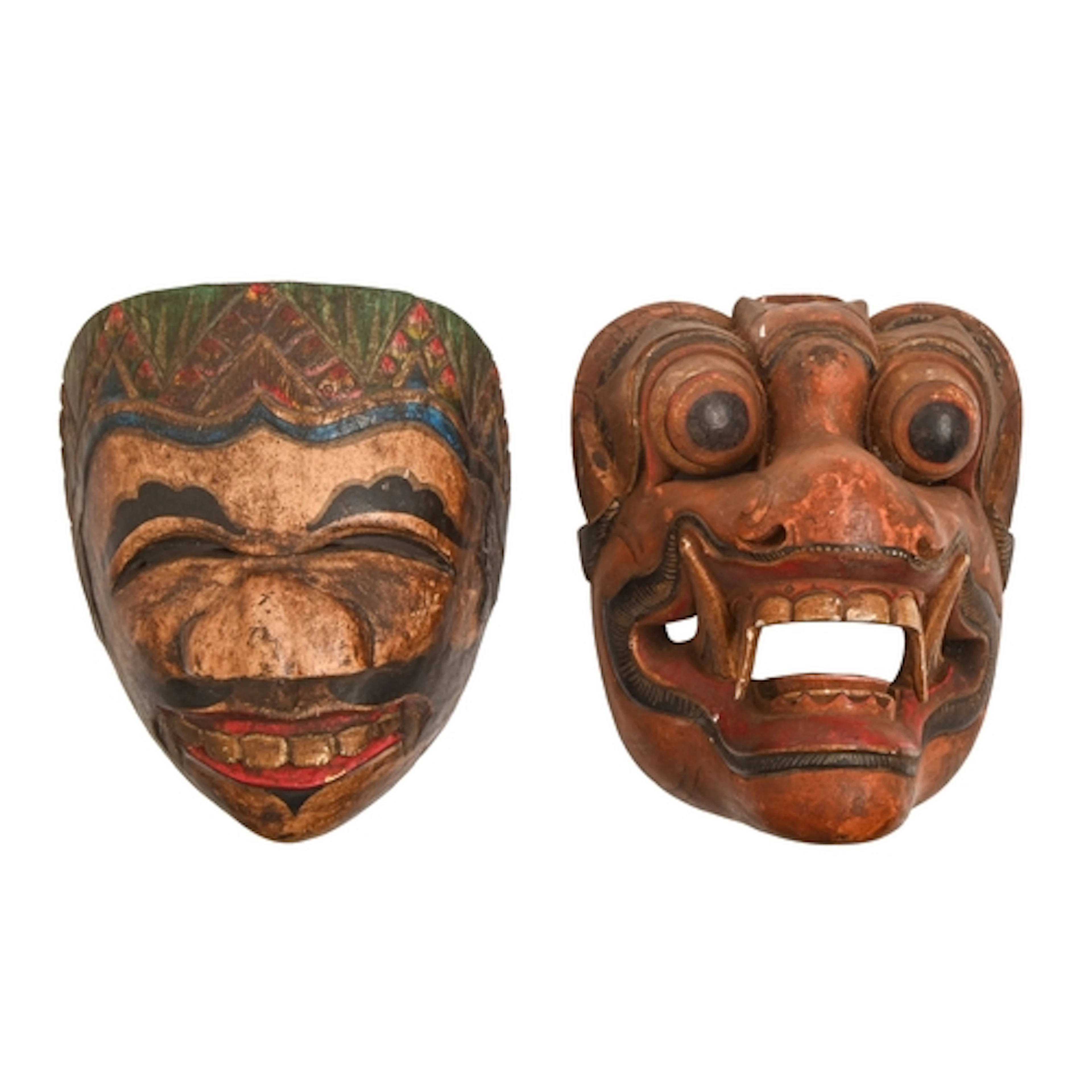
Two Indonesian polychrome wood dancer's masks, possibly 19th...
10/06/2026
€188.76
Est.: €116.61
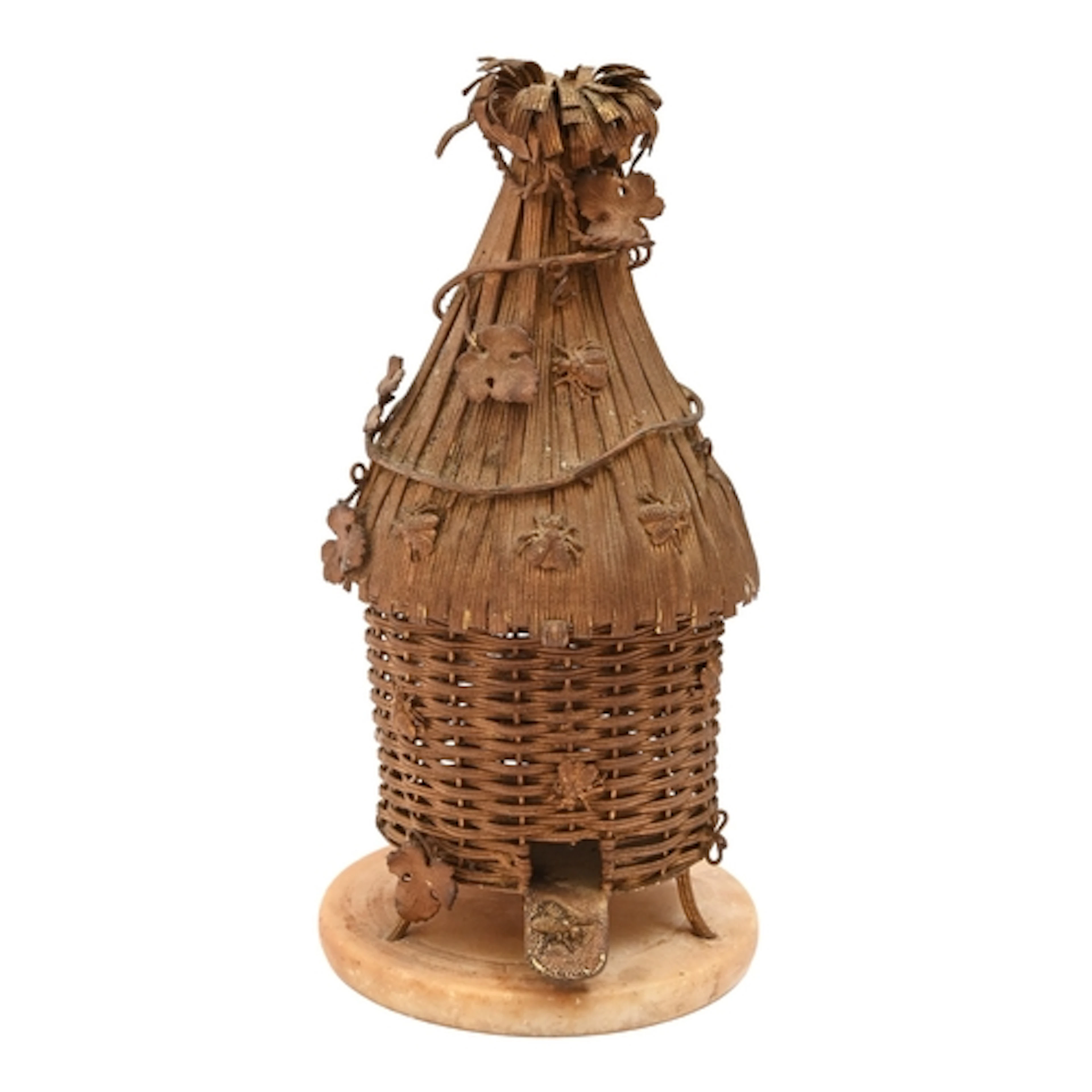
A French gilt wirework box in the form of a bee skep, second...
10/06/2026
€141.57
Est.: €174.92
¡Lleva tu subasta a coleccionistas de todo el mundo!
Publica ahora