




Todas las subastas / Arte Antiguo / Post-medieval - Very rare majolica plate from the High...


Quite a rare example of Dutch majolica pottery. This deep dish from the 16th century was found during archaeological excavations. Very beautiful ornamental decoration, featuring a frieze of arches and oves in relief in yellow and green. Northern Netherlands, probably manufactured in the city of Rotterdam. Dutch majolica is one of the rarest ceramics known, especially in a complete state. Dutch majolica is extremely rare to find in a complete condition, most often parts are missing. This is because almost all pieces come from excavations. It is estimated that only 200 pieces have been handed down over the centuries, most of which are in museum collections or foundations. Besides the fact that Dutch majolica is rare, it also has a historical peculiarity: it marks a new chapter in people’s lives and a blend of cultures. Majolica has something magical and a particular allure that astonishes. This must have been how it was for people in the first half of the 16th century, when this luxury product was introduced for the first time. This product was exotic, innovative and decorated with vivid and bright colors on a tin-glazed background, in contrast with the brown, yellow and green lead-glazed ceramics that were common. Dutch majolica was influenced by many cultures. The main influences were Hispano-Islamic culture and the Italian Renaissance. Later, it was also influenced by imports of Chinese porcelain. This example still shows influences of the Italian Renaissance. The border decoration is copied from Italy. But the main decoration is characteristic of Dutch majolicas. In this period (1620–1640), scenes of daily life appear. Decorations of people, landscapes, fruits, animals, birds and flowers. A wonderful example of decorative art from the late Dutch Renaissance. Beautifully bright colors. Time has no effect on majolica, so it still looks fresh after 400 years. The influence is clearly visible from Italy and Flanders. For comparable examples, see the publication “Dutch Majolica & Delftware (1550-1700) from the Edwin van Drecht Collection”, pp. 30-33. Dimensions: diameter 25.2 cm – height 10.9 cm. This dish has been professionally restored. Provenance: Netherlands, Galerie D.K.N., From an important private Dutch collection of antique ceramics The seller can prove that the lot was obtained legally, provenance statement seen by Catawiki. Important information: The seller warrants that he is authorized to sell/export this lot. The seller will ensure that the necessary permissions, such as an export license, are arranged. (cultural object passport) The seller will inform the buyer of his status if this takes more than a few days.
Estimación:€550
Ir a la subastaVer todos los artículos deCatawikioArte Antiguo
Estimación:
€550
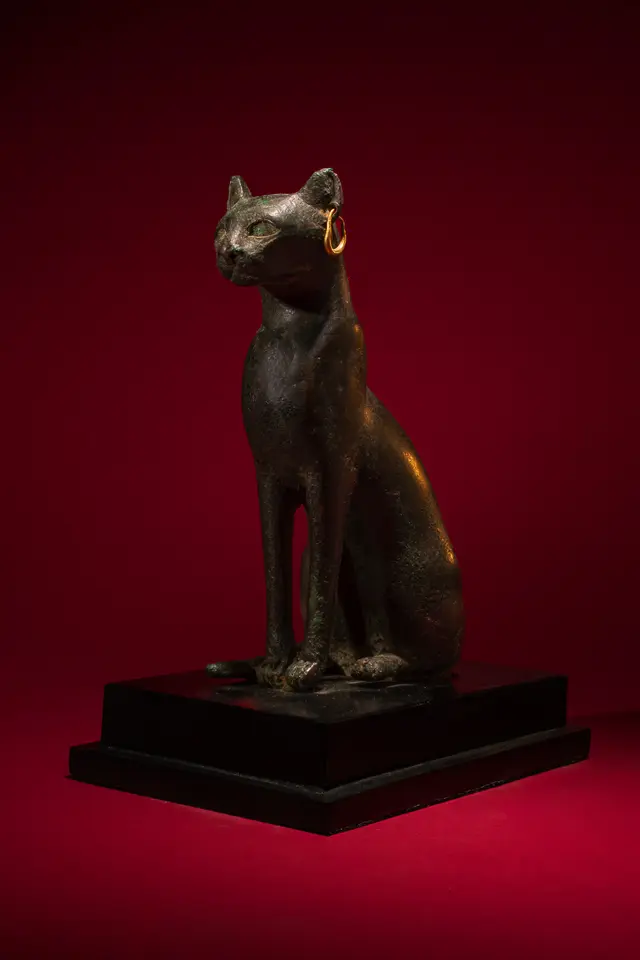
RARE EGYPTIAN BRONZE CAT STATUETTE WITH GOLD EARRINGS - LARGE SIZE
06/21/2026

€25,506.4
Est.: €23,095.64
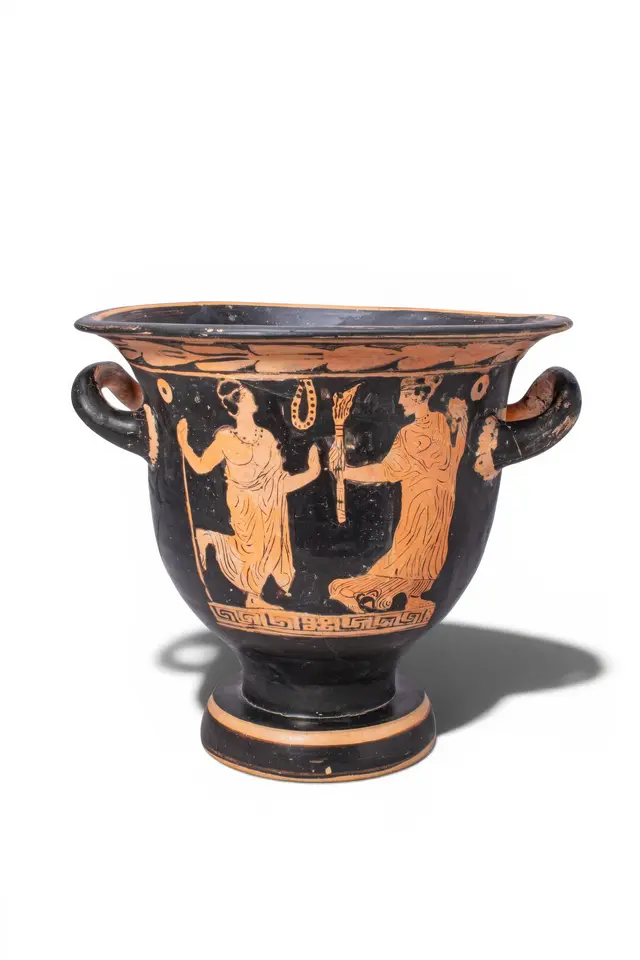
APULIAN RED-FIGURE BELL KRATER WITH KOMASTOS AND MAENAD - TL TESTED
06/21/2026
€3,014.39
Est.: €2,304.2
¡Lleva tu subasta a coleccionistas de todo el mundo!
Publica ahoraAl suscribirte, aceptas la política de privacidad. Cancela tu suscripción en cualquier momento.
Barnebys HQ
Brahegatan 10
BOX 5038
114 37 Stockholm
