



Todas las subastas / Varios / Noé Caron (1942) - La clairière


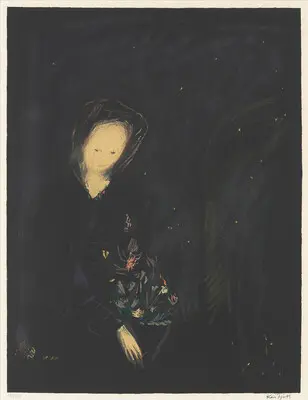
Pictura Subastas presents this magnificent work of art belonging to Noah Caron, which depicts a silent pond surrounded by tall trees, on whose waters a mysterious golden light from the forest’s depth is reflected. The painting stands out for its excellent technique and the high pictorial quality it conveys. • Dimensions of the work: 41x33x1 cm. • Oil on panel hand-signed by the artist in the lower right, Noah Caron. • The piece is in good conservation condition. The work comes from an exclusive private collection in Girona. Important note: the photographs included are an integral part of the lot description. Digital representation in an indicative mockup; there may be differences from the actual item in color, scale, and details. The painting will be professionally packed by an IVEX expert (https://www.instagram.com/ivex.online/), using high-quality materials to ensure its protection. The shipping price covers both the cost of professional packaging and the transport itself. Shipping will be carried out by Correos, GLS or NACEX with tracking. International shipments available. This painting presents a quiet wooded landscape organized around a lagoon or small pond that reflects the light of a bright sky. Tall trees rise on both sides and form a natural frame around a central opening, where a yellow and green glow seems to penetrate from the distance. The dark vegetation, still water, and the delicate blue, golden, violet, and reddish tones create an intimate, mysterious, and deeply contemplative atmosphere. The water occupies almost the entire lower half and functions as a mirror of the landscape. Its surface appears calm, barely interrupted by small ripples and reflections. This calm transmits the sense of a secluded place, protected from wind and external movement. The darker areas of the pond are dominated by blacks, browns, deep greens, and violets. These colors suggest the shade cast by the trees and the depth of the water. The intensity of the shadow further highlights the light reflections at the center. In the central zone a vertical glow appears, composed of yellows, greens, whites and small turquoise nuances. This luminous stripe seems to come from an opening among the vegetation and extend over the water. Its presence organizes the entire composition and instantly draws the eye. The central reflection does not form a completely rigid line, but is fragmented by small blotches and undulations. The yellows mix with whites, violets, and greens, creating a vibrant surface. This irregularity allows one to imagine the slight movement of the water. Next to the main reflection appear several vertical violet and bluish shapes that reproduce the trunks and vegetation of the background. These elongated lines increase depth and establish a direct relationship between the real space and its inverted image. In the foreground, small turquoise, green, and yellow patches are scattered across the darkness. They can be interpreted as reflections of leaves, aquatic plants, or lights filtered through the trees. Their small size adds variety without breaking the silence of the whole. The edge is difficult to delimit precisely, as vegetation, earth, and water blend through dark tones. This ambiguity gives the landscape a mysterious appearance and makes the pond seem to extend into the shade. On the left side there is a mass of earth and vegetation that slightly intrudes into the water. Its brown, reddish, black, and greenish colors create an irregular base. Bushes and trees rise above it, occupying a large part of the composition. The vegetation at the far left is especially dense. Deep greens, dark blues, violets, and small turquoise accents stack to form a compact surface. The darkness of this area reinforces the protected character of the pond. Some shrubs show reddish and pinkish spots that may correspond to illuminated leaves, flowers, or atmospheric reflections. These warm notes add color richness and link with the golds of the sky. The vegetation seems to be in a seasonal transition. On the right side extends another large wooded mass of browns, greens, violets, and blacks. Its density visually balances the left vegetation and closes the space. The water is thus contained between two tree-lined shores. The shrubs near the right shore show small green and bluish reflections. Some areas seem to receive light from the center, while others remain entirely in shadow. This alternation provides volume and depth. In the center of the background stand several tall, narrow trees. Their vertical silhouettes rise toward the light and take forms resembling cypresses or conifers. The stepped arrangement creates an ascending rhythm and guides the gaze toward the sky. These central trees appear lighter and less defined than those in the foreground. Their greens, grays, and yellows blend with the luminous atmosphere. This chromatic softness allows perceiving distance and visually enlarges the forest. One of the trees near the center-right presents a dark, narrow canopy that contrasts with the clarity. Its silhouette introduces a very defined vertical accent. The corresponding reflection seems to extend toward the pond. The large trunks in the foreground act as natural columns. On the left, several dark, slender lines rise, while on the right a sturdier trunk dominates. This vertical structure frames the luminous opening. The main right-side tree has a broad trunk in browns, blacks and grays. Its form rises from the vegetation and splits into several branches that extend across the top. The nearby presence of this tree adds depth. The upper branches advance toward the center with curved and diagonal lines. Some are almost bare, while others bear small clusters of leaves. Their arrangement forms an open vault over the sky. On the left side appear other tall, narrow trunks. Their black and brown silhouettes cross the bright area and create a strong contrast. The separation between them allows the sky’s clarity to continue being visible. One of the central trees shows small reddish and ochre leaves concentrated near the top. These colors suggest autumn or the incidence of warm light. The foliage adds delicacy to the dark branches. The canopy at the upper right is dominated by browns, ochres, golds, and muted greens. The leaves seem to receive lateral light that makes them warm. This tone balances the yellow reflections of the water. The sky occupies a good portion of the upper half and is presented with light blues, turquoises, whites, yellows, and soft grays. Its brightness contrasts with the dark forest. The atmosphere seems to correspond to early morning or late afternoon moments. The clouds are distributed with soft, poorly defined shapes. The yellows and ochres suggest the presence of the hidden sun, while the blues provide a sense of coolness. The sky is not completely clear, but covered by a delicate changing luminosity. In the upper left, a somewhat more intense blue zone is observed. Toward the center, the sky becomes light green and yellow. This transition directs the gaze toward the glow between the trees. The luminous focus is not shown directly. The sun seems to remain hidden behind vegetation or clouds, but its clarity floods the center. This absence adds mystery and prevents the light from appearing too evident. The central arrangement of luminosity creates a sense of openness. The dark forest seems to separate to reveal a distant and almost inaccessible space. This opening can be interpreted as a clearing, a path, or the continuation of the pond. The composition is organized through a marked free symmetry. The dark masses concentrate on both sides, while the light occupies the center. The vertical trees balance the horizontal lines of the water. Despite this organization, the landscape retains a natural appearance. The branches cross irregularly, the canopies have different heights, and the shores do not follow geometric limits. This freedom avoids any rigidity. The chromatic range combines cool and warm tones with great sensitivity. The greens, blues, and violets convey freshness and depth; the yellows, ochres, and reddish tones introduce light and warmth. The blacks and browns provide stability. The darkest colors concentrate in the foreground and at the sides. The clearer colors appear in the center and in the sky. This gradation directs the eye from the somber proximity to the illuminated distance. The light reflected on the pond creates a connection between the sky and the earth. The water reproduces the colors of the heavens and introduces them into the forest’s depth. This chromatic continuity unifies the entire scene. The absence of human figures intensifies the sense of isolation. The place seems not to have been altered and preserves an atmosphere of untouched nature. The viewer becomes the only witness of the scene. Nor are there any constructions, roads, or boats. This lack of human references gives the landscape a universal and timeless character. It could be any secluded forest where the water remains in silence. The work invites slow contemplation. There is no concrete narrative or visible action; the true theme is the relationship between light, water, and vegetation. The landscape communicates through its atmosphere. The pond can be interpreted as a symbol of introspection. Its dark, reflective surface evokes the depth of thoughts and the capacity to look inward. The central glow introduces a sense of hope. The trees symbolize permanence, growth, and protection. Their trunks frame the light and seem to guard the space. Verticality connects the dark ground to the bright sky. The central opening may represent a path toward the unknown. Although no defined path is visible, the light invites a mental advance toward the background. This device gives the landscape a spiritual and poetic dimension. The contrast between shadow and clarity constitutes the emotional core of the scene. The darkness is not threatening but protective and silent. The light, for its part, appears as a soft presence that transforms the forest. The atmosphere may recall a dawn when the first rays pierce the trees, or a sunset when the light slowly recedes. This temporal ambiguity broadens the image’s evocative ability. Autumn tones bring a dimension related to the passage of time. Some leaves seem to begin changing color, while others keep their greens. The forest is in a tranquil transition. The image conveys silence, yet one can imagine numerous sounds: the slight movement of the water, the rustle of leaves, the distant birdsong, and the wind through the branches. This sensory dimension makes the landscape enveloping. The beauty of the scene arises from the simplicity of its elements. Trees, water, and sky are enough to build a space charged with emotion. The absence of anecdotal details concentrates attention on nature. In sum, this precious painting offers an intimate, mysterious, and deeply serene vision of a pond surrounded by tall trees and dense vegetation, illuminated from behind by a golden glow that reflects on the water. The forest’s dark masses, the branches framing the sky, and the delicate blend of blues, greens, violets, and yellows build an atmosphere of silence and contemplation. The work turns this natural corner into a poetic image of introspection, hope, and harmony between light and shade.
Estimación:€300
Ir a la subastaEstimación:
€300


¡Lleva tu subasta a coleccionistas de todo el mundo!
Publica ahoraAl suscribirte, aceptas la política de privacidad. Cancela tu suscripción en cualquier momento.
Barnebys HQ
Brahegatan 10
BOX 5038
114 37 Stockholm
