



Todas las subastas / Etnográfica / Museum Grade Huge OVIRAPTOR cf philoceratops Fossil Egg...

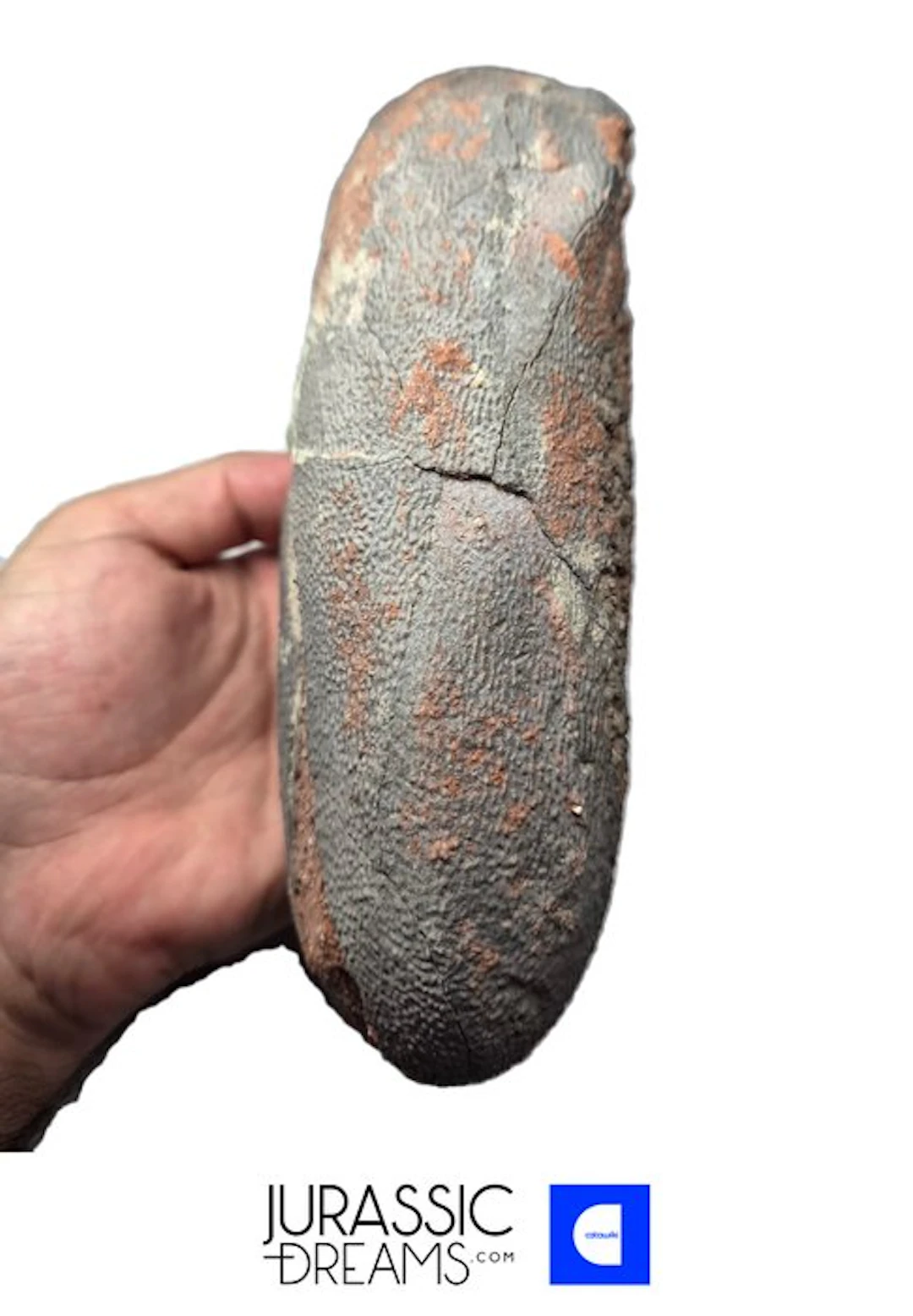
Scientific name: Oviraptor cf philoceratops, Osborn 1924. Fossilized Egg. form Macroolithus yaotunensis (Elongatoolithidae) Location: Gobi Desert, Eastern Asia Geological Formation: Djadokhta Formation Age: Upper Cretaceous, Campanian stage, (~75 Million Years) Size: 19 x 8,5 x 6cm REF.: #J710 DESCRIPTION: Oviraptor eggs from the Late Cretaceous Djadokhta Formation (Gobi Desert in Eastern Asia) are elongated, ridge-textured, and were originally mistaken for Protoceratops prey, but subsequent finds of embryos (e.g., IGM 100/971) confirmed they belong to Oviraptor. These eggs, often arranged in pairs within circular, brooding nests, demonstrate that these theropods displayed bird-like nesting behavior. Key Details on Djadokhta Oviraptor Eggs: Initial Misconception: Discovered in 1923 by Roy Chapman Andrews, they were thought to be stolen eggs from Protoceratops, leading to the name "egg thief". Brooding Evidence: Fossil finds, such as the one described in 1993, showed that the adult was not stealing the eggs, but instead brooding, or sitting on, its own nest. Egg Characteristics: The eggs are of the form Macroolithus yaotunensis (Elongatoolithidae). They are characterized by their elongated shape (approx. 163–198 mm long) and a surface with ridges aligned to the long axis. Embryo Discoveries: Significant specimens include IGM 100/971 (first known theropod embryo) and others from sites like Ukhaa Tolgod, which solidified the link between the eggs and the parent. Nesting Structure: Eggs were arranged in pairs, forming a circular, open, or partially covered nest, often with 15 or more eggs. Pigmentation: Research on oviraptorid samples suggests these eggs possessed pigments, likely giving them a blue-green color, similar to some modern birds. These discoveries were crucial in bridging the understanding of the relationship between dinosaurs and modern birds. Observations abour our specimen: It is completely natural, unrestored and unrepaired. A large percentage of its surface remains intact, with only some areas losing its shell. Its size is incredibly large compared to the average for this species. A true investment-grade marvel. All of our fossils come with a Certificate of Authenticity. Every week, the issued Certificates of Authenticity are updated in our database verification system on our website. If you find that your certificate has not yet been updated, please contact us and we will update it immediately. Display box NOT included.
Estimación:€1,700
Ir a la subastaVer todos los artículos deCatawikioEtnográfica
Estimación:
€1,700

OCT 27 | 4:00 PM
¡Lleva tu subasta a coleccionistas de todo el mundo!
Publica ahoraAl suscribirte, aceptas la política de privacidad. Cancela tu suscripción en cualquier momento.
Barnebys HQ
Brahegatan 10
BOX 5038
114 37 Stockholm
