


Todas las subastas / Arte Antiguo / Medieval

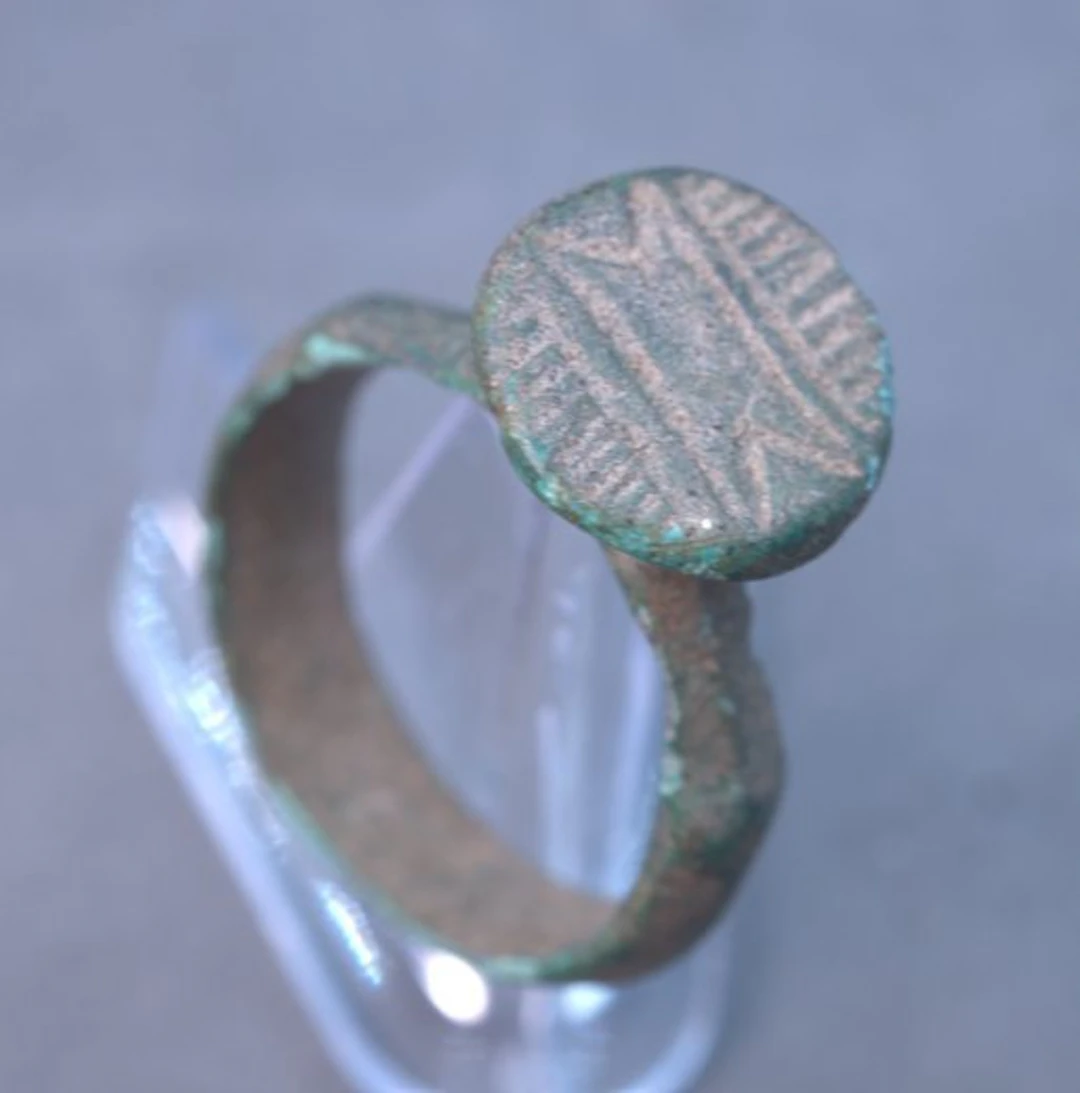
"Medieval, Crusaders Bronze Ring with Abstract Geometric Motif Culture / Period: Medieval, Crusaders Date / Period: 11th–14th century A.D. Material: Bronze Dimensions: Outer diameter: 29 mm Condition: Good condition. No shipping outside theopean Union. Due to complex export regulations concerning cultural goods, this item cannot be shipped outside the EU. Please ensure you have a delivery address within theopean Union before placing a bid. Provenance information: Object Registration ID: 788 The current owner purchased this object from a reputable Dutch numismatic auction house in Schiedam, the Netherlands. Due to privacy regulations, the name of the previous owner could not be disclosed. No further information concerning the earlier ownership history of the object was available from the previous owner. Background Information: This bronze finger ring dates to the medieval Crusader period and features a circular bezel engraved with an abstract geometric pattern composed of intersecting diagonal and vertical lines. Such engraved motifs were widely employed on medieval rings, where simple geometric ornamentation often carried decorative, symbolic, or personal significance. During the 11th–14th centuries A.D., bronze rings of this type were worn throughout the eastern Mediterranean, the Byzantine world, and the Crusader States established in the Levant. While many rings displayed inscriptions or Christian symbols, geometric decoration remained equally popular, reflecting artistic traditions shared between Westernopean, Byzantine, and local Eastern workshops. The engraved design was created by hand using fine chisels after casting the ring in bronze. The carefully incised linear pattern demonstrates the practical craftsmanship of medieval metalworkers, who produced durable jewellery intended for everyday wear. Bronze remained an accessible material, allowing soldiers, pilgrims, merchants, and civilians to own personal ornaments inspired by contemporary artistic styles. Rings such as this served multiple purposes. Besides functioning as jewellery, they could express personal identity, act as tokens of faith or remembrance, or simply reflect the owner's appreciation for decorative craftsmanship. During the Crusader period, prolonged contact between Latin, Byzantine, and Islamic cultures encouraged the exchange of artistic motifs, resulting in jewellery that combined influences from several traditions while retaining simple, practical forms. The absence of a figurative image or inscription makes the geometric decoration particularly characteristic of many utilitarian medieval rings, where balanced linear ornament provided visual appeal without relying on complex iconography. Similar engraved bronze rings have been recovered from settlements, castles, pilgrimage sites, and urban centres throughout the Crusader territories and neighbouring regions. Dating to the 11th–14th century A.D., this ring belongs to a period marked by extensive cultural interaction, trade, and pilgrimage across the eastern Mediterranean. It reflects the everyday material culture of the medieval world, where practical objects frequently incorporated elegant decorative details.
Estimación:€210
Ir a la subastaVer todos los artículos deCatawikioArte Antiguo
Estimación:
€210
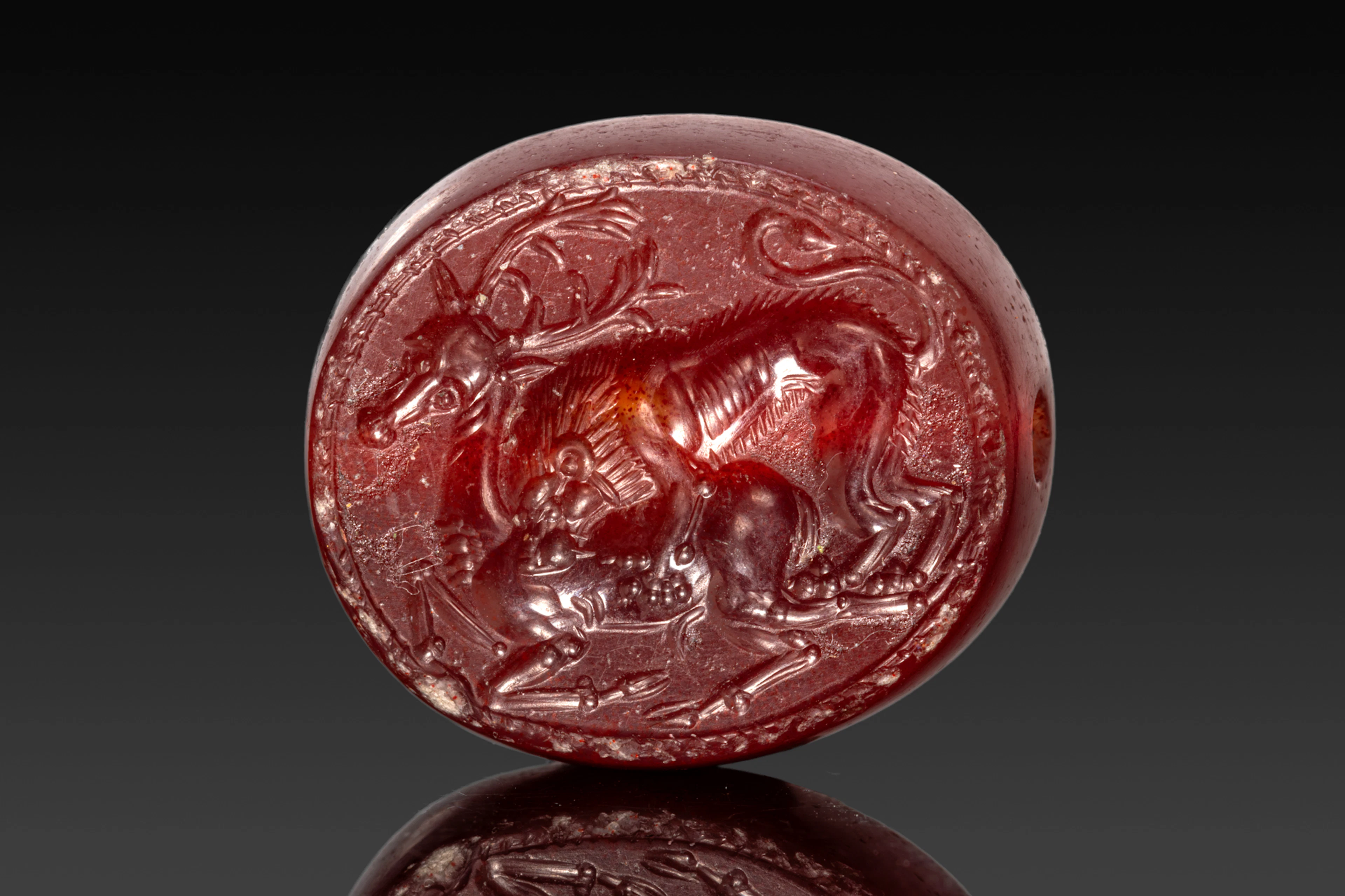
ETRUSCAN CARNELIAN STAMP SEAL WITH A LION ATTACKING A STAG
06/21/2026

€5,796.91
Est.: €5,773.91
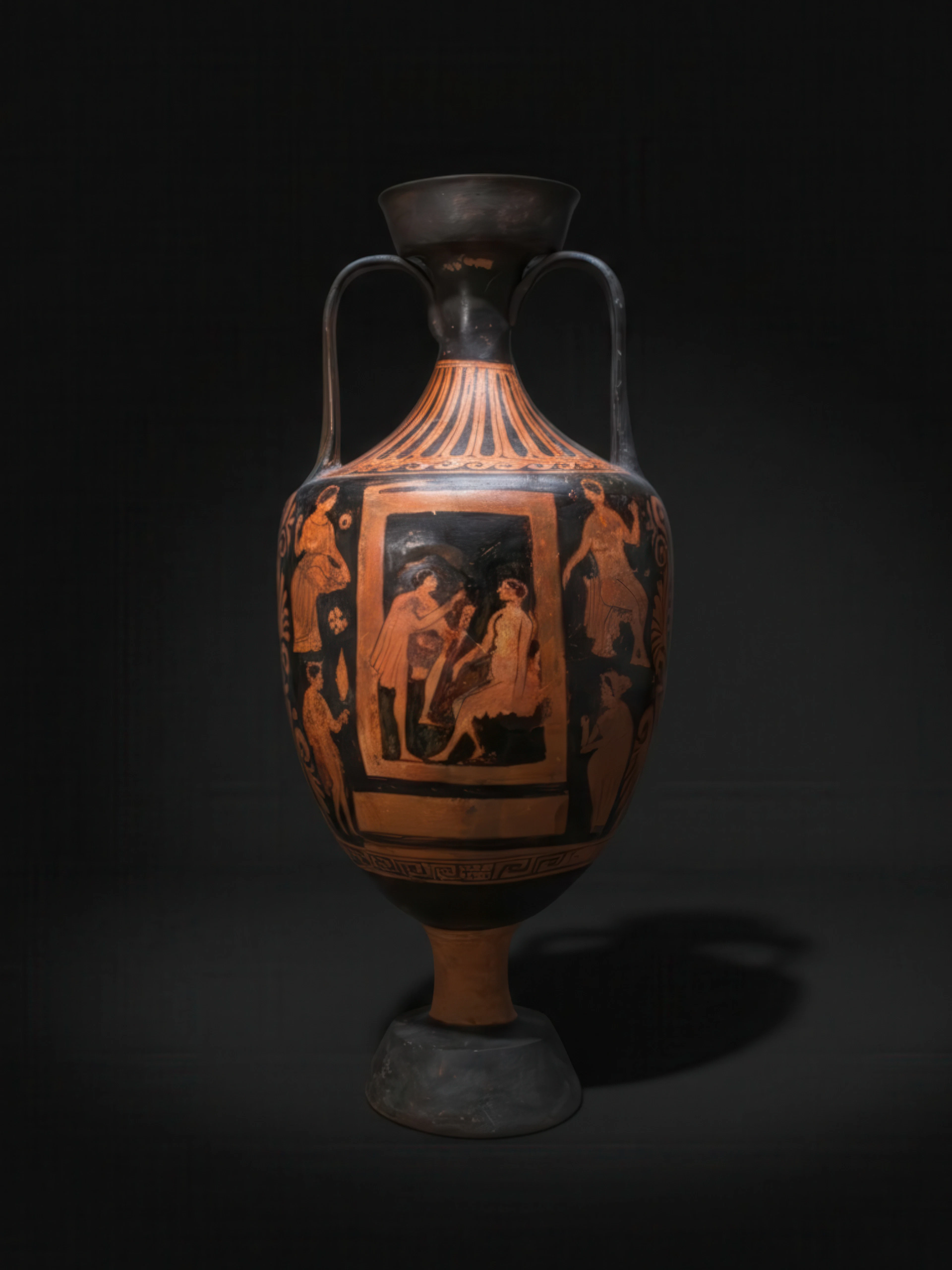
LARGE APULIAN RED-FIGURE AMPHORA WITH NAISKOS SCENE AND ALTAR
06/21/2026
€6,376.6
Est.: €5,773.91


OCT 27 | 4:00 PM
¡Lleva tu subasta a coleccionistas de todo el mundo!
Publica ahoraAl suscribirte, aceptas la política de privacidad. Cancela tu suscripción en cualquier momento.
Barnebys HQ
Brahegatan 10
BOX 5038
114 37 Stockholm
