



Todas las subastas / Etnográfica / Mask of merriment - Bambara - Mali

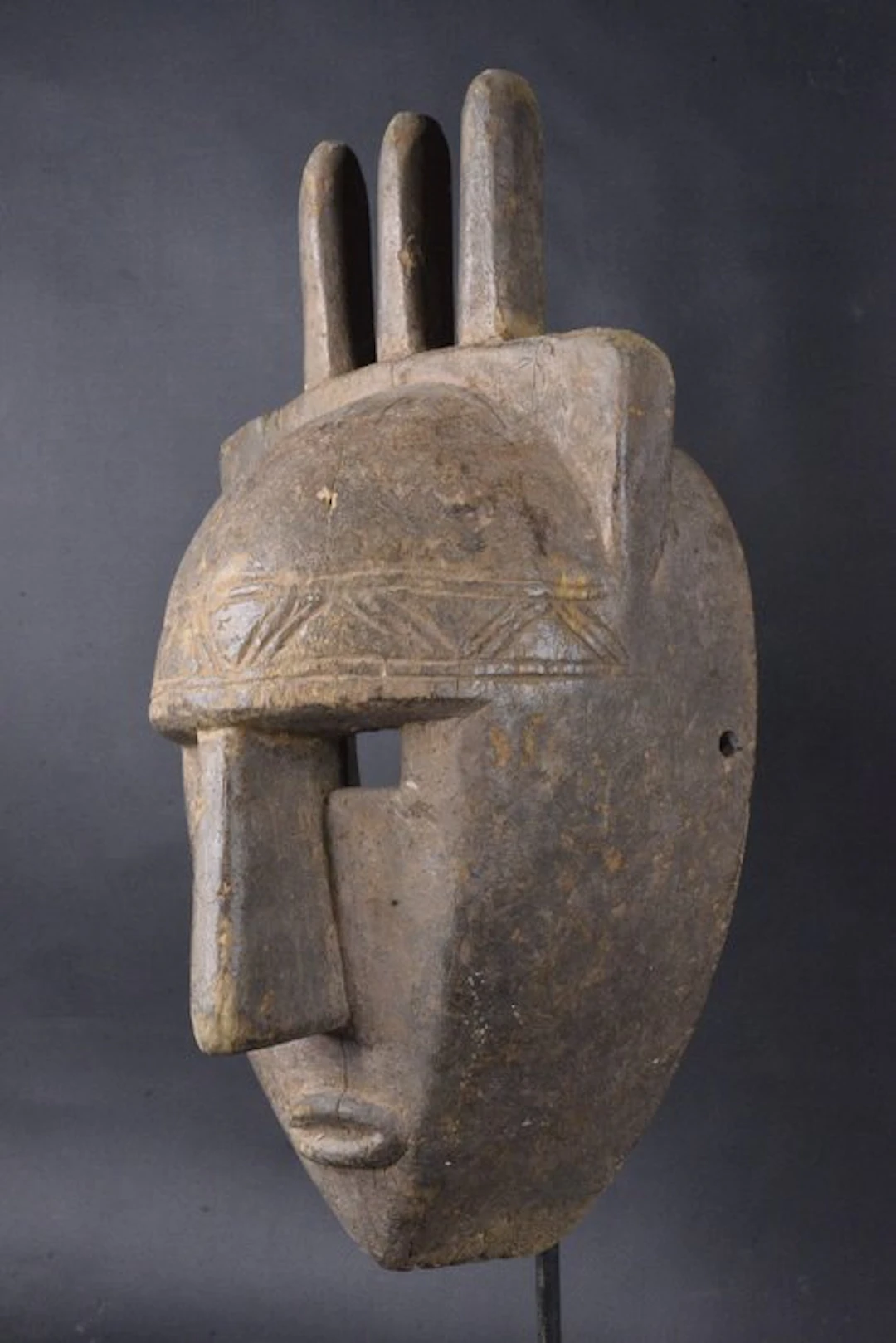
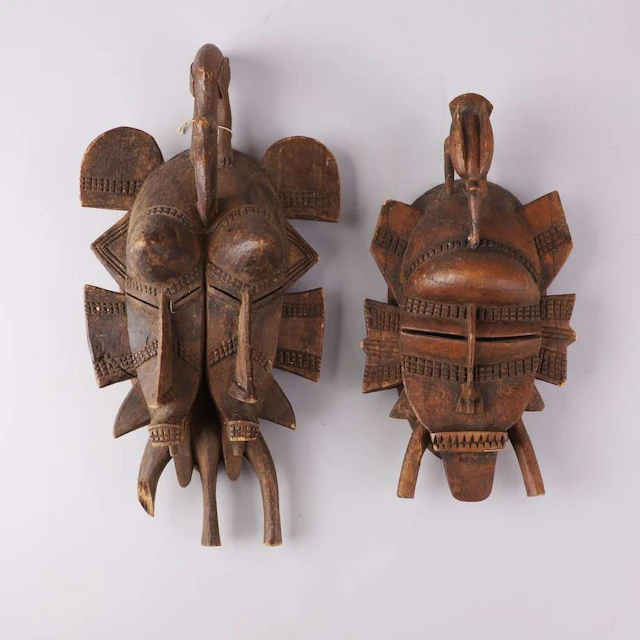
Mali Bambara Wood Height: 365 mm Width: 185 mm Depth: 145 mm African wooden mask of the Bambara (Bamana) people from Mali - This mask, identifiable by its structure as belonging to the Bambara (Bamana) people of Mali, has a very geometric aesthetic, with a long straight nose, a forehead carved with chevrons, and, above all, a crest made of horns or vertical spikes. Although it is described as a “joy mask” because it is worn during public festivities and rhythmic dances, its primary function is at the heart of the major initiation societies of the Bambara. More precisely, this mask is linked to the N'Domo (or Ndomo) society. Here is what it was used for and how it was used: 1. Initiation of young boys (The N'Domo society) The N'Domo is the first of six secret societies that shape a Bambara man’s life. It takes care of boys who have not yet been circumcised before they enter adulthood. Learning to live in society: The mask served to guide the youths during their retreat and learning period. They were taught the origin of man, self-control, silence, and future responsibilities. Spiritual protection: As long as they are not circumcised, the young boys are considered vulnerable to negative spiritual forces. The N'Domo mask acted as a shield to capture and neutralize these forces (nyama). 2. Joyful festivals and village quests During and at the end of their initiation period, the young boys went into the village for public performances: Dances and celebrations: Wearing the mask and fiber costumes, they performed rhythmic dances to celebrate the end of a cycle or the harvest. This is the festive, “joyful” aspect visible to the whole village (including women and non-initiates). The quests: The mask bearers toured the settlements to ask for offerings (grains, food, money). These gifts funded the ceremonies of the youth society. The symbolism of vertical spikes In the mask file mask_bambara-2026-070.jpg, three spikes (or horns) aligned along the top of the head are clearly visible. In N'Domo tradition, the number of horns has a precise symbolic meaning related to gender: 3 or 6 horns: symbolize the masculine element (the number 3 is the man’s number among the Bambaras). 4 horns: symbolize the feminine gender. 5, 7, or 8 horns: symbolize androgyny or the human spirit in its totality. In short: This joy mask served as a spiritual and social tutor for Bambara adolescents, turning a crucial rite of passage into a protective and festive celebration for the entire community. This mask is representative of Bambara art, with a balance between shapes and volumes and finely carved details. The items are sent with a tracking number. Delivery to France by Chronopost in 1 to 2 days. Delivery to the European Union via Chronopost International in 3 to 5 days. Delivery via Colissimo International for the rest of Europe and for the whole world. We speak english. Mask african art Afrikanische Maskenkunst arte de máscaras africanas arte delle maschere africane statue african art Arte de estatuas africanas arte delle statue africane Afrikanische Maskenkunst Máscara de estatua de galería de arte africano
Estimación:€150
Ir a la subastaVer todos los artículos deCatawikioEtnográfica
Estimación:
€150


OCT 27 | 4:00 PM
¡Lleva tu subasta a coleccionistas de todo el mundo!
Publica ahoraAl suscribirte, aceptas la política de privacidad. Cancela tu suscripción en cualquier momento.
Barnebys HQ
Brahegatan 10
BOX 5038
114 37 Stockholm
