
Todas las subastas / Arte, Pintura & obra gráfica / Ludwig Mies van der Rohe - Barcelona Pavillon - Artprint...

Ludwig Mies van der Rohe - Barcelona Pavillon - Artprint...
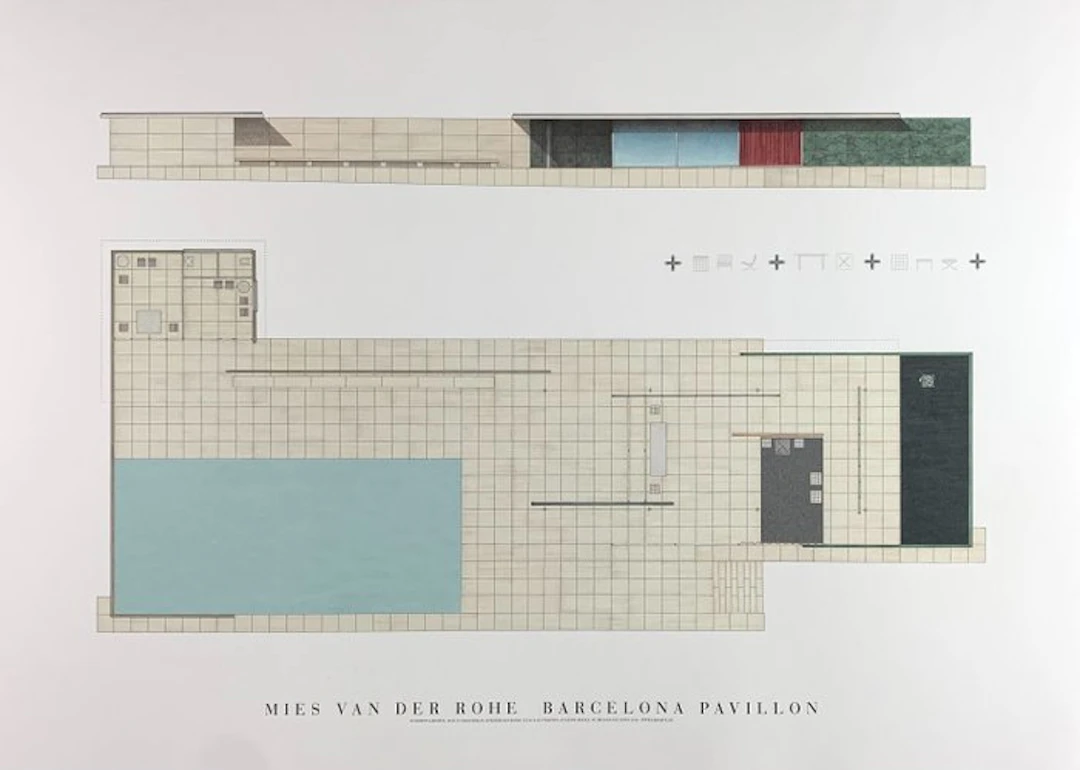
Beautiful, expressive art print by a design of Ludwig Mies van der Rohe, in 50 x 70 cm format, titled Barcelona Pavilion. The work is a high-quality offset print on sturdy paper and in very good condition. New architectural art print on lightly textured paper. - printed and published by Kunstverlag circa 2000 - sourced directly from Kunstverlag - since then professionally stored, light-protected in a graphic archive Ludwig Mies van der Rohe Barcelona Pavilion Art: Art print Technique: Offset print on sturdy paper Originality: Reproduction Sheet size: 50 x 70 cm Condition: Like new Origin: Kunstverlag Era: Modern art Nationality: German art Style of depiction: Representational Stylistic device: Architecture Ludwig Mies van der Rohe: Ludwig Mies van der Rohe, born 1886 in Aachen, Germany, is regarded as one of the most influential architects of the 20th century and a principal proponent of modern architecture. With his famous maxim “Less is more” and the development of the International Style, he fundamentally shaped architecture and influenced numerous other architects and designers. Mies's early career was strongly influenced by collaboration with Peter Behrens, where other notable architects such as Le Corbusier and Walter Gropius also worked. This collaboration brought him into contact with the avant-garde of architecture and the modern design movement. Behrens's clear, functional style and his innovative use of materials and technologies left a lasting impression on Mies. A central point in Mies's career was his involvement with the Bauhaus, one of the most important art and design schools of the 20th century. Under the leadership of Walter Gropius, the Bauhaus developed a vision of the fusion of art, craft, and technology. Artists and designers such as Marcel Breuer, Paul Klee, and Wassily Kandinsky worked at the Bauhaus and shared Mies's enthusiasm for a new, functional aesthetic. Mies van der Rohe was also heavily influenced by the Dutch De Stijl movement, especially Piet Mondrian and Gerrit Rietveld. De Stijl emphasized reduction to basic geometric forms and primary colors, reflected in Mies's minimalist designs. Rietveld's “Red and Blue Chair” and Mondrian's abstract paintings are examples of this philosophy of simplification and order. In the 1920s, Mies further developed his vision of modern architecture and created some of his best-known works. The Barcelona Pavilion, designed for the 1929 World Exposition, and the Villa Tugendhat in Brno are outstanding examples of his clear lines, open spaces, and innovative use of materials. The Barcelona Pavilion, with its flowing spaces and luxurious materials such as marble and onyx, remains a milestone of modern architecture. Mies's concept of an open floor plan was developed further in his later works in the United States. After emigrating to the United States in 1937, Mies became director of the Architecture Department at the Illinois Institute of Technology (IIT) in Chicago. Here he influenced a new generation of architects and implemented his principles of modern design in numerous projects. The Farnsworth House in Plano, Illinois, is another iconic work by Mies. This glass, minimalist building stands on stilts and integrates the surrounding nature into the living experience. His use of steel and glass to create a seamless transition between indoors and outdoors greatly influenced architects such as Philip Johnson and Richard Meier. Philip Johnson, a close friend and admirer of Mies, adopted many of his ideas and incorporated them into his own work, such as the Glass House in New Canaan, Connecticut. Johnson's work reflects Mies's influence in the clear, reduced formal language and the harmonious connection of architecture and nature. The Seagram Building in New York City, designed by Mies in collaboration with Philip Johnson, is another example of his influence on modern skyscraper architecture. With its elegant, functional design and the use of steel and glass, the Seagram Building set new standards for office buildings and influenced skyscraper design worldwide. Eero Saarinen, known for his organic forms and iconic designs such as the TWA Terminal at JFK Airport, was also inspired by Mies's clear lines and functional approach. Saarinen's works show a synthesis of Mies's minimalist approach with a flowing, sculptural form language. Frank Lloyd Wright, though stylistically different, was a contemporary whose organic architecture and integration of buildings into the landscape also show parallels to Mies's concept of open space and the connection between interior and exterior. Wright's famous Fallingwater and Mies's Farnsworth House are both examples of architecture that respects and incorporates nature. In the postwar era, architects such as I.M. Pei and Minoru Yamasaki continued the principles of Mies van der Rohe in their own work. Pei's masterful combination of geometric clarity and functional elegance, visible in projects like the Louvre Pyramid in Paris, demonstrates the lasting relevance of Mies's ideas. Renzo Piano and Richard Rogers, known for the Centre Pompidou in Paris, combined Mies's minimalist aesthetic with high-tech elements, creating a new interpretation of modern architecture. Their work emphasizes transparency, structure, and technical innovation—principles Mies also pursued. The influence of Mies van der Rohe extends to newer architects such as Norman Foster and Zaha Hadid. Foster's iconic designs, like the Hearst Tower in New York and the Gherkin in London, show a clear line and innovative use of materials that extend Mies's vision of a modern, functional architecture. Hadid, known for her flowing, dynamic forms, demonstrated a new dimension of modern architecture that still rests on the principles of clarity and functionality established by Mies. Mies van der Rohe remains a central figure in architectural history, with influence felt across generations. His principles of simplicity, clarity, and functional beauty have shaped modern architecture and continue to inspire architects worldwide, even in the 21st century, to create innovative and timeless structures. Shipping information: We roll prints onto sturdy rigid boards, wrap them in corrugated cardboard, and ship them in specially designed, very sturdy boxes. Shipping is tracked with a tracking number. Le Corbusier, Walter Gropius, Ludwig Hilberseimer, Philip Johnson, Marcel Breuer, Alvar Aalto, Peter Behrens, László Moholy-Nagy, Lilly Reich, Oscar Niemeyer, Frank Lloyd Wright, Gerrit Rietveld, Richard Neutra, Louis Kahn, Eero Saarinen, Josef Albers, Hans Scharoun, Bruno Taut, Adolf Loos, Hans Poelzig, Erich Mendelsohn, El Lissitzky, Buckminster Fuller, Egon Eiermann, Arne Jacobsen, Charles and Ray Eames, J.J.P. Oud, Jean Prouvé, Zaha Hadid, Santiago Calatrava, Bauhaus About us: We have been active in the art trade for over 20 years and have extensive experience in the professional handling and shipping of artworks. - no shipping to the Canary Islands, shipping to Taiwan is possible -
Estimación:€150
Ir a la subastaVer todos los artículos deCatawikioArte, Pintura & obra gráfica
Estimación:
€150
Artículos similares

Resultados de subastas para artículos similares
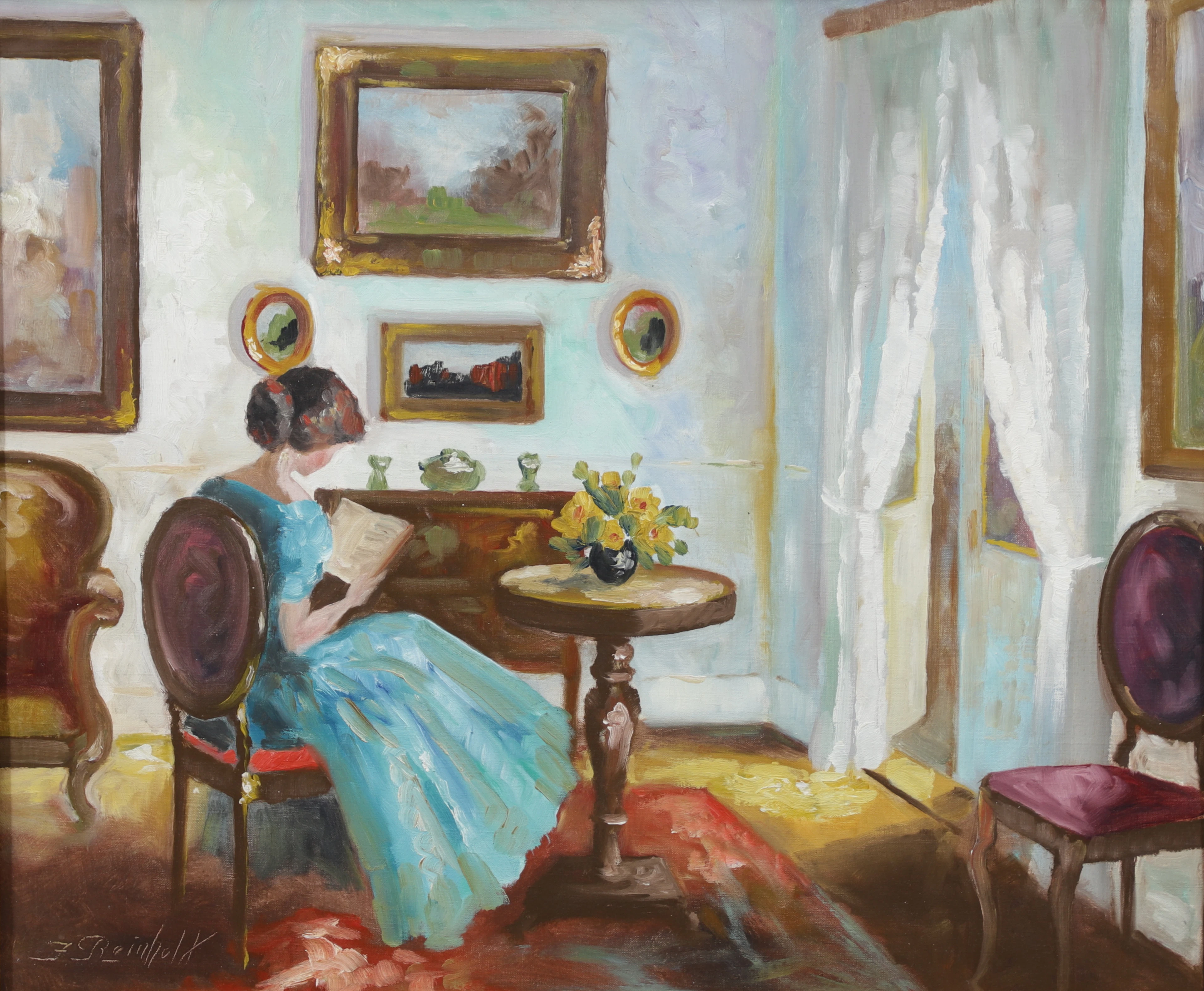
OIDENTIFIERAD KONSTNÄR. Interiör mad kvinna, olja på duk, signerad Reinholt.
10/08/2026
€35.7
Est.: €44.64
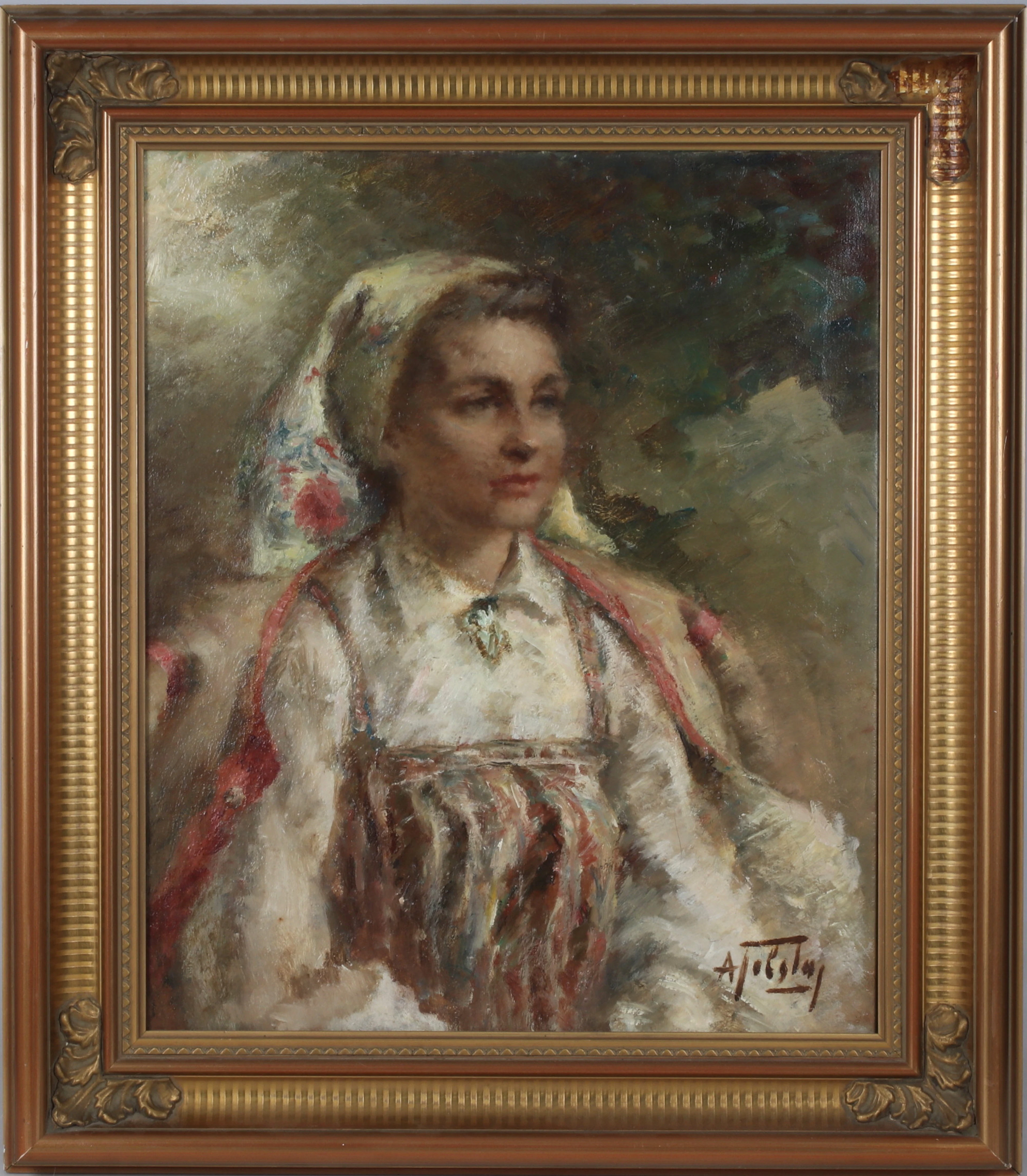
ALEXANDER TOLSTOY. Porträtt, olja på duk, signerad.
10/08/2026
€89.25
Est.: €176.92
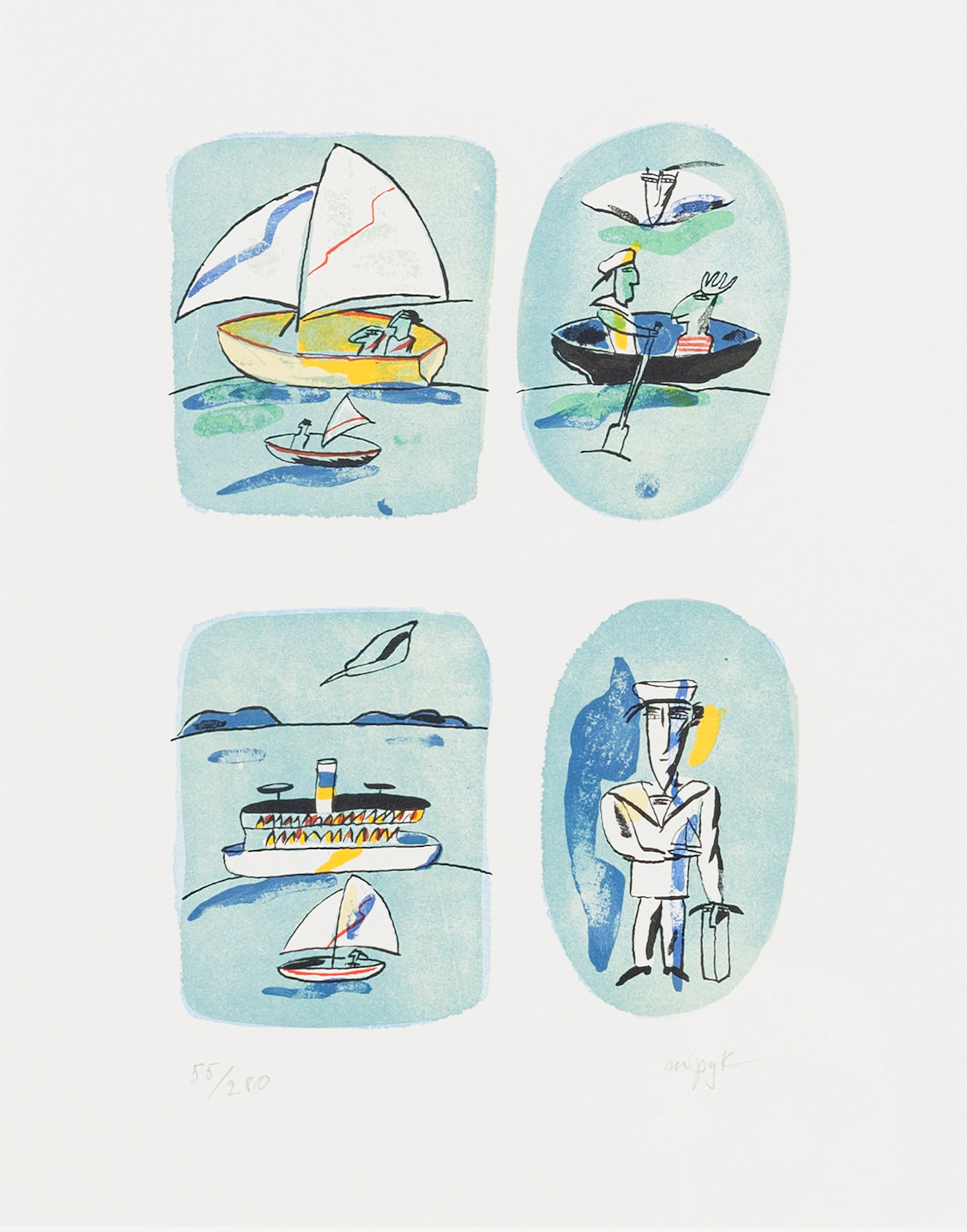
MADELEINE PYK. Komposition med segelbåtar, färglitografi, signerad
10/08/2026
€125.85
Est.: €107.14
¡Lleva tu subasta a coleccionistas de todo el mundo!
Publica ahora