
Todas las subastas / Arte, Pintura & obra gráfica / Lluís Domingo Abelló (1917) - La arboleda verde

Lluís Domingo Abelló (1917) - La arboleda verde
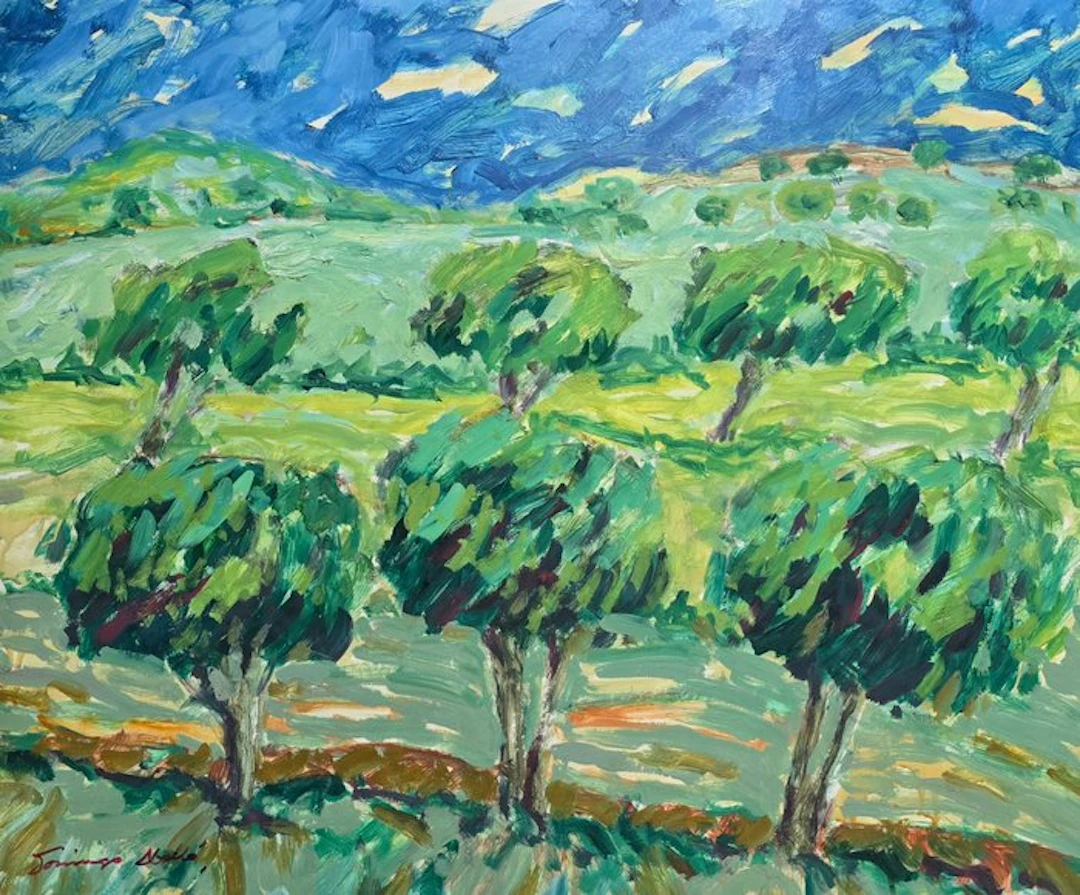
Pictura Subastas presents this magnificent artwork by Domingo Abelló, depicting a vast olive grove over green, undulating fields, under an intense blue sky that foresees the movement of wind and clouds. The painting stands out for its excellent technique and the high pictorial quality it conveys. · Framed dimensions: 71x81x6 cm. · Unframed dimensions: 46x55 cm. · Oil on panel, hand-signed by the artist on the left side of the work, Domingo Abelló. · The piece is in good conservation condition. · The work is sold with a precious frame (included in the auction as a gift). The work comes from an exclusive private collection in Girona. Important note: the photographs included are an integral part of the lot description. Digital representation in an indicative mockup; there may be differences from the actual item in color, scale and details. The painting will be professionally packed by an IVEX expert (https://www.instagram.com/ivex.online/), using high-quality materials to guarantee its protection. The shipping price covers both the cost of professional packing and the actual transport. Shipping will be via Correos, GLS or NACEX with tracking. International shipping available. This painting presents a wide rural landscape dominated by a succession of leafy trees extending from the foreground to the hills on the horizon. The vegetation, abundant and full of different greens, occupies most of the composition, while an intense and changing blue sky covers the upper area. The scene conveys the freshness of a fertile, open and quiet territory, where the trees seem to grow freely following the undulations of the terrain. In the foreground three large trees stand out, whose rounded canopies form a powerful green band. Their trunks rise from the bottom and split into short branches that support dense foliage. The proximity of these specimens makes them act as a natural entrance to the landscape, placing the viewer very close to the grove. The tree on the left has a light, slightly inclined trunk. Its canopy extends to both sides through a combination of deep greens, turquoises, yellows and small almost-black areas. The irregularity of its outline suggests leaves stirred by the wind, while the interior shadows provide volume and a sense of great vegetal density. In the center rises another tree with a darker, vertical trunk. Its canopy divides into several groups of leaves that combine bluish greens, emeralds and yellowish reflections. The opening between its branches allows a view of part of the field behind. This central tree acts as a point of union between the foreground and the rows of vegetation advancing into the distance. To the right appears a third, strongly present tree, with a wide canopy that extends beyond the image edge. Its greens are accompanied by violets, garnets and very dark areas marking the shadows. The trunk descends firmly to the ground and provides stability to the whole. Its position visually balances the tree on the left. The canopies of these three specimens nearly touch each other, forming a continuous band. Yet each tree retains its own recognizable silhouette. The differences in size, tilt, and color create a varied rhythm that avoids monotony. The repetition of rounded shapes reinforces the idea of a cultivated grove or an olive field. The foreground soil is composed of soft greens, turquoises, greys, ochres, browns and small reddish accents. Some areas seem covered with grass, while others reveal the earth. The warm bands running horizontally along the bottom could represent stones, roots, paths, or sectors of land where vegetation is less abundant. Behind the first line of trees lies a bright field of yellowish greens. The different horizontal bands suggest gentle slopes, cultivated plots or paths crossing the estate. The lighter areas appear to receive direct light, while the deeper green areas indicate small depressions or sectors covered by denser vegetation. In the middle plane a new row of trees appears, slightly smaller. Their dark trunks lean in different directions and support rounded canopies that repeat the shapes of the nearby specimens. This succession provides depth and allows imagining a vast plantation extending beyond what is visible. One of the middle-plane trees, located toward the left, seems to lean notably. Its canopy is formed by dark greens, bluish greens and yellows. The trunk’s tilt and the direction of the branches add movement, as if the wind were sweeping the landscape from one side and forcing the trees to adapt to its force. In the center another tree’s canopy takes on an almost circular shape. The light greens at the top contrast with the blue-violet shadows inside. Around it other vegetative masses appear, overlapping, creating the impression of a field full of trees arranged in different levels. The right side of the middle plane gathers several trees close together. Their canopies form a green, dark band that blends with the background terrain. The repetition of trunks and branches establishes a diagonal rhythm that leads the eye toward the hill on the upper right. In the distance a broad hill extends in pale greens, turquoises and bluish tones. On its surface small rounded shapes represent distant trees. Their small size contributes to the sense of depth. Some appear as mere green blotches, while others retain a slight reference to trunk and canopy. The arrangement of trees on the hill suggests a landscape cultivated for generations. There are no buildings or human figures, but the regularity of some rows allows us to imagine the manipulation of those who till the land. Human presence is indirectly perceived in the land management and in the care of the grove. On the left side of the horizon rises a taller hill. Its surface gathers intense greens, yellows and small blueish nuances. The rounded form of this elevation contrasts with the horizontal field in the center. Its presence helps close the landscape and creates a gradual transition toward the sky. On the right, the hills are softer and accompanied by a band of ochre and reddish tones. This warm area can evoke dry earth, a distant road, or freshly worked land. The small trees atop the crest seem to outline against the sky and mark the boundary between earth and the upper space. The sky holds great strength within the scene. Intense blues dominate the upper zone and vary from deep tones to lighter, brighter ones. Among them appear small yellowish, whitish and greenish openings suggesting light filtering through the clouds. The atmosphere seems unstable and changing. Some areas of the sky show considerable darkness, while others allow light to reach the fields. This alternation suggests a windy day, perhaps before a storm, during which clouds move quickly and continuously transform the landscape’s illumination. The contrast between the blue sky and the green vegetation creates an image full of freshness. Although both belong to a cool range, yellows, ochres, reddish tones and violets introduce variety and warmth. These small color notes are distributed throughout the scene and prevent the landscape from feeling uniform. Light appears to travel across the fields irregularly. Some bands take on a very bright yellowish-green, while others remain shaded in bluish tones. The trees also show this alternation between clarity and darkness, reinforcing the impression that clouds move over the terrain and cast moving shadows. The scene transmits a sense of intense natural life. The trees seem hardy, deeply rooted in the earth and accustomed to the wind. Their inclined trunks and dense canopies suggest they have grown in adaptation to the environment. The grove thus becomes an image of continuity, strength, and permanence. The landscape also invites imagining the field’s sounds: wind through the leaves, the rustle of branches, the movement of grass and the silence of distant hills. The absence of people allows nature to take center stage. The viewer may feel placed inside the estate, protected by the trees and surrounded by a wide variety of greens. The composition maintains a balance between proximity and distance. The large foreground trees provide solidity, the middle rows create depth, and the back hills expand the territory. The sky, for its part, covers the entire scene with a dynamic atmosphere that contrasts with the stability of the trunks. Overall, this painting offers a vigorous and luminous view of a rural landscape covered by an extensive grove, possibly an olive field, extending to the soft hills of the horizon. The multiple greens, the inclined trunks, the ochre lands and the blue sky with changing clouds build a scene full of movement and depth. The work conveys freshness, freedom, and a deep connection with nature, celebrating the resilience of the trees and the serenity of life in the countryside.
Estimación:€450
Ir a la subastaVer todos los artículos deCatawikioArte, Pintura & obra gráfica
Estimación:
€450
Artículos similares



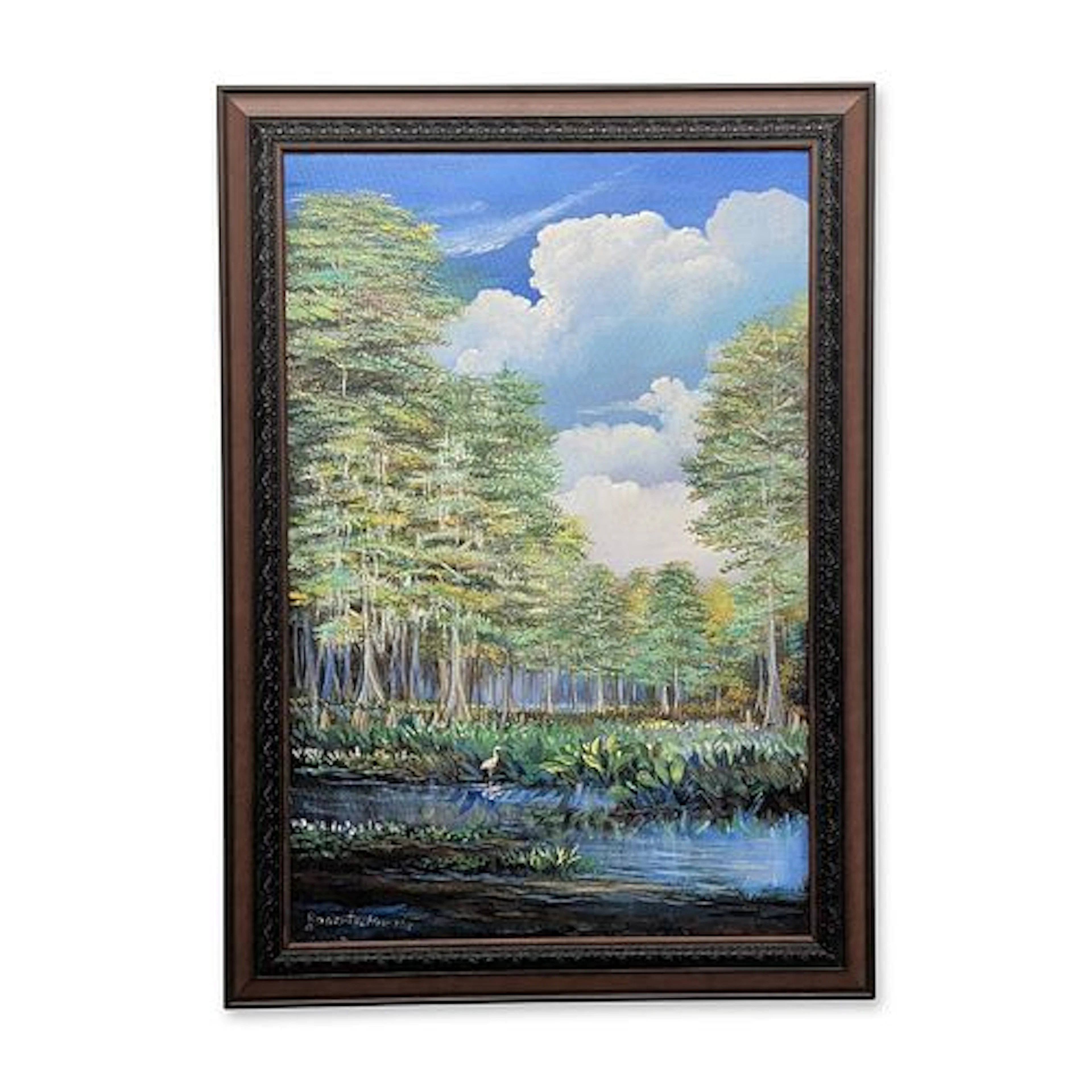
Robert Butler (American, 1943-2014) Florida Highwaymen Large Scale
€266.58
Resultados de subastas para artículos similares




A LATE CHARLES I OR EARLY CHARLES II RAISED WORK OR STUMP WORK BOUND
09/09/2026

€2,327.29
Est.: €2,333.98
¡Lleva tu subasta a coleccionistas de todo el mundo!
Publica ahora