

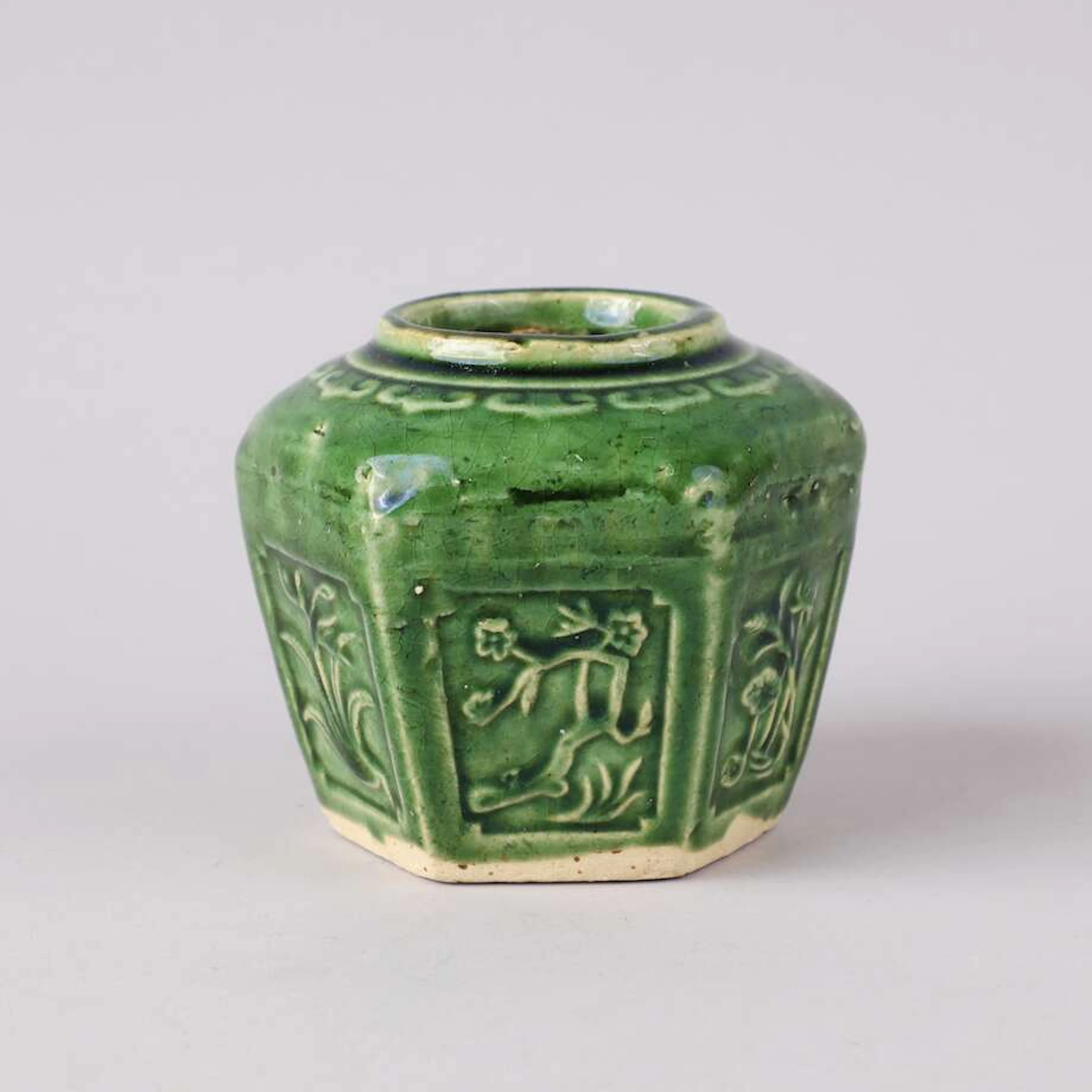



Todas las subastas / Arte Asiática / little mirror - Jade, Silvered bronze - China - Qing Dynasty (1644-1911)

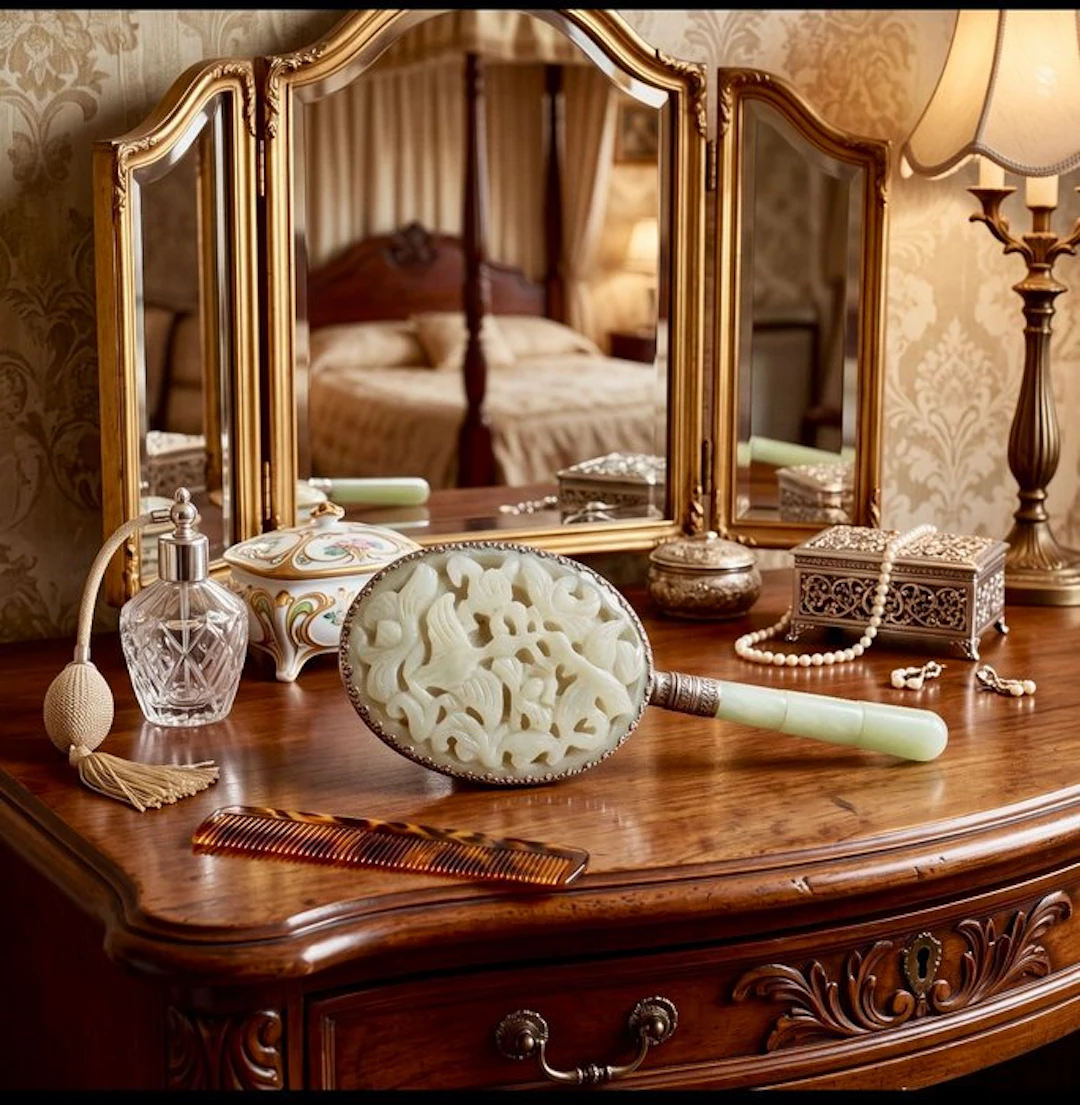
Ancient mirror made in traditional Chinese style, characterized by the use of refined, finely worked precious materials. The object is composed of three main parts: • The upper plaque (oval) is the most elaborate part, consisting of a large white or celadon jade carving finely openwork (pierced). The decorative motifs appear to depict intertwined natural elements typical of Chinese dynastic art, such as phoenixes, dragons, or flowering branches, symbolizing good fortune and nobility. The plaque is set into a beaded metal mount. The junction between the oval head and the handle is decorated with a repoussé metal ring (likely silver or silvered bronze) with raised geometric and floral motifs. The handle is straight, smooth, and polished, carved from a single piece of light green jade (jadeite or nephrite) with translucent shading ranging from milky white to apple green. In Chinese antiques, mirrors with this specific structure are almost always “vanity” objects assembled during the late Qing Dynasty for the aristocracy or for the luxury goods market. There is, however, a crucial technical peculiarity that collectors and auction houses often encounter: • Reuse of the plaque: very often, the oval white jade openwork plaque is older than the mount itself. ItOriginally was created as a belt buckle or as a hair ornament (sometimes dating back to the preceding Ming Dynasty or early Qing Dynasty). • Later assembly: toward the end of the 19th century, these valuable ancient plaques were disassembled and mounted into new silver settings to create refined hand mirrors, pairing them with handles carved from preexisting sculptures (such as dragon-shaped belt hooks or Ruyi scepters). Jade carving in China was never purely aesthetic; each motif carried a visual blessing (a rebus or homophone). The carving of this particular plaque belongs to the traditional decorative category known as "Chunshui" (Spring Water), a theme born during the Liao/Jin dynasties and handed down through the centuries: • The Phoenix (Fenghuang) or Heron among the lotuses: Within the dense pierced interlace stand out aquatic or mythological birds moving among sinuous lotus stems. • The Lotus (Lian) evokes spiritual purity, as it arises from mud yet blossoms immaculate, and is synonymous with harmony and continuous unity. • The Bird (Heron/Egret or Phoenix) symbolizes elegance, feminine grace, and resilience. • Wish for Integrity and Longevity: the combination of birds and aquatic vegetation expressed the blessing “may your career and life flow smoothly and purely like spring water.” Being a object destined for the women’s chambers of the court (the gonggui), it also symbolized marital fidelity and the purity of the noblewoman who owned it. Dimensions 16 cm x 5.8 cm x 1.5 cm and weighs 101 g Intact aside from signs of time Insured shipping with professional packaging.
Estimación:€300
Ir a la subastaVer todos los artículos deCatawikioArte Asiática
Estimación:
€300


OCT 27 | 4:00 PM
¡Lleva tu subasta a coleccionistas de todo el mundo!
Publica ahoraAl suscribirte, aceptas la política de privacidad. Cancela tu suscripción en cualquier momento.
Barnebys HQ
Brahegatan 10
BOX 5038
114 37 Stockholm
