
Todas las subastas / Etnográfica / Large Cleoniceras Ammonite with Four Associated Fossils...

Large Cleoniceras Ammonite with Four Associated Fossils...
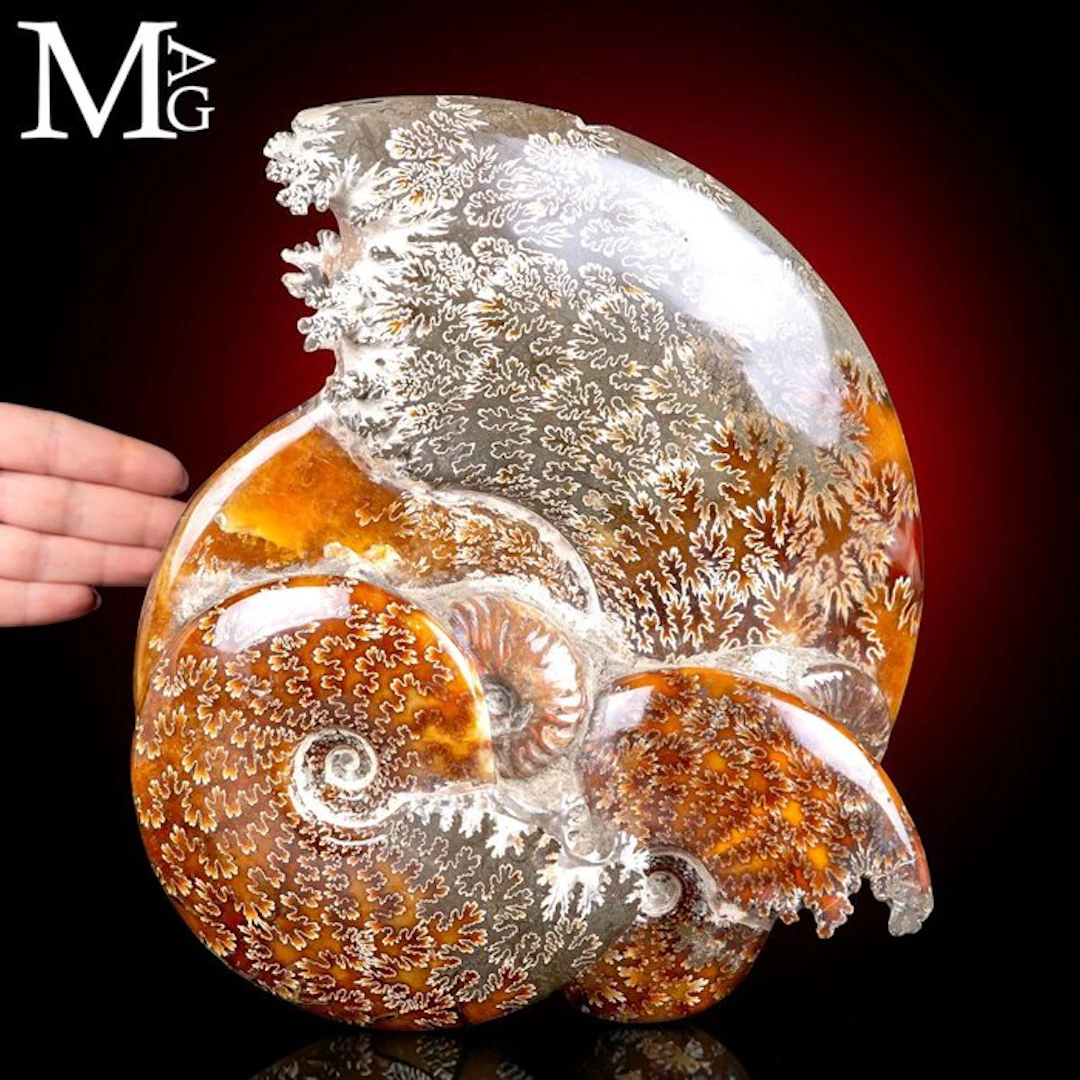
Fossil Cretaceous Ammonite — Natural Agglomerate of Cleoniceras Ammonites, Cretaceous, Madagascar. Extraordinary fossil formation from Madagascar dating to the Early Cretaceous, consisting of a large ammonite of the genus Cleoniceras and four smaller specimens of the same species. The five ammonites have been deliberately preserved in the position in which they were found. This is not an artificially assembled collection, but an authentic natural agglomerate that formed when the different organisms settled together on the seafloor of an ancient sea about 110 million years ago. The main specimen dominates the composition with its large spiral, while the four secondary ammonites emerge around it with different sizes and orientations. Their overlapping creates a complex, unique three-dimensional structure capable of documenting both the morphology of these extinct cephalopods and the particular circumstances of their deposition and fossilization. The surfaces have been carefully prepared and polished to highlight the natural colors of the fossil. Tones of smoky gray, ivory, and silver alternate with warm hues of honey, amber, caramel, and reddish brown. Particularly fascinating is the very dense pattern of the suture lines, visible on much of the shells. These fine, fern-like branchings, resembling ferns, corals, or arabesques, indicate the contact points between the internal septa and the outer shell wall. Their remarkable complexity is characteristic of evolved ammonites from the Cretaceous and contributed to making the structure more resistant. The two faces offer a completely different reading of the formation. On one side the large ammonite and the four secondary specimens are clearly recognizable; on the opposite side, the main spiral nearly covers the entire surface and is crossed by an extensive interlacing of sutures. In some natural openings, the inner septa emerge in relief, showing the three-dimensional complexity of the shell. Cleoniceras were cephalopod mollusks related to present-day nautiluses. Their shell was divided into chambers: the animal lived in the last one, while the preceding chambers helped regulate buoyancy. More than a single fossil, this formation represents an authentic paleontological testament: five ammonites kept together for millions of years in the configuration in which nature delivered them.
Estimación:€1,050
Ir a la subastaVer todos los artículos deCatawikioEtnográfica
Estimación:
€1,050
Artículos similares


Resultados de subastas para artículos similares

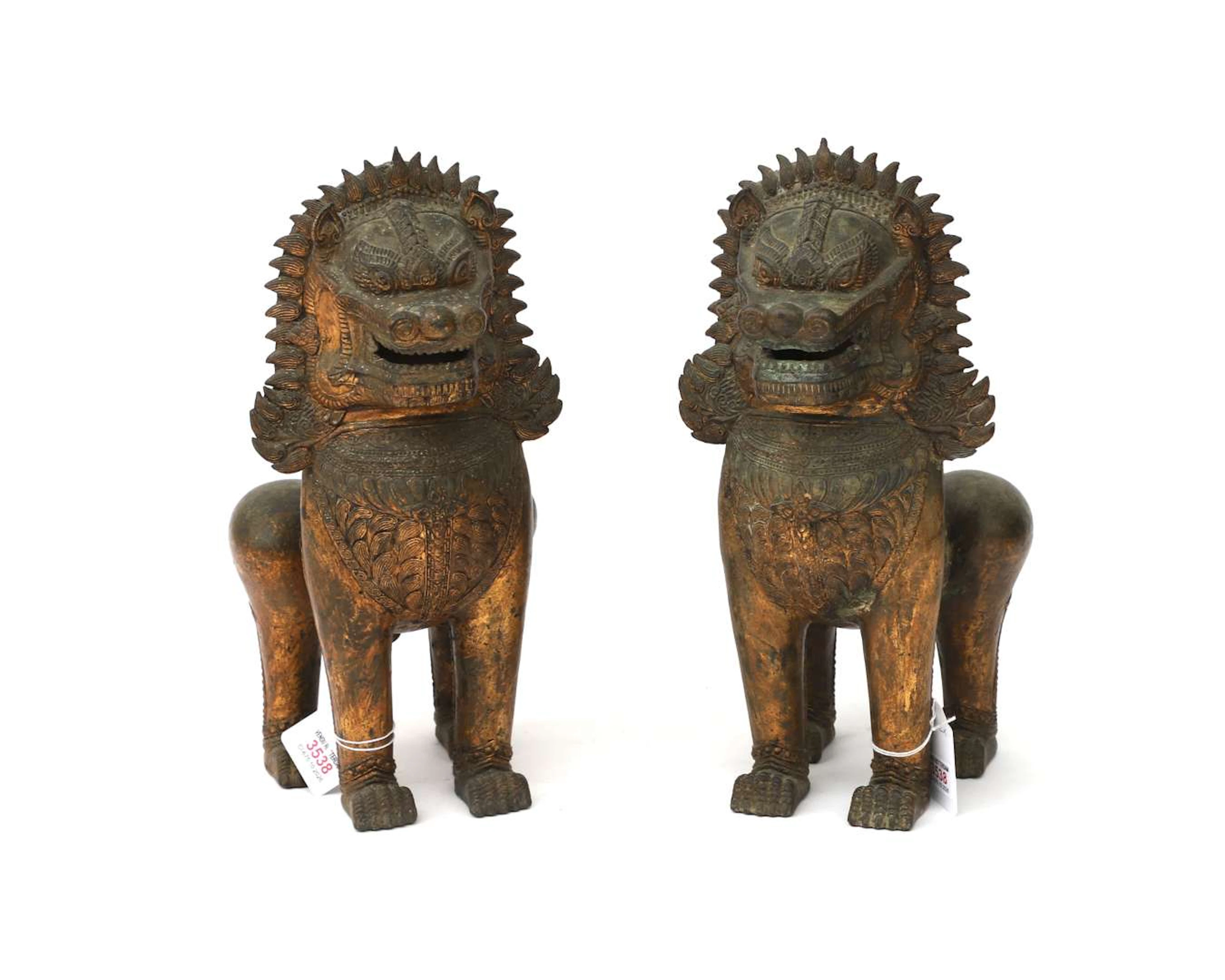
Two gilded bronze Singha temple lions, Thailand, first half of the 20th century
10/07/2026

€220
Est.: €200
¡Lleva tu subasta a coleccionistas de todo el mundo!
Publica ahora