
Todas las subastas / Arte, Pintura & obra gráfica / Josep Soler (1941) - Verano en el campo

Josep Soler (1941) - Verano en el campo
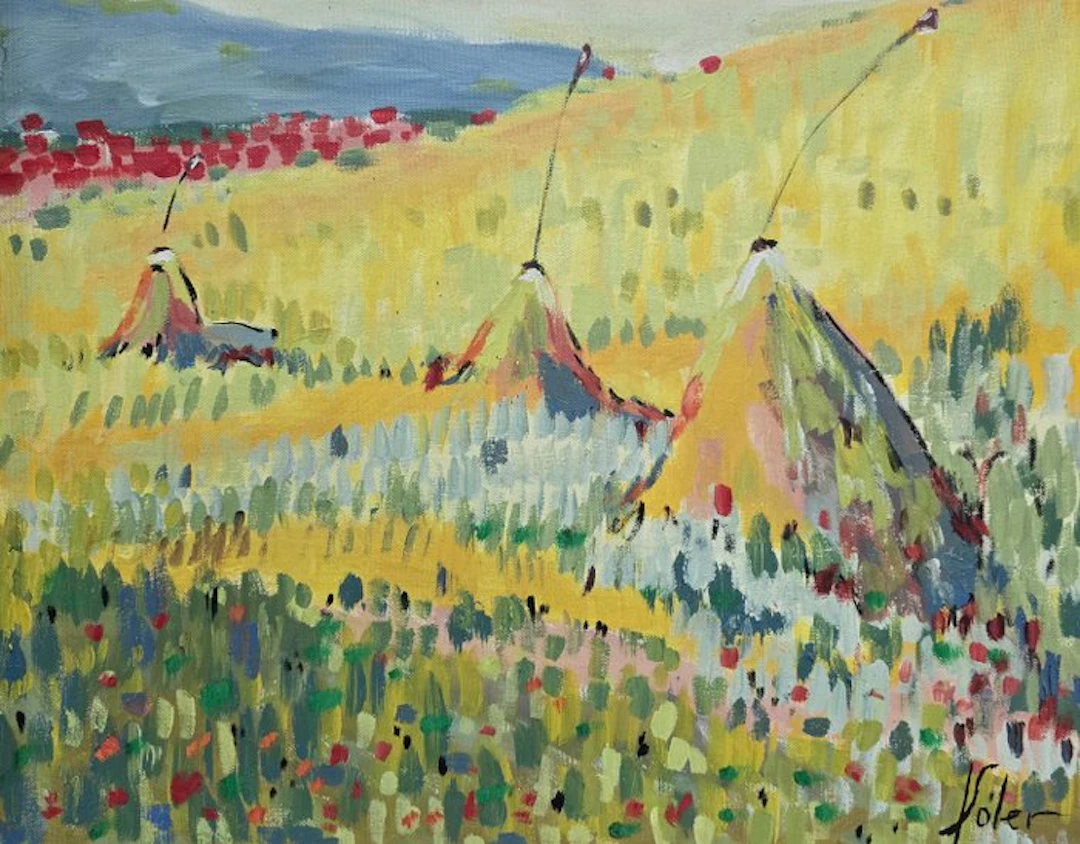
Pictura Subastas presents this magnificent artwork by Josep Soler, depicting a countryside landscape rich in color, with luminous fields, wildflowers, and three piles of hay that evoke harvest and the harmony of rural life. The painting stands out for its excellent technique and the high pictorial quality it conveys. • Framed dimensions: 56x65x5 cm. • Unframed dimensions: 45x55 cm. • Oil on canvas hand-signed by the artist at the lower right. • The piece is in good condition. • The work is sold with a beautiful frame (included in the auction as a gift). The work comes from an exclusive private collection in Girona. Important note: the photographs included are an integral part of the lot description. Digital representation in the mockup is indicative; there may be differences from the actual item in color, scale and detail. The painting will be professionally packed by an IVEX expert (https://www.instagram.com/ivex.online/), using high-quality materials to ensure its protection. The shipping price covers both the cost of professional packaging and the transportation itself. Shipping will be done by Correos, GLS or NACEX with tracking. International shipping available. This painting presents a rural landscape full of light and color, dominated by a broad expanse of yellow and green fields that unfold beneath a soft sky. In the midst of the vegetation, three large conical structures resemble hay piles raised after the harvest, each crowned with a tall pole topped by a small reddish element. The scene conveys a sense of vitality, spaciousness, and connection with rural life, turning the field into a cheerful and dynamic space. The composition is organized into successive horizontal bands representing different zones of the terrain. At the bottom lies dense vegetation, formed by dark greens, yellows, blues, whites, pinks, and numerous red accents. In the middle zone, clear plots and golden fields prevail, while the background is occupied by a reddish line of buildings or vegetation and by a chain of bluish mountains. The foreground stands out for its extraordinary wealth of colors. On a green base appear small vertical, rounded shapes evoking tall grasses, wildflowers, and scattered plants. Red, orange and pink dots seem to represent poppies and other flowers growing spontaneously among the vegetation, adding an intense sense of joy and freshness. The greens in the foreground display a wide variety of shades. Some areas are dark and deep, while others take on yellowish, bluish, or grayish tones. This diversity allows one to imagine terrain covered with different species of plants, some taller and others barely visible among the grass. The small light patches introduce luminosity and seem to receive direct light from the sky. Among the vegetation, soft lines and bands of pink, yellow and green can be distinguished, potentially corresponding to paths or natural field divisions. These routes traverse the lower part and lead the eye toward the central structures. Although not rigidly delimited, they help organize the landscape and suggest paths used during agricultural work. The most important structure appears on the right-hand side. Its large triangular form rises above the vegetation and gathers yellows, greens, pinks, grays, blues, and some dark details. The base seems to merge with the field’s plants, while the upper part culminates in a small light area from which emerges a long curved rod. Its size makes it the main focal point. The rod above this main form rises almost to the upper edge of the image. Its fine, dark line contrasts with the light colors of the distant hill. At the end there is a small reddish shape, like a ribbon, a flag, or a beacon placed to identify the pile. This detail introduces a sense of movement, as if a light breeze were crossing the field. In the central area a second conical structure rises, somewhat smaller and farther away. Its warm colors, formed by pinks, ochres, soft greens and yellows, combine with a blueish shadow that runs along one side. It is also crowned by a tall pole, whose verticality directs the gaze toward the sky. The repetition of this form establishes a rhythm and reinforces the depth of the landscape. To the left appears a third structure, even further away. Its smaller size confirms distance and helps visually expand the space. Next to it there is a bluish-gray horizontal shape that could correspond to a cart, a cover, a shed or some field-work element. The combination of both elements adds variety and prevents the scene from looking symmetrical. The three structures maintain a very balanced visual relationship. The first is large and close, the second occupies an intermediate position, and the third is near the horizon. This progression creates a diagonal that runs through the landscape from right to left and leads the eye to the background. The rods rising above them emphasize this sequence and add verticality to a primarily horizontal composition. The central field is dominated by intense yellows, soft greens and ochre tones. These hues suggest ripe crops under warm light, possibly during the summer months or at the beginning of autumn. Some lighter bands seem to indicate recently harvested areas, while the green parts could represent crops still growing or sections covered with grass. Throughout the middle zone there are numerous small shapes of green, blue and gray, distributed in irregular rows. They can be interpreted as shrubs, small plants, or remnants of vegetation marking the boundaries between plots. Their repetition creates a slow rhythm and helps distinguish the different levels of terrain from the foreground to the gentle hills in the background. In the upper left extends a line formed by reds, maroons and pinks. This band could represent a cluster of distant houses, a field of intensely colored flowers, or a succession of rural elements cut against the horizon. Its warm color contrasts with the bluish mountains behind and creates a point of interest that balances the large structure on the right. The mountains appear as broad blue and grayish forms crossing the upper left. Their soft contours convey distance and serenity. The cool color of these elevations acts as a counterpoint to the bright yellows and greens of the field. Moreover, their presence places the scene in a wide open territory surrounded by a tranquil relief. The sky occupies a narrow band at the very top and presents a clear depiction, with white, greenish and bluish tones. Its luminosity spreads over the ground and seems to envelop the entire landscape in a warm atmosphere. No well-defined clouds or signs of bad weather appear, so the scene suggests a tranquil day, possibly marked by agricultural activity and the soft field air. One of the most attractive aspects of the painting is the harmony between warm and cool colors. The yellows, reds, oranges and pinks provide energy, while the greens, blues and grays convey balance and freshness. This combination makes the landscape bright without losing depth. Each area has its own chromatic identity, yet all remain connected within the scene. The absence of visible human figures does not remove the sense of activity. The piles raised, possible paths, field divisions, and the rods placed on the structures indicate the place has been worked and organized. Human presence is perceived indirectly through their actions, as if the farmers had just left the field after a harvest day. The landscape can be interpreted as a celebration of rural labor and the abundance of the land. The golden fields evoke ripe fruits, the flowers in the foreground symbolize vitality, and the conical structures recall harvest collection and preservation. The scene unites nature and human activity without opposing them, showing a harmonious relationship between both. There is also a marked sense of freedom. The field’s breadth, the mountains’ distance, and the clear sky allow the eye to wander across the scene without obstacles. Even the elongated rods seem to point to the open space and direct attention upward. This openness conveys optimism and makes the landscape a place full of light, air, and life. Despite the abundance of colors, the scene retains a tranquil atmosphere. There is no element suggesting haste, tension, or conflict. The fields seem to rest under daylight’s clarity, and the conical shapes integrate naturally into the terrain. The result is a cheerful and serene landscape inviting contemplation of the subtle color changes present in every corner. Overall, this painting offers a luminous and expressive view of a rural landscape, composed of golden fields, abundant vegetation, wildflowers, and three large hayconic structures distributed in depth. The variety of greens, yellows, reds, pinks and blues fills the scene with vitality, while distant mountains and a clear sky provide expansiveness and serenity. The work conveys joy, abundance, and a deep harmony between human labor and nature.
Estimación:€1
Ir a la subastaVer todos los artículos deCatawikioArte, Pintura & obra gráfica
Estimación:
€1
Artículos similares


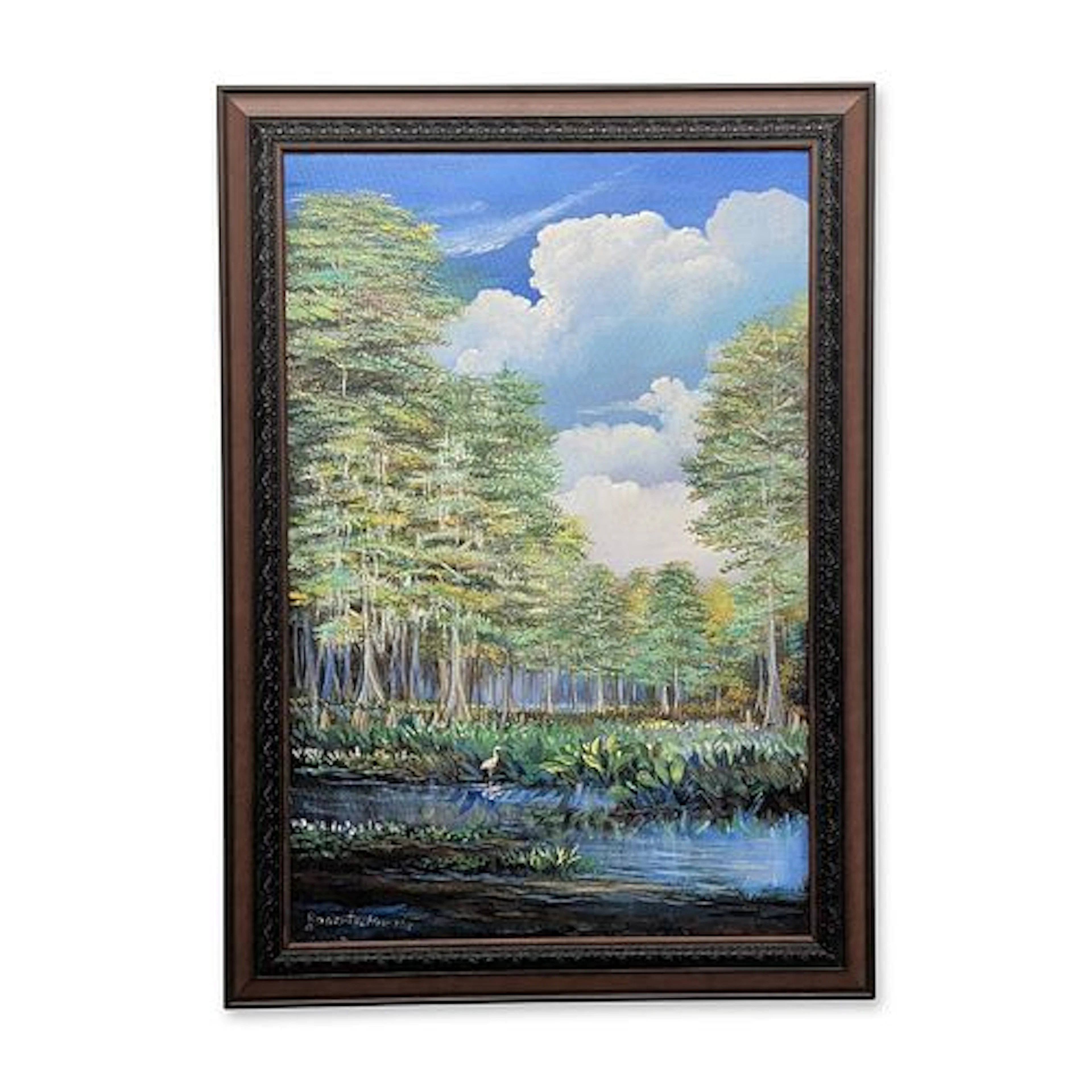
Robert Butler (American, 1943-2014) Florida Highwaymen Large Scale
€266.58
Resultados de subastas para artículos similares


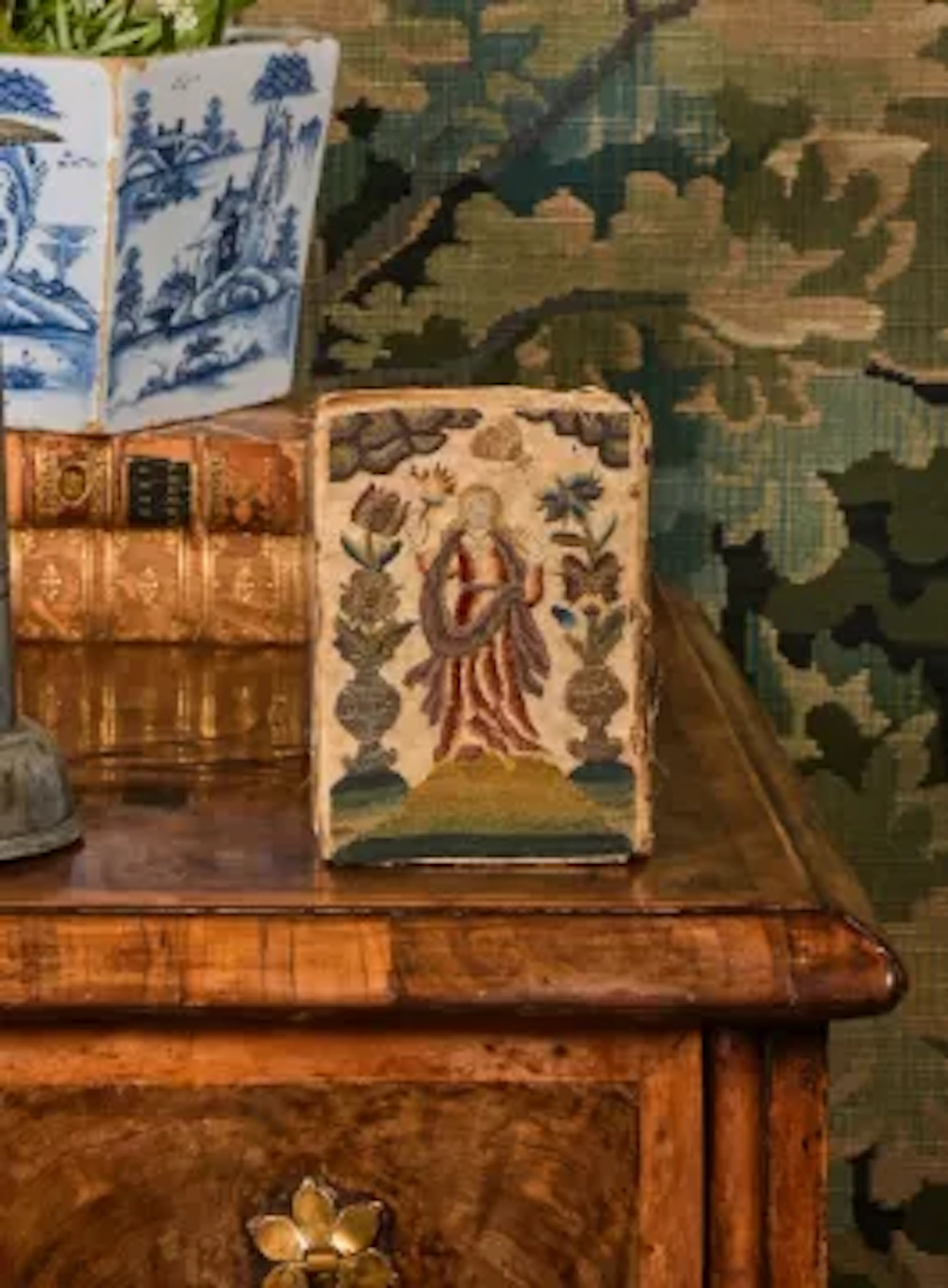
A LATE CHARLES I OR EARLY CHARLES II RAISED WORK OR STUMP WORK BOUND
09/09/2026

€2,327.29
Est.: €2,333.98
¡Lleva tu subasta a coleccionistas de todo el mundo!
Publica ahora