





Todas las subastas / Arte, Pintura & obra gráfica / JOHN BRETT (BRITISH 1831-1902), THE SOUTH BISHOP ROCK, ANTICIPATIONS
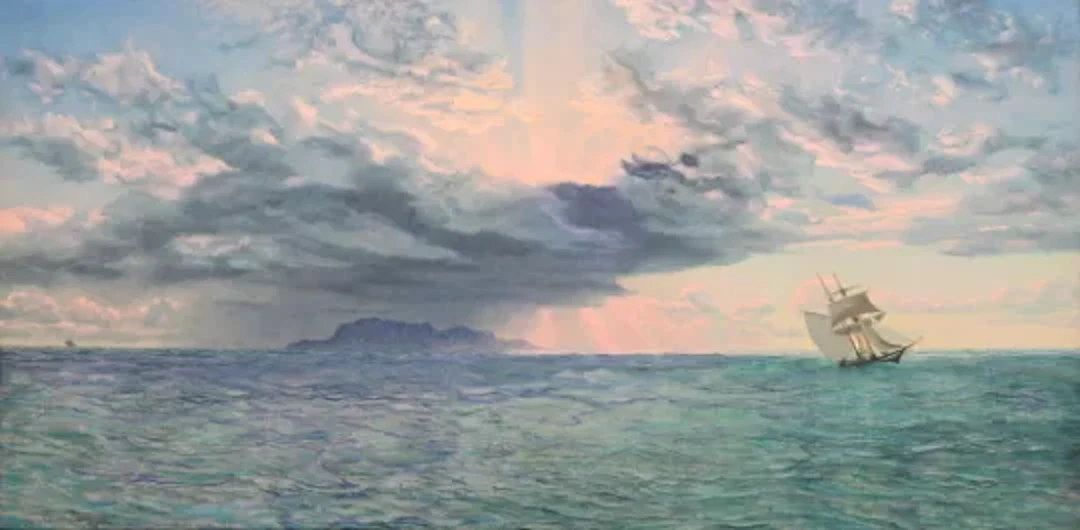
JOHN BRETT (BRITISH 1831-1902) THE SOUTH BISHOP ROCK, ANTICIPATIONS OF A WILD NIGHT Oil on canvas Signed and dated '1872' (lower left) 60.5 x 121.5cm (23¾ x 47¾in.) Provenance: Rt Hon William Kenrick MP, 1874 Mrs Edna Calvert, 1975 Agnew, 1985 Leggatt Bros, no. 22139 The Royal Exchange Gallery, 1991 Abbott and Holder Private Collection, United Kingdom Exhibited: London, Royal Academy, 1872, no. 938 Liverpool, 1872, no. 177 Glasgow Institute of Fine Arts, 1874, no. 215 Literature: The Birmingham Daily Post, 14 May 1872 The Athenaeum, 25 May 1872, p. 660 The Times, 27 May 1872, p. 5 The Art Journal, 1872, p. 276 The Spectator, 1872, p. 788 The Fortnightly Review 17, p. 703 Brett was born at Bletchingley, Surrey, on 8 Dec. 1831, was eldest son of Captain Charles Curtis Brett of the 12th lancers by his wife Ann Philbrick. Praised by Ruskin as 'one of my keenest minded friends', Brett made his name at the Royal Academy of 1858 with a work entitled The Stonebreaker, (Walker Art Gallery, Liverpool) in which the arduous task of the young boy, breaking flints, was contrasted with the beauty of Brett's native landscape. Ruskin thought that 'in some points of precision it goes beyond anything that the pre-Raphaelites have done yet'. Brett spent much of September and October 1871 with his wife and baby son at Whitesand Bay, near St David's, where he painted a number of oil sketches in his newly-adopted 7" x 14" format. These all feature one or other of the distant rocky outcrops known as the North Bishop and the South Bishop which are visible looking west from the beach. In his studio the following winter he developed two larger works from these sketches - A Summer Day, Whitesand Bay (private collection) and this picture. Both were sent into the 1872 Royal Academy, and although Whitesand Bay was apparently 'skied', The South Bishop was allocated a place on the line, where, according to Tom Taylor in The Times, it 'can be fairly appreciated. It shows the sea beginning to roughen, and the clouds to gather threateningly under rising wind'. The Illustrated London News printed a detailed description of the work: it 'gives a view over the sea towards the distant rock that is united into one mass of reddish purple behind the haze illumined by the declining sun, the rays of which, striking upwards, also redden a file of purple clouds, which, stretching overhead, herald a sudden squall. The surfaces of the waves are fretted by the freshening wind into ten thousand wavelets, and these myriad surfaces are chequered by the reddish and bluish purples reflected from the sky, the cast shadows of the waves themselves, and the emerald "local colour" revealed by reflected light'. Neither pictures were sold until 1874, when, through the agency of a mutual friend, the Birmingham architect William Martin, both were acquired from the artist by the prominent industrialist, art collector and MP William Kenrick. We are grateful to Charles Brett for his assistance in the cataloguing of this lot. Condition Report Disclaimer, JOHN BRETT (BRITISH 1831-1902), THE SOUTH BISHOP ROCK, ANTICIPATIONS OF A WILD NIGHT, JOHN BRETT (BRITISH 1831-1902) THE SOUTH BISHOP ROCK, ANTICIPATIONS OF A WILD NIGHT Oil on canvas Signed and dated '1872' (lower left) 60.5 x 121.5cm (23¾ x 47¾in.) Provenance: Rt Hon William Kenrick MP, 1874 Mrs Edna Calvert, 1975 Agnew, 1985 Leggatt Bros, no. 22139 The Royal Exchange Gallery, 1991 Abbott and Holder Private Collection, United Kingdom Exhibited: London, Royal Academy, 1872, no. 938 Liverpool, 1872, no. 177 Glasgow Institute of Fine Arts, 1874, no. 215 Literature: The Birmingham Daily Post, 14 May 1872 The Athenaeum, 25 May 1872, p. 660 The Times, 27 May 1872, p. 5 The Art Journal, 1872, p. 276 The Spectator, 1872, p. 788 The Fortnightly Review 17, p. 703 Brett was born at Bletchingley, Surrey, on 8 Dec. 1831, was eldest son of Captain Charles Curtis Brett of the 12th lancers by his wife Ann Philbrick. Praised by Ruskin as 'one of my keenest minded friends', Brett made his name at the Royal Academy of 1858 with a work entitled The Stonebreaker, (Walker Art Gallery, Liverpool) in which the arduous task of the young boy, breaking flints, was contrasted with the beauty of Brett's native landscape. Ruskin thought that 'in some points of precision it goes beyond anything that the pre-Raphaelites have done yet'. Brett spent much of September and October 1871 with his wife and baby son at Whitesand Bay, near St David's, where he painted a number of oil sketches in his newly-adopted 7" x 14" format. These all feature one or other of the distant rocky outcrops known as the North Bishop and the South Bishop which are visible looking west from the beach. In his studio the following winter he developed two larger works from these sketches - A Summer Day, Whitesand Bay (private collection) and this picture. Both were sent into the 1872 Royal Academy, and although Whitesand Bay was apparently 'skied', The South Bishop was allocated a place on the line, where, according to Tom Taylor in The Times, it 'can be fairly appreciated. It shows the sea beginning to roughen, and the clouds to gather threateningly under rising wind'. The Illustrated London News printed a detailed description of the work: it 'gives a view over the sea towards the distant rock that is united into one mass of reddish purple behind the haze illumined by the declining sun, the rays of which, striking upwards, also redden a file of purple clouds, which, stretching overhead, herald a sudden squall. The surfaces of the waves are fretted by the freshening wind into ten thousand wavelets, and these myriad surfaces are chequered by the reddish and bluish purples reflected from the sky, the cast shadows of the waves themselves, and the emerald "local colour" revealed by reflected light'. Neither pictures were sold until 1874, when, through the agency of a mutual friend, the Birmingham architect William Martin, both were acquired from the artist by the prominent industrialist, art collector and MP William Kenrick. We are grateful to Charles Brett for his assistance in the cataloguing of this lot. Provenance:, Exhibited:, Literature:, The Birmingham Daily Post, The Athenaeum, The Times, The Art Journal, The Spectator, The Fortnightly Review, The Stonebreaker, A Summer Day, Whitesand Bay, Whitesand Bay, The South Bishop, Illustrated London News, Condition Report Disclaimer
Estimación:€8,317.51
Ir a la subastaVer todos los artículos deDreweattsoArte, Pintura & obra gráfica
Estimación:
€8,317.51

RISTO VILHUNEN. "Landskap II", olja på gips, signerad och daterad
10/18/2026
€58.41
Est.: €134.66
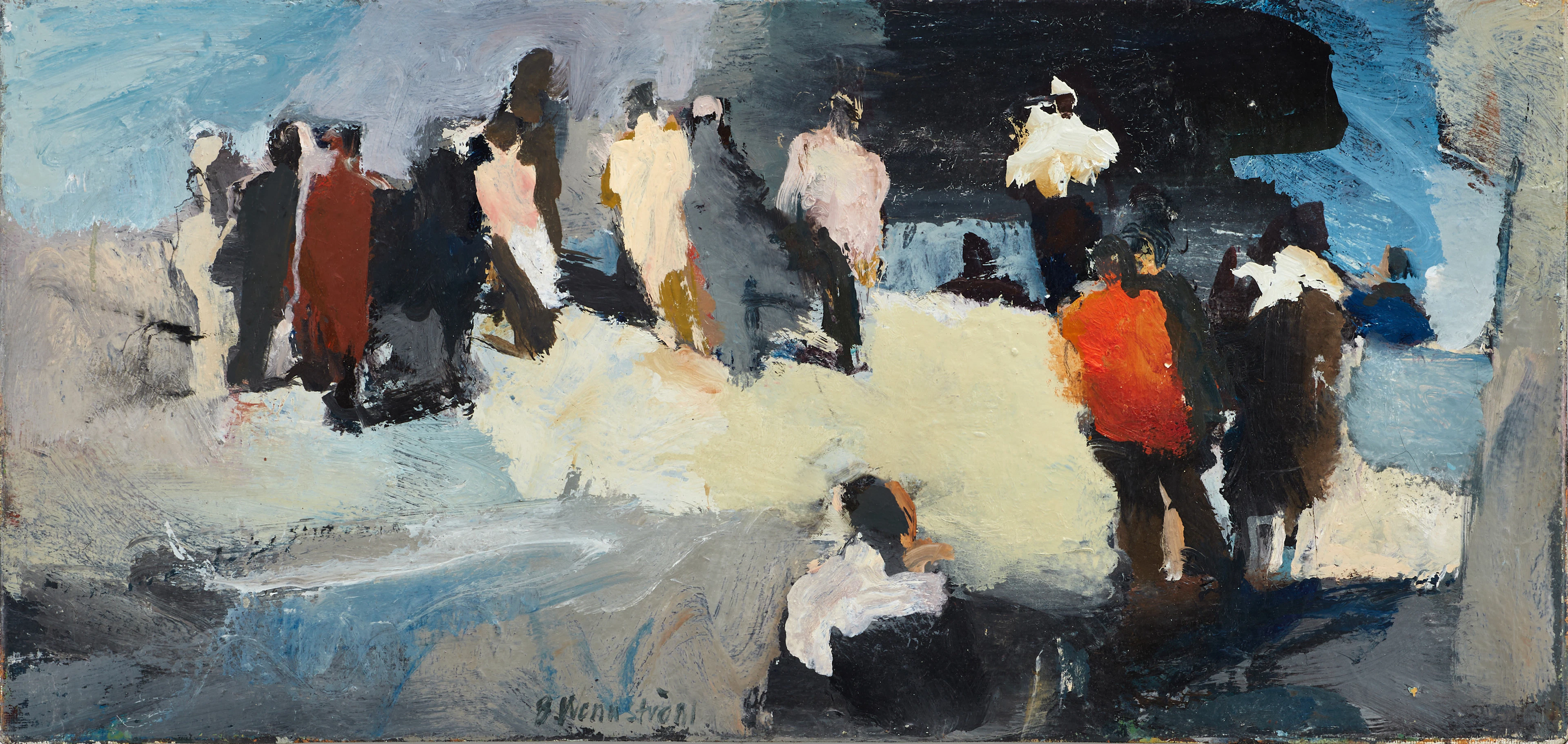
BERNDT WENNSTRÖM (född 1945), "Krönet", signerad, olja på duk.
10/18/2026
€269.62
Est.: €359.1
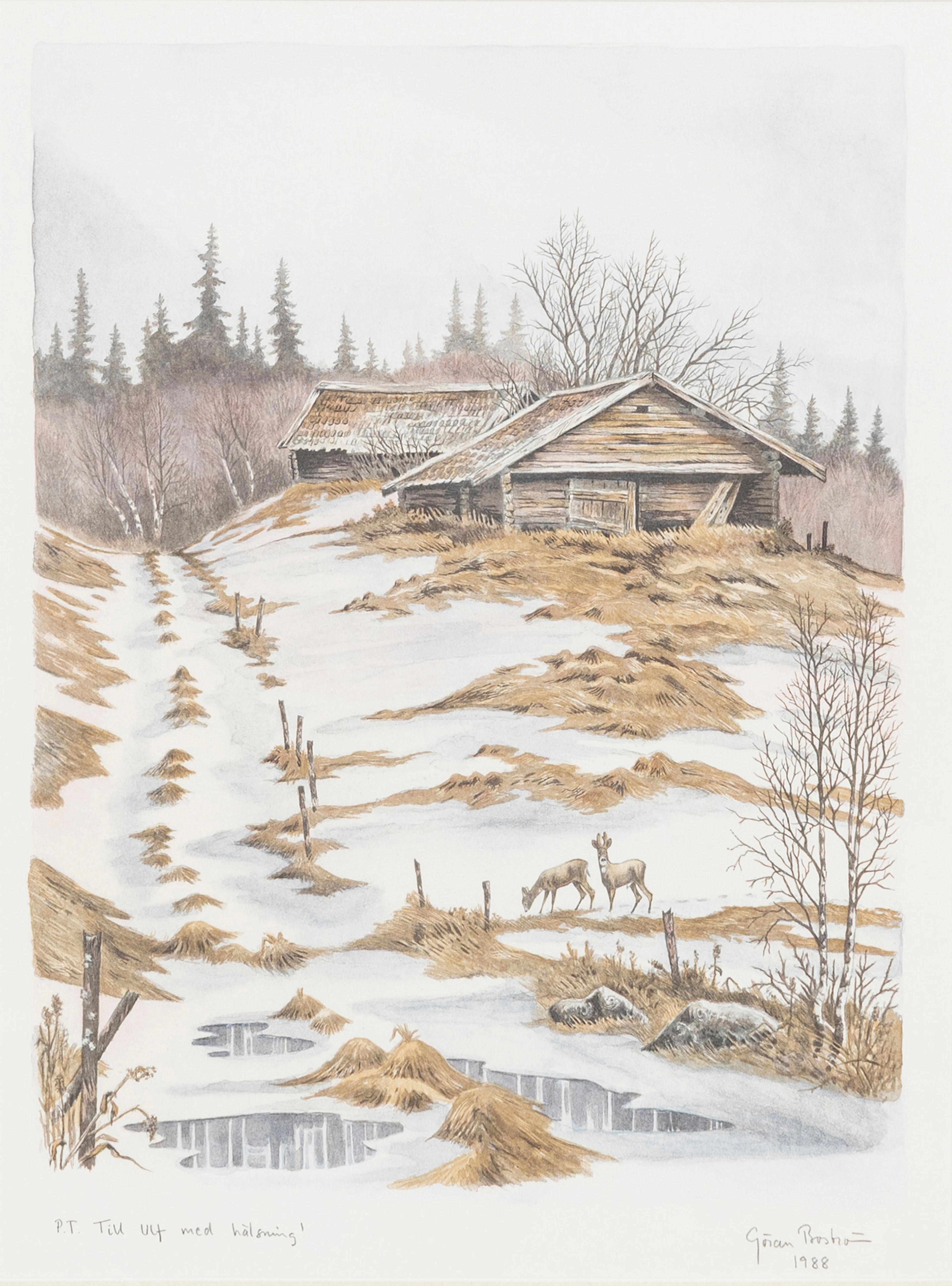
GÖRAN BOSTRÖM (1942-). Motiv med rådjur, färglitografi, signerad
10/18/2026
€35.95
Est.: €89.77

"Seguros Mutuos de Valencia y su provincia", azulejo valenciano de
10/18/2026
€70
Est.: €90


OCT 27 | 4:00 PM
¡Lleva tu subasta a coleccionistas de todo el mundo!
Publica ahoraAl suscribirte, aceptas la política de privacidad. Cancela tu suscripción en cualquier momento.
Barnebys HQ
Brahegatan 10
BOX 5038
114 37 Stockholm
