





Todas las subastas / Libros, mapas, papel & manuscritos / Johannes de Laet - De Imperio Magni Mogolis (Great Mughal Empire) 1st EDITION

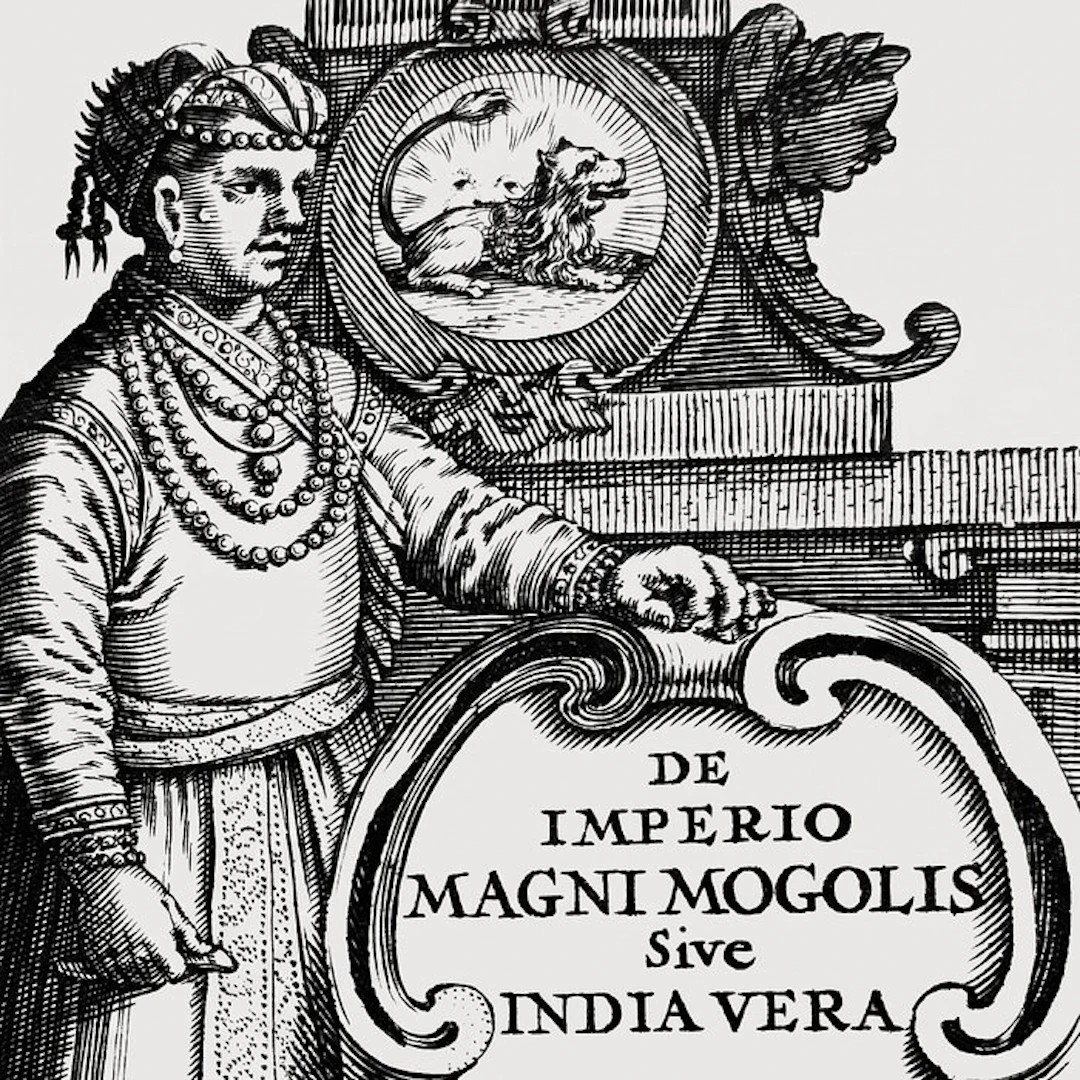
1631 FIRST EDITION ON INDIA, MUGHAL EMPIRE, GEOGRAPHY, DUTCH WEST INDIA COMPANY, HISTORY, TRAVEL, ECONOMY, RELIGION, MONGOL-TURKIC KINGDOM, ISLAM by Johannes de Laet (1581–1649), a Dutch geographer and director of the Dutch West India Company, was the first to print maps with the names Manhattan, New Amsterdam (New York City) and Massachusetts. This book became one of the most trusted guides of the 17th century regarding the Mughal Empire's geography, administration, economy, culture, ruling dynasty, and court life. It provided a highly accurate look into a wealthy region European powers were eagerly trying to establish trade with. Johannes de Laet meticulously gathered reports, journals, and translations from English, Portuguese and Dutch merchants, agents, and diplomats who had been to the Mughal court (such as Francisco Pelsaert, Pedro Teixeira, Garcia de Orta, english ambassador Thomas Roe and mercant Ralph Fitch). The Mughal Empire was the most significant Muslim-ruled Indian empire, governing nearly the entire territory of South Asia during the period of Islamic domination in India. The term "Mughal" (or "Moghul")—derived from Arabic and Persian—is a variation of the word "Mongol," used to highlight the Mongol and Turkic origins of the Timurid dynasty, which was established by the conqueror Timur also known as Tamerlane (c. 1320–1405). This book is divided into two parts, the first describing the geography of India, its climate, the character and customs of its inhabitants, its government and royal court, its money, and its military, and the second covering the history of the Mughal Empire from 1538 to 1628, with a particular focus on the emperors Akbar the Great and Jahangir. Original contemporary binding in excellent condition, virtually intact, as shown in the photos. 1631 FIRST EDITION ON INDIA & MUGHAL EMPIRE. The book opens with an attractive illustrated title page, featuring an idealized depiction of a Mughal emperor dressed in traditional regal attire, wearing heavy jewelry and a turban, and resting his hand on what appears to be a katar (Indian push dagger). Above him is a circular medallion depicting a lion or a mythical creature against the backdrop of a sun. In the book the history of the "Mughal" (or "Moghul") empire begins with Babur, a Central Asian ruler and descendant of Timur or Tamerlane and Genghis Khan, who founded the empire after winning the first battle of Panipat in 1526. Because Babur and his descendants proudly claimed this Timurid heritage to legitimize their rule, the empire became known as "Mughal" (the Persian/Arabic word for Mongol). The illustration on page 100 is dedicated to the indigo plant (Indigofera tinctoria). This plant was one of the sources of the dye indigo and was of extreme importance to Johannes de Laet and his European readers for purely economic reasons: indigo was in fact one of the most profitable and most bitterly contested trade goods originating from the Mughal Empire. In Europe, there was significant demand for products from Mughal India, particularly cotton textiles, as well as goods such as spices, peppers, silks, saltpetre for munitions, and indigo. The Mughal Empire was a powerful early modern Islamic empire that ruled most of South Asia from 1526 to 1857. TITLE: De Imperio magni Mogolis sive India vera Commentarius. E varijs auctoribus congestus (A Commentary on the Empire of the Great Mogul, or True India. Compiled from various authors). AUTHORS: Joannes or Johannes de Laet (Latinized as Ioannes Latius) PUBLISHER: ex Officina Elzeviriana (Bonaventura Elzevier and Abraham I Elzevier publishing house) DATE: 1631, printed in Leiden, text in Latin DESCRIPTION: in 24° size height 112 x width 63 mm or 4.4 by 2.5 inches. [12] preliminary unnumbered sheets, 299 pages, [23] unnumbered sheets for index. Contemporary stiff parchment binding, virtually intact, rare defects or spots. The binding is in excellent condition, very solid and fully functional, free of tears, losses, cracks, or structural damage, as shown in the photos. Beautiful engraved title page, dozens of woodcut initials, several head and tail pieces. Pages, text and illustrations are intact, rare small stains or oxidations. COMPLETE 1631 FIRST EDITION ON INDIA & MUGHAL EMPIRE. AS HIGHLIGHTED IN THE INITIAL TABLE OF CONTENTS (SEE SIXTH & SEVENTH PHOTO), THIS BOOK DEVELOPS 11 ESSENTIAL CHAPTERS: Chapter I (Pag. 1): Indiæ sive Imperii Magni Mogolis Topographica descriptio – A detailed topographical description of India and the physical boundaries of the Great Mughal Empire. Chapter II (Pag. 92): Cæli solique ratio – An examination of the climate (heavens) and the nature of the soil, outlining the environmental conditions of the subcontinent. Chapter III (Pag. 107): De Incolarum ingenio, moribus, institutis & superstitionibus – An ethnographic overview covering the character, customs, social institutions, religious beliefs and superstitions of the native inhabitants. Chapter IV (Pag. 127): De Regimine politico & civili – An analysis of the political system and civil administration governing the empire. Chapter V (Pag. 131): De Aula regia & Arce Agrensi – A description of the royal court and the specific fort/citadel of Agra, which was a primary seat of Mughal power. Chapter VI (Pag. 141): De Moneta & numerandi modo & ponderibus – An economic guide detailing the local currency (money), the methods of counting, and the systems of weights and measures. Chapter VII (Pag. 142): De Opulentia huius principis – An account of the immense personal wealth and financial resources of the Mughal prince/emperor. Chapter VIII (Pag. 151): De militaribus copiis huius principis – A breakdown of the military forces and armies commanded by the ruler. Chapter IX (Pag. 157): De Indiæ Regibus – A historical chronology of the kings, derived from; A)Oral or written accounts from the indigenous people. B)Garcia de Orta's history of spices. C)Pedro Teixeira's Persian records. Chapter X (Pag. 172): Fragmentum Historiæ Indicæ... – A fragment of Indian history that the author notes was received from his Dutch countrymen and translated by him from Dutch into Latin. Conclusion (Pag. 292): Conclusio huius Commentarii, & judicium de imperio Mogolis – The final commentary and the author's concluding assessment or judgment regarding the state of the Mughal Empire. LITERATURE & REFERENCES: World Cat OCLC n°13935115 & 1203406389; USTC n°1028010; Willems, Les Elzevier 354; Short Title Catalogue Netherlands n°832850365; London, United Kingdom, British Library Shelfmark: 1295.a.5; Paris, France, Bibliothèque nationale de France Shelfmark: FB-12029; Amsterdam, Netherlands, Rijksmuseum Shelfmark: BC KF 1 C 16; Rostock, Germany, Universitätsbibliothek Shelfmark: Qd-3916; Liège, Belgium, Bibliothèque universitaire Shelfmark: XXI.038.014 [16°]; The Empire of the Great Mogul, translated by J.S. Hoyland with S.N. Bannerjee. Taraporevela, Bombay, 1928. Reissued Munshiram Manoharlal, New Delhi, 1975. Shipping: via UPS, protected, INSURED and fully tracked package. Estimated time for Europe 3-5 working days. Shipping within one working day. You can combine shipping if you purchases several items from us, saving money and time.
Estimación:€550
Ir a la subastaVer todos los artículos deCatawikioLibros, mapas, papel & manuscritos
Estimación:
€550
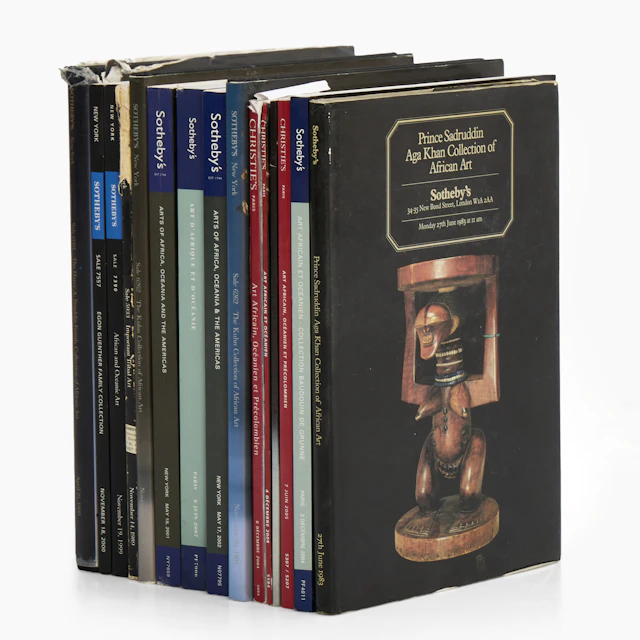
AUKTIONSKATALOGER, 15 st mellan 1983-2009, Sotheby's - Chtisties.
10/23/2026
€49.52
Est.: €89.94
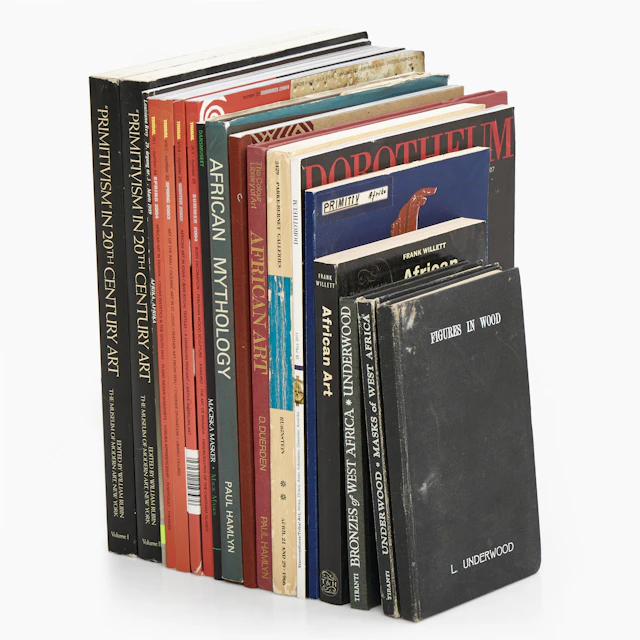
BÖCKER, TIDSKRIFTER, diverse om primitivism och afrikansk konst, bl.a. Tribal.
10/23/2026
€49.43
Est.: €89.94

ANDREAS LUNDBERG (född 1973). "TRUST", monogramsignerad samt numrerad
10/23/2026
€89.88
Est.: €179.55


OCT 27 | 4:00 PM
¡Lleva tu subasta a coleccionistas de todo el mundo!
Publica ahoraAl suscribirte, aceptas la política de privacidad. Cancela tu suscripción en cualquier momento.
Barnebys HQ
Brahegatan 10
BOX 5038
114 37 Stockholm
