



Todas las subastas / Arte, Pintura & obra gráfica / Joaquim Mir i Trinxet (1873-1940), Circle of - La Montagne aux mille couleurs

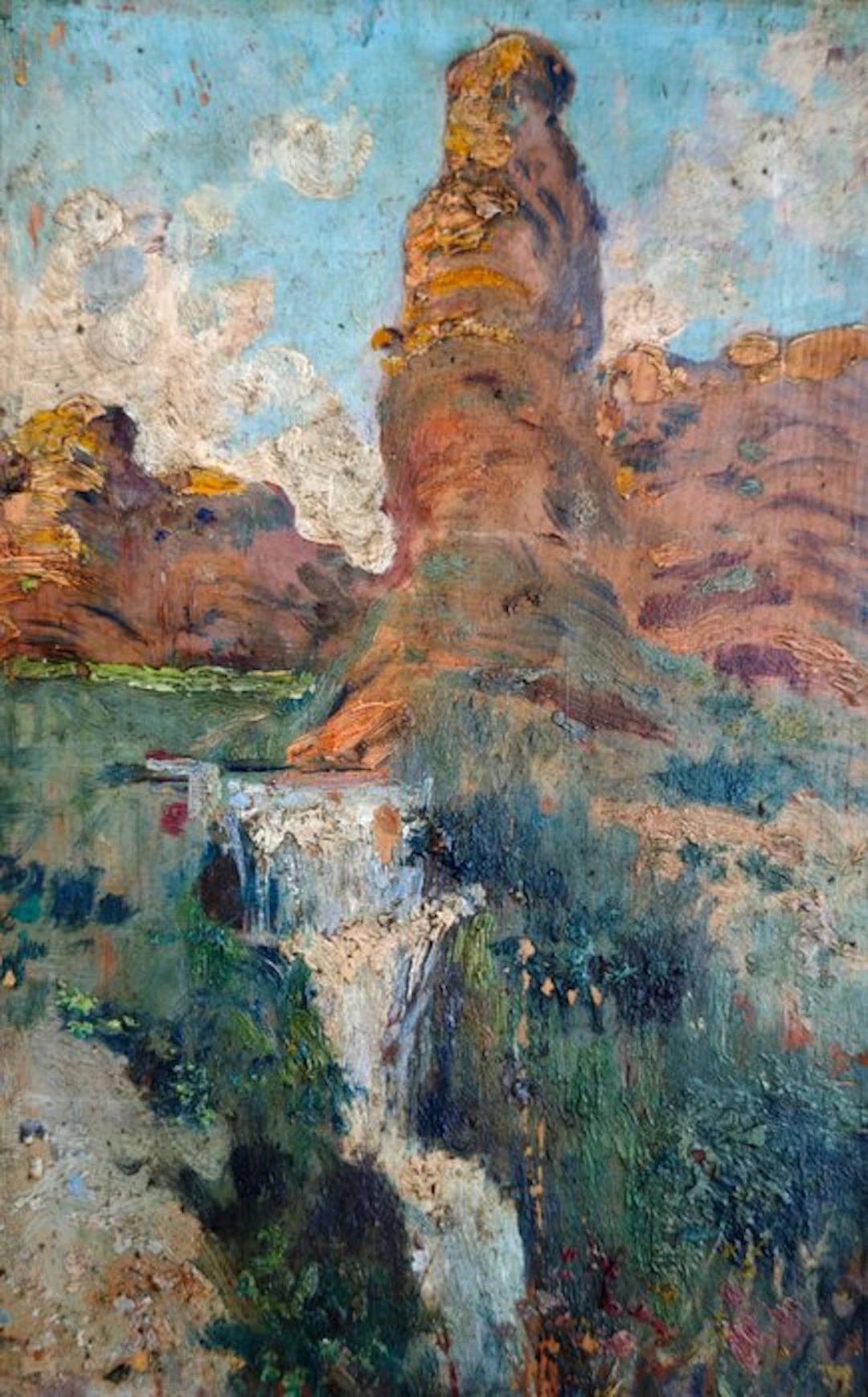
Circle of Joaquim Mir i Trinxet (1873-1940) Mountain landscape with waterfall – Oil Interesting oil painting, catalogued within the circle of Joaquim Mir i Trinxet (1873-1940), one of the great representatives of Catalan Modernism and a fundamental figure in the renewal of Spanish landscape painting in the late 19th and early 20th centuries. The work represents a mountain landscape of extraordinary chromatic richness, led by a vertical-profile rock formation, surrounded by vegetation and crossed in the foreground by a small watercourse or waterfall. It is especially notable for its vigorous, impasto brushwork, the intensity of its chromatic contrasts, and the expressive interpretation of nature, features that allow interesting stylistic connections with Joaquim Mir’s landscape production. The composition shows remarkable freedom of execution, in which color takes a fundamental leading role and natural elements are built through painterly patches of great expressive force. The work is prudently catalogued within the circle of the artist, not ruling out the possibility that it could be a creation by Joaquim Mir himself, a hypothesis that would require deeper comparative and documentary study to be confirmed. On the back there are handwritten notes of difficult legibility, whose interpretation could provide additional information about the painting’s history, provenance, or identification. The artist: Joaquim Mir i Trinxet (1873-1940) Joaquim Mir i Trinxet, born in Barcelona in 1873 and died in 1940, was one of the most original and innovative painters of Catalan Modernism. His artistic career developed during a period of profound transformations in European painting, marked by the overcoming of academic naturalism and the emergence of new forms of interpretation of the landscape. Mir began his artistic training in Barcelona and was linked to the Catalan Modernist milieu of the late 19th century. He was part of the group known as the Colla del Safrà, composed of young artists who shared a special interest in plein air painting, chromatic experimentation, and the representation of natural light. Among the painters associated with this artistic milieu were Isidre Nonell, Ricard Canals, and other representatives of the Catalan pictorial renewal. During his early years, Mir developed a naturalist and luminous painting, progressively interested in the expressive possibilities of color. One of the fundamental periods of his career was his stay in Mallorca, especially in the Serra de Tramuntana region. Mallorcan landscapes had a deep influence on his pictorial language. The mountains, ravines, rock formations, and Mediterranean vegetation became protagonists of compositions characterized by extraordinary chromatic intensity. During this period, Mir developed an ever freer and more personal interpretation of nature. Natural shapes began to lose part of their traditional definition, while color gained increasing autonomy. Subsequently, the artist continued developing his landscape production in different Catalan towns, including Tarragona, Reus, Mont-roig del Camp, and Vilanova i la Geltrú. His work constitutes one of the most singular contributions to the evolution of Spanish landscape painting. Although he generally kept a recognizable reference to nature, his treatment of color and painting material reached in certain compositions a freedom close to abstraction. Today, Joaquim Mir is regarded as an essential figure of Catalan Modernism and the development of Spanish landscape painting in the early 20th century. His works are preserved in important public and private collections and have been the subject of exhibitions and specialized studies. Description of the work The composition represents a mountainous landscape dominated by a large rock formation located in the central area. This elevation presents a vertical and irregular profile, with a structure reminiscent of certain geological features characteristic of Mediterranean landscapes. The rock is depicted through an intense combination of ochres, browns, reddish tones, and purplish hues. The artist uses a brushstroke with considerable material charge, through which he constructs the different planes and reliefs of the rocky surface. In the upper zone, the formation is set against a sky of intense turquoise blue. The clouds are represented by white and grayish patches, executed with loose brushstrokes that convey movement and luminosity. On either side of the central formation, other rock masses of lesser height are distinguished. These structures present warm tones, especially ochres, earth tones, and reddish hues, contrasting with the blue of the sky. In the middle area there is a wide expanse of greenish-blue vegetation. The plant forms are represented by fragmented brushstrokes, without overly precise delimitation. The artist seems mainly interested in capturing the chromatic relationships between the different zones of the landscape. In the foreground a small watercourse descends between the rocks, forming a waterfall. The water is represented by white, blue, and grayish patches, which contrast with the deep greens of the vegetation. The waterfall introduces an element of movement within the composition. The vertical and diagonal brushstrokes suggest the water’s descent over the rocky surfaces. Along the margins there are small patches of reddish, greenish, and yellowish tones, which contribute to enriching the pictorial texture. The composition presents a great chromatic density, especially in the lower zones, where color patches overlap and generate a vibrant surface. The result is an expressive interpretation of nature, in which landscape observation combines with notable painterly freedom. Relation to Joaquim Mir’s painting One of the most interesting aspects of the work is its stylistic proximity to certain landscapes developed by Joaquim Mir during the early decades of the 20th century. Mir stood out for an interpretation of nature based on chromatic intensity, freedom of brushwork, and the importance of painterly matter. In numerous compositions, especially in his mountain landscapes, the artist transformed natural forms through patches of color that acquired autonomous prominence. Rocks, ravines, waterfalls, and vegetation were recurring motifs in different stages of his career. The present work shows affinities with this language through the use of an impasted brushstroke, the intensity of blues and greens, and the representation of mountains by chromatic masses. In particular, the contrast between turquoise sky and warm-toned rock formations stands out. This chromatic opposition is a common resource in Modernist landscape painting and finds interesting parallels with certain Mir compositions. Also significant is the way vegetation is represented, through small color patches that suggest natural shapes without detailing them minutely. The waterfall is resolved with a rapid and expressive execution, giving greater importance to the sensation of movement than to the detailed description of the water. These characteristics justify studying the work within the artistic milieu of Joaquim Mir. Cataloguing as a circle of Joaquim Mir must be understood as a proposed attribution based on stylistic features. It does not constitute authentication of authorship nor does it permit confirming a direct relationship with the painter’s workshop or personal circle. Nevertheless, due to the particularities of its execution and affinities with certain landscapes of the artist, an eventual attribution to Joaquim Mir himself cannot be ruled out, always subject to specialized material, comparative, and documentary examination. Catalan Modernism and the renewal of landscape painting At the end of the 19th century, Catalan painting underwent a profound transformation. Influence from Impressionism, Symbolism, and new European trends contributed to changing the way nature was represented. Modernist artists began to give increasing importance to the individual perception of the landscape. Light, color, and atmosphere took on a fundamental leading role. Within this context, Joaquim Mir developed a particularly personal interpretation of the Mediterranean landscape. His painting was characterized by a progressive liberation of color from naturalistic representation. The mountains, ravines, and forests ceased to be mere descriptive motifs and became chromatic structures of great intensity. Brushwork acquired an autonomous expressive function. Pictorial matter began to play a fundamental role in constructing forms. This work participates in that sensibility through an interpretation of the landscape based on color superimposition and free execution. Nature appears represented as a set of visual sensations, rather than as a strict topographic description. Influence of Post-Impressionism The work also shows affinities with certain approaches of European Post-Impressionism. During the last decades of the 19th century, numerous artists began to go beyond the strictly optical principles of Impressionism. Color ceased to be used solely as a descriptive instrument and gained expressive dimension. Brushwork became more visible and natural forms began to be interpreted through chromatic structures. In this composition, the rocks are built with overlapping brushstrokes of ochres, browns, and reddish tones. The vegetation is represented by small green, blue, and yellowish patches. The water is resolved through contrasts of whites and dark tones. The intensity of these chromatic relations contributes to a subjective interpretation of the landscape. The artist does not seem interested in reproducing every natural element in detail, but in conveying the visual impression of the whole. This feature brings the work closer to certain manifestations of Post-Impressionism and Catalan Modernism. Color as a fundamental element Color richness is one of the main attractions of painting. The artist uses a palette dominated by turquoise blues, deep greens, ochres, reddish tones, and luminous whites. The sky presents an intense blue color, establishing a marked contrast with the mountains. The rock formations are built through a succession of warm patches. Ochres and browns combine with small reddish and violet accents. The vegetation presents a range of greens oscillating between dark tones and bluish hues. The water introduces luminosity through the use of whites and light grays. The color distribution creates a visual journey that begins in the sky, continues to the central rocky formation, and descends toward the waterfall. The result is a composition of great visual intensity. Color does not merely fulfill a descriptive function, but directly participates in the expressive construction of the landscape. Brushwork and painterly matter The execution of the work presents a vigorous brushstroke, with visible accumulations of painterly matter. The rocks are represented with strokes in different directions, contributing to suggest the irregularity of their surfaces. In certain areas there are impastos that provide relief and texture. The vegetation is treated with fragmented brushstrokes, with color superpositions that generate a vibrant surface. The water is produced with a more fluid execution, with light patches suggesting its movement. The sky combines relatively uniform color zones with freer brushwork in the clouds. This diversity of procedures allows differentiation of the different elements of the landscape. Painterly matter thus acquires fundamental importance. The painting is not limited to representing natural forms, but uses texture as an expressive resource. This treatment constitutes one of the aspects that allow stylistic relation of the work to Catalan Modernist landscape painting. Composition and spatial depth The painting presents a vertical composition dominated by the large central rock formation. This structure acts as the main axis of the landscape. The lateral mountains help frame the scene and reinforce the sense of depth. The middle zone is occupied by a stretch of vegetation that provides a transition between the rocks and the foreground. The waterfall introduces a downward visual path. The artist uses alternation between warm and cool zones to differentiate the different planes. The bluish tones of the sky contrast with the ochres of the mountains. The greens of the vegetation introduce a chromatic transition toward the bottom. The arrangement of these elements creates a dynamic and balanced composition. The verticality of the rock formation and the waterfall contributes to reinforcing the sense of movement. Annotations on the reverse According to the information provided, the work presents handwritten annotations on the back, difficult to read. These inscriptions constitute an element of documentary interest, as they could be related to an old identification, a collection reference, an attribution, or some inventory note. However, their content could not be established with certainty. For this reason, no specific meaning is attributed to these annotations. Studying them through detailed photographs could provide additional information about the painting’s history. Frame and presentation The work is framed in a wide gilded frame, of traditional character. The frame includes an extensive inner burgundy area surrounding the painting and helping to highlight its chromatic richness. A fine gold molding directly delineates the composition. The contrast between the burgundy of the frame, the gold of the molding, and the intense blues and greens of the landscape creates a presentation of notable decorative appeal. Signs of wear and small alterations in the finish of the frame are evident. The frame is offered as a gift to the buyer, with no commercial value, and is not an integral part of the work. Its possible defects will not be a basis for claims. It is recommended to carefully examine all photographs, which form an integral part of the description, to adequately assess the conservation status of the painting and its framing. Artistic interest The painting constitutes an interesting landscape composition stylistically related to the artistic milieu of Joaquim Mir i Trinxet, one of the central figures of Catalan Modernism. Its interest lies especially in the chromatic intensity, the impasted brushwork, and the expressive representation of the rock formations and water. The composition shows affinities with the renewal of Catalan landscape painting at the beginning of the 20th century, characterized by a progressive freedom in the use of color and painterly matter. The possible relationship with the circle of Joaquim Mir and the existence of handwritten notes on the reverse are aspects of interest for future research. The work is especially attractive for collectors of Catalan painting, Modernism, Post-Impressionism, Spanish landscape painting, and early 20th-century painting. Characteristics Proposed attribution: Circle of Joaquim Mir i Trinxet (1873-1940). Authorship: not confirmed. The possibility of a work by the artist himself is not ruled out, pending specialized study. Technique: oil. Genre: landscape. Subject: mountainous landscape with rock formation and waterfall. Style: Catalan Modernism, with Post-Impressionist affinities. Proposed stylistic chronology: early decades of the 20th century. Inscriptions: handwritten notes on the reverse, difficult to read. Presentation: framed. Shipping The work will be carefully and professionally packed, using appropriate protective materials to ensure its safety during transport. Outbound shipments outside the European Union may be subject to taxes, duties, import charges, clearance fees, and customs procedures. These possible costs will be the sole responsibility of the buyer and are not included in the hammer price or shipping costs. Additionally, shipments to islands, insular territories, or remote or hard-to-access areas may incur extra charges. Any surcharge applied by the transport company for this reason shall be borne by the buyer. It is recommended to pre-check customs conditions and possible transport surcharges applicable to the destination.
Estimación:€1,200
Ir a la subastaVer todos los artículos deCatawikioArte, Pintura & obra gráfica
Estimación:
€1,200
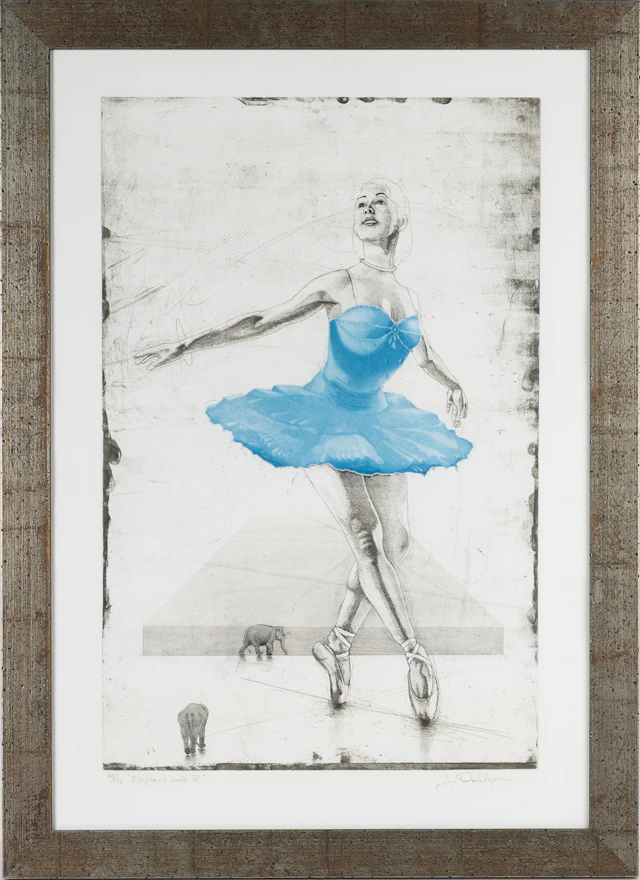
JAN DAHLGREN (FÖDD 1954). "Elephant walk III", etsning.
10/23/2026
€26.96
Est.: €89.94
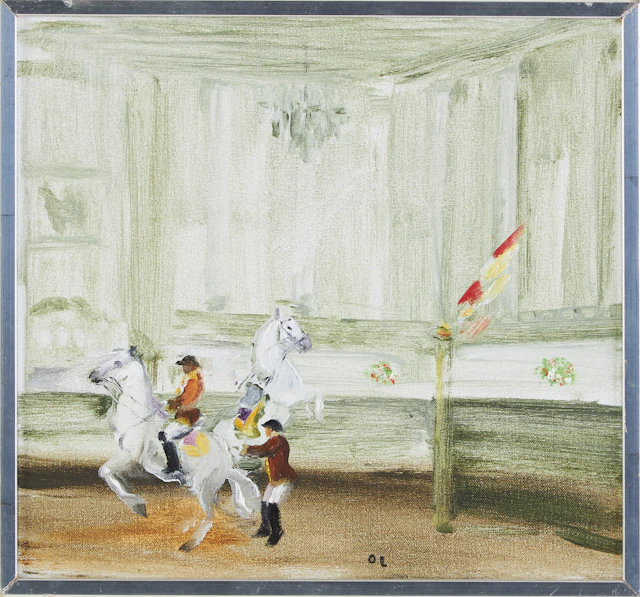
OLLE LINDGREN (FÖDD 1930). "Detroit" och interiör med hästar, (2 )
10/23/2026
€89.88
Est.: €179.89
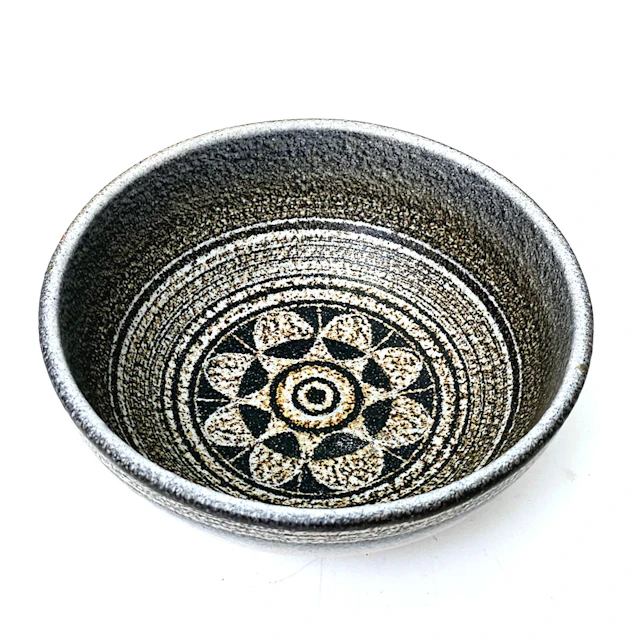
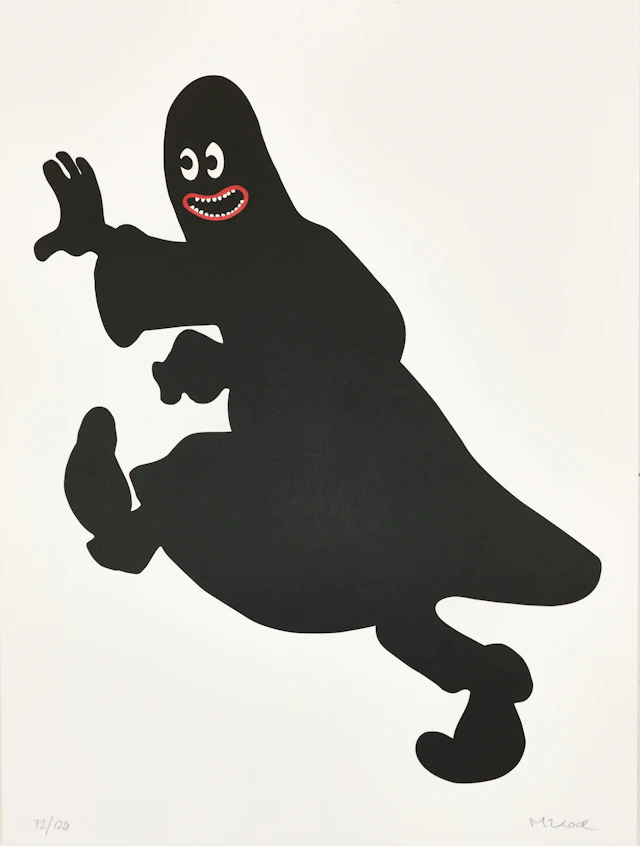
MAKODE LINDE (Sverige, född 1981). "Phantom Blot", signerad och numrerad
10/23/2026
€131.31
Est.: €224.87


OCT 27 | 4:00 PM
¡Lleva tu subasta a coleccionistas de todo el mundo!
Publica ahoraAl suscribirte, aceptas la política de privacidad. Cancela tu suscripción en cualquier momento.
Barnebys HQ
Brahegatan 10
BOX 5038
114 37 Stockholm
