


Todas las subastas / Arte Antiguo / ISHIKAWA TORAJI • Tawamure (戯れ) — “Playing” • 1934 •...

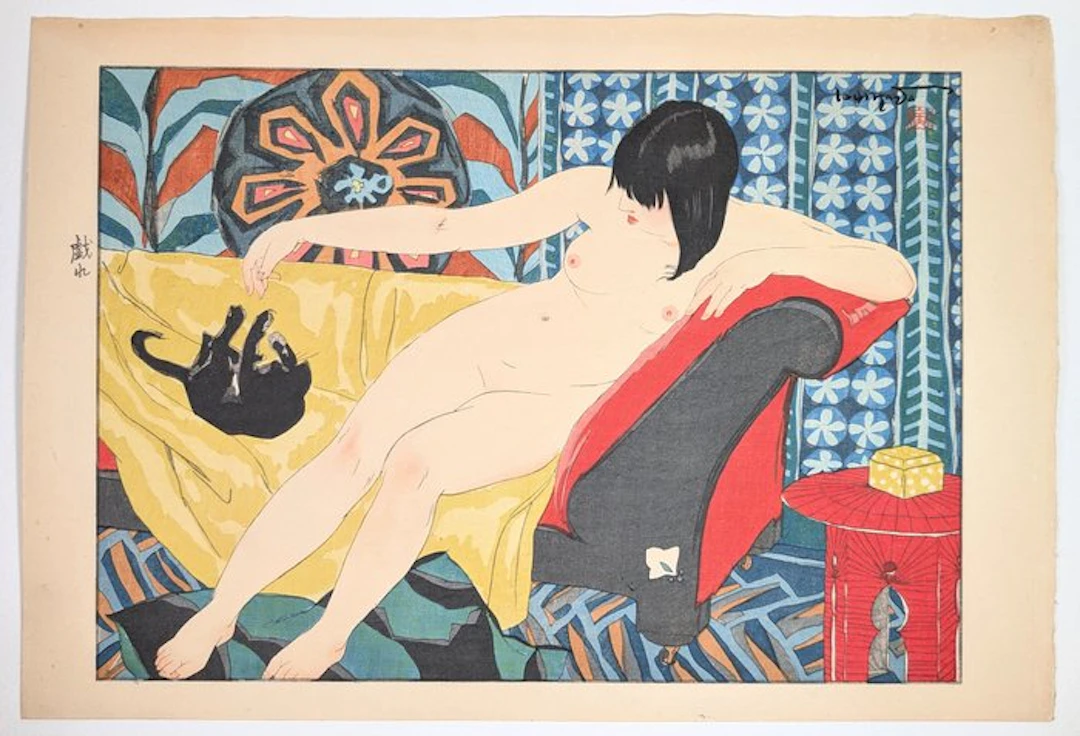
** Tawamure holds Ishikawa Toraji’s auction record. An impression sold at Christie’s in November 2017 for $5,250 against an estimate of $2,000–2,400 — more than double the high estimate, and, on the published auction databases, the highest price recorded for the artist in any medium over the past two decades.! ** Artist: Ishikawa Toraji (石川寅治, 1875–1964) Title: Tawamure (戯れ) — “Playing” / “Frolic”. Series: Associated with Rajo Jūshu (裸女十種) — Ten Types of Female Nudes. Date: c. 1934–36. Auction cataloguing gives 1934; the Art Institute of Chicago dates its impression 1936. Technique: Woodblock print (mokuhanga), polychrome, on Japanese washi Format: Ōban yoko-e — sheet 27 × 40 cm (10⅝ × 15⅞ in.) Signature: Signed Ishikawa in Roman script, upper right, with the artist’s red seal Tora (寅) Publisher: Self-published by the artist (Ryoku-usō Gashitsu, 緑雨荘画室), as with the Rajo Jūshu designs Institutional holding: An impression of this design is in the Art Institute of Chicago (acc. no. 1998.424) CONDITION Excellent. A crisp, fresh impression with the keyblock line sharp throughout — visible in the drawn contour of the shoulder and hip, the fine hatching of the cat’s belly fur, and the ruled radiating lines of the red lacquer table. The colours are strong and unfaded. Paper Excellent. Full margins on all four sides, unbacked, with the deckle edge visible. The sheet is supple and structurally sound, with no tears, holes, losses, creasing or repair. Light warm toning to the margins consistent with a ninety-year-old sheet, slightly more pronounced at the upper right. The Nude Who Isn’t Looking at You A woman lies stretched full-length across a divan of charcoal grey and vermillion, one arm reaching back behind her, two fingers extended toward a black cat that has rolled onto its back in the folds of a yellow throw. The cat’s paws are in the air. It is batting at her hand, or at nothing at all. Her head is turned away and her face is more than half hidden behind the hard forward-falling edge of her bob — the cropped, sharply angled cut that in 1930s Tokyo identified a woman instantly as a moga, a “modern girl.” The interior around her is a small catalogue of interwar Japanese cosmopolitanism. The wall is papered in indigo, printed with white five-petal blossoms in staggered bands. A large cushion behind her carries a slate, coral and orange medallion that could as easily be Viennese as Japanese. At the right stands a red lacquer table with a spotted yellow box on it; underfoot, a rug of interlocking blue, ochre and green geometry. Toraji sets all of this flat and hard-edged, then models the single figure in soft gradation — the Western-trained painter’s nude laid into a decorative field handled entirely in the logic of the woodblock. Ten Types of Female Nudes — and the Censors Between 1934 and 1935 Toraji designed and self-published Rajo Jūshu — ten large woodblock nudes issued under his own imprint, Ryoku-usō Gashitsu, cut by the master carver Yamagishi Kazue (山岸主計) and printed by Urushibara Eijirō and Matsuzaki Keizaburō. It is his single sustained venture into printmaking and, by a wide margin, the work for which he is remembered. Where his contemporaries confined the nude to the bath-house and the dressing table, Toraji put his women across the whole of the modern domestic interior — reading, dancing, lounging, standing at a mirror, playing with a pet. The furniture is Western, the patterning is Art Deco, and the hair is cut short. These are not bijin-ga beauties in the inherited sense; they are women of a specific decade, in a Japan where the “modern girl” had become a genuine public argument about how women might live. The authorities responded accordingly: the series drew official attention as obscene, and designs were confiscated. The censorship is now inseparable from the series’ reputation, and it explains its shape in the market — impressions survive unevenly, and complete sets are seldom seen intact. Individual designs are held by the Art Institute of Chicago, the British Museum, the Minneapolis Institute of Art and the National Gallery of Victoria, and the full set of ten was donated to the MAK in Vienna, where it was exhibited in 2017. A point of genuine interest, and one we would rather state plainly than gloss over. The canonical ten designs of Rajo Jūshu — Asa, Seishun, Suzu no Ne, Odori, Yokushitsu nite, Ikoi, Dokusho, Kuroi Neko, Tsurezure and Buryū Inko — are all large sheets of roughly 48 × 37 cm, carrying a mica ground, the carver’s seal in the lower left margin and the artist’s Ishikawa Toraji watermark. Tawamure is not one of them. It is a substantially smaller ōban yoko-e, and the ten are already complete without it. Auction houses and Japanese dealers routinely catalogue this design under the Rajo Jūshu heading, and on subject and idiom it plainly belongs to the same moment — the same divan, the same wallpaper, the same black cat that appears in Kuroi Neko. The Art Institute of Chicago, however, records its impression (27.5 × 40.9 cm, essentially identical to this sheet) as a standalone work dated 1936 — that is, after the ten were issued and after the trouble with the censors had begun. Ishikawa Toraji — The Painter Who Made One Great Set of Prints Toraji was, first and last, a yōga painter — a practitioner of the Western-style painting that took root in Japan after the Meiji Restoration. Born in Kōchi on Shikoku, he came to Tokyo at sixteen to study under Koyama Shōtarō at the Fudōsha, and in 1901 helped found the Taiheiyō Gakai (Pacific Western-style Art Society) alongside Yoshida Hiroshi and Mitsutani Kunishirō. He travelled through the United States and Europe from 1902 to 1904, returning saturated in European practice, and exhibited steadily thereafter at the Bunten, Teiten and Nitten, later serving as a juror and auditor. His print work is confined almost entirely to the mid-1930s, and to this one body of nudes. It is the point at which his two trainings meet: the anatomical modelling and compositional freedom of the oil painter, translated by Yamagishi Kazue’s cutting into the flat colour and hard contour of the woodblock. In 1953 he received the Imperial Award of the Japan Art Academy. He turned to harbours, ships and coastal landscapes in his later years and painted until shortly before his death in Tokyo in 1964, aged eighty-nine — but it is the nudes that collectors pursue.
Estimación:€2,000
Ir a la subastaVer todos los artículos deCatawikioArte Antiguo
Estimación:
€2,000
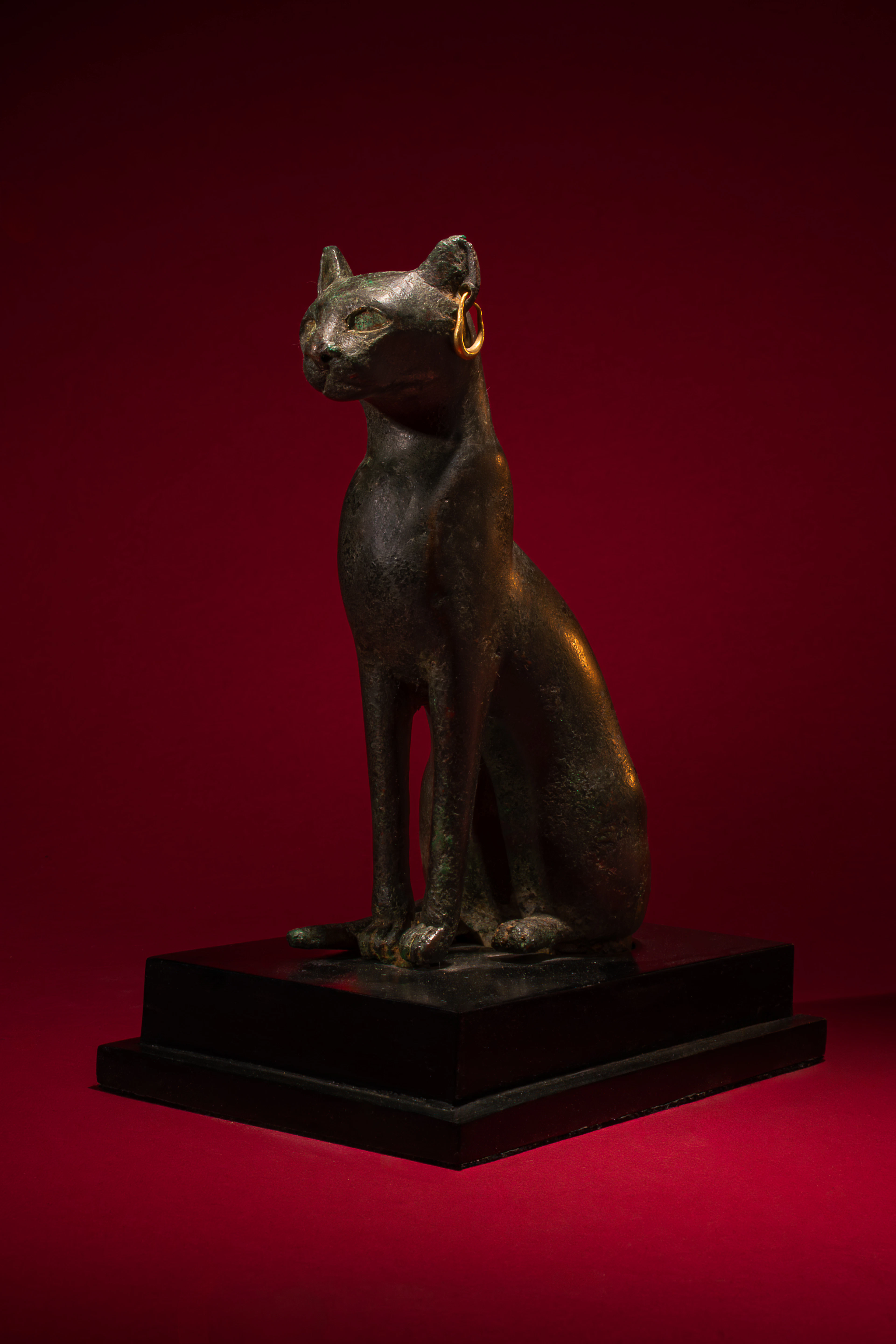
RARE EGYPTIAN BRONZE CAT STATUETTE WITH GOLD EARRINGS - LARGE SIZE
06/21/2026

€25,506.4
Est.: €23,095.64
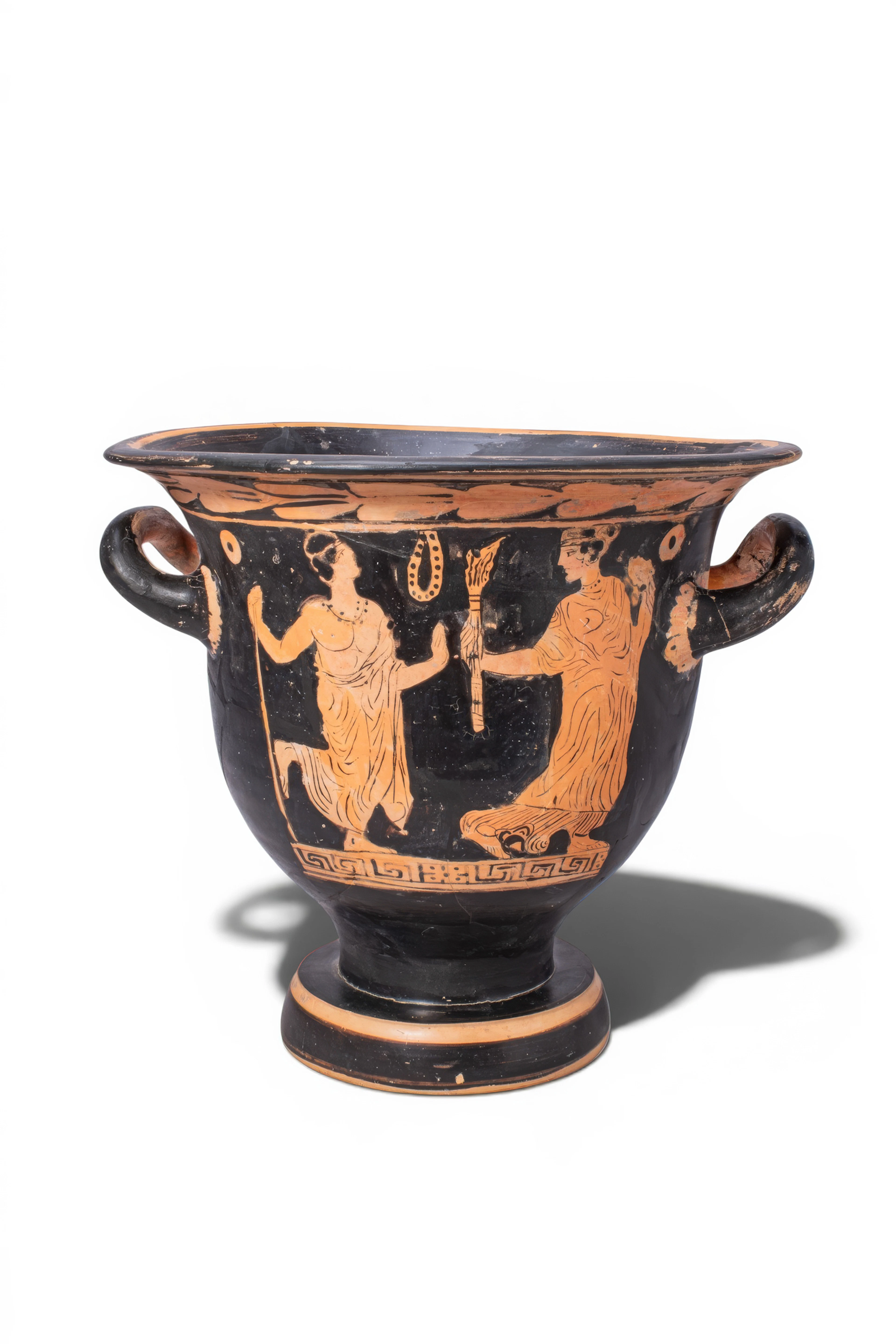
APULIAN RED-FIGURE BELL KRATER WITH KOMASTOS AND MAENAD - TL TESTED
06/21/2026
€3,014.39
Est.: €2,304.2
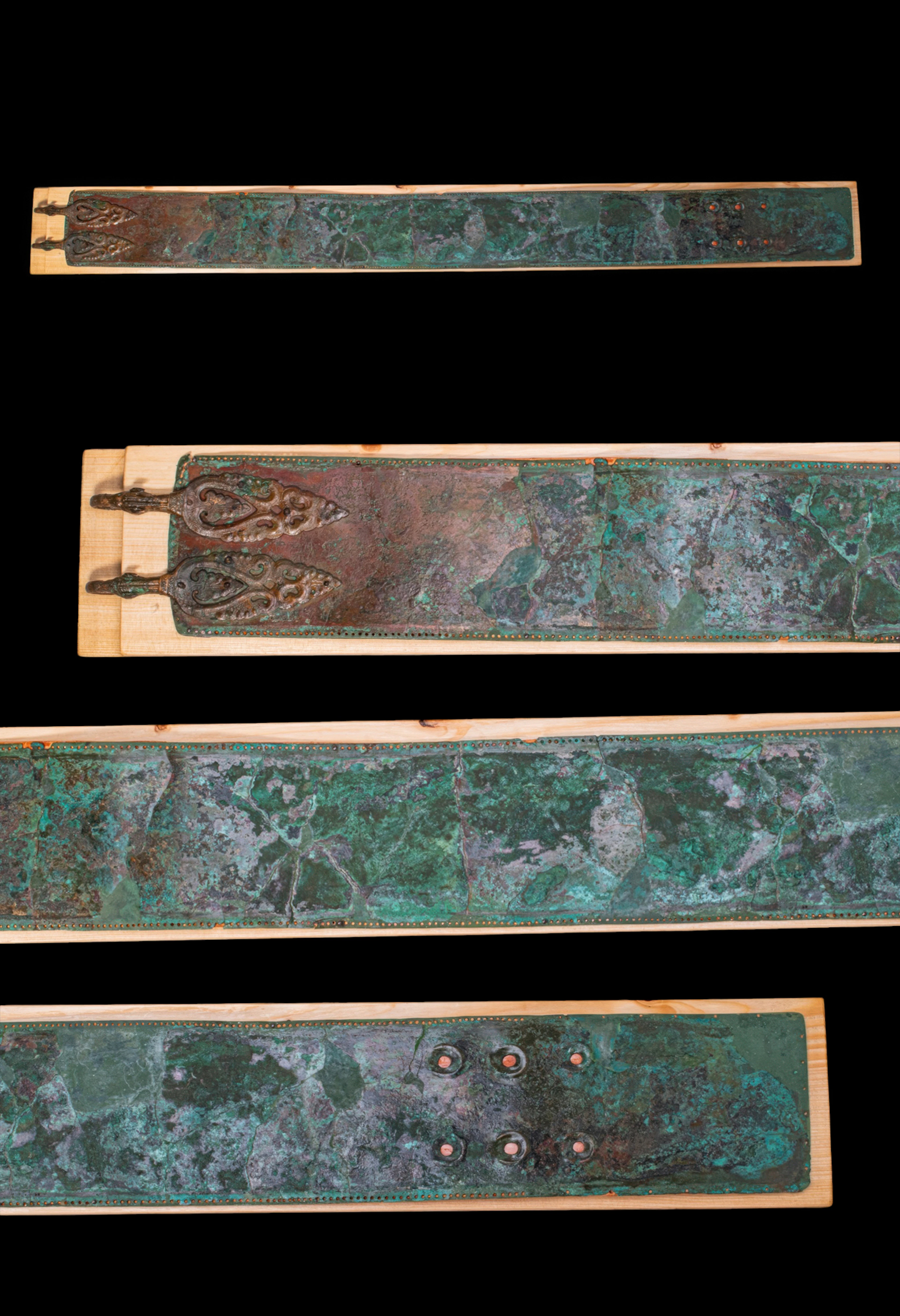

OCT 27 | 4:00 PM
¡Lleva tu subasta a coleccionistas de todo el mundo!
Publica ahoraAl suscribirte, aceptas la política de privacidad. Cancela tu suscripción en cualquier momento.
Barnebys HQ
Brahegatan 10
BOX 5038
114 37 Stockholm
