




Todas las subastas / Esculturas / Head of Athena Lemnian, after Phidias – Italian School – 21st century

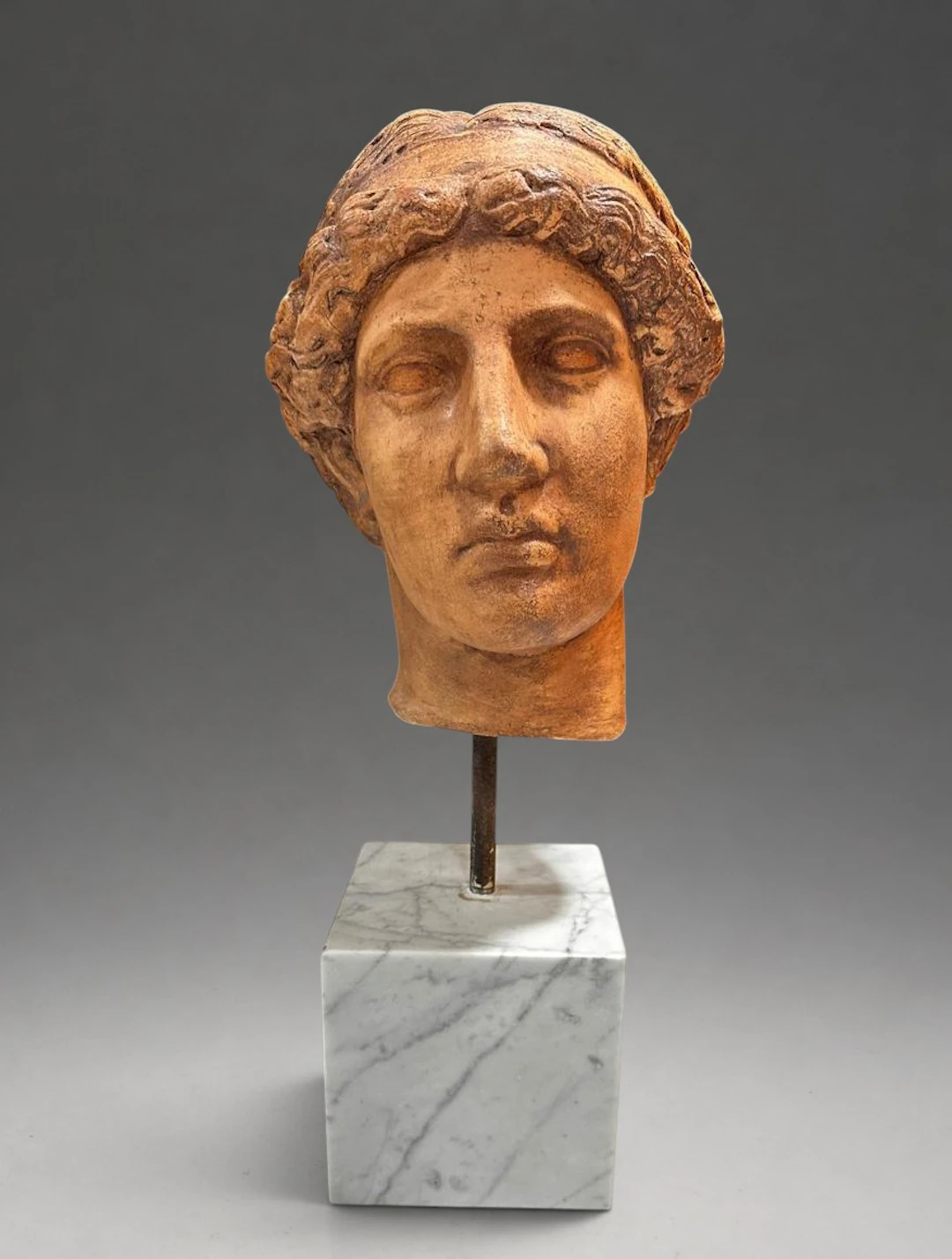
Descriptio A terracotta sculpted head of Athena Lemnia, made in Italy during the 21st century, based on the famous model by Phidias. The original bronze statue, created between 451 and 448 BC for the Athenians living as cleruchies or colonists on the island of Lemnos, is known only through a few Roman marble replicas. These include the head found near Rione Terra in Pozzuoli, and the Palagi Head in Bologna, considered by specialists to be one of the most faithful versions of the original. The statue stood on an open-air pedestal on the Acropolis of Athens and was considered one of Phidias’s masterpieces. The goddess adopts a pensive and absorbed pose, with soft cheeks, a harmonious nose, and a beauty praised by numerous ancient writers, including Lucian of Samosata, who hailed it as an exceptional work by Phidias, and Pausanias, who highlighted the Lemnian Athena among his creations. Her hairstyle is characterized by symmetrical locks that convey a sense of volume and softness. The original depiction shows the goddess with the aegis across her torso, interpreted in the reference text as a symbol of peace, and a peplos whose folds produce striking chiaroscuro effects. Her face, turned to the right, balances the position of her raised left arm. Athena, identified by the Romans with Minerva, was one of the principal deities of Greek mythology. Considered Zeus’s favorite daughter, she was born, according to mythological tradition, fully grown from the god’s head, armed with a shield decorated with the head of Medusa, a spear, an aegis, and a helmet. She was also known as Pallas and Parthenos, “the virgin.” Athens housed her main temple, the Parthenon, and, according to legend, came under her protection after the goddess offered the olive tree to its inhabitants. Athena was the protector of Greek cities, the arts, crafts, and, in later mythology, wisdom. She was also a goddess of war and one of the Greeks’ main defenders during the Trojan War. After the fall of the city, the Greeks desecrated the sacred nature of an altar to the goddess where the prophetess Cassandra had taken refuge. As punishment, Athena asked Poseidon to unleash a storm that destroyed a large part of the Greek fleet on their return voyage. She was also the protector of agriculture and women’s work, especially spinning and weaving, while tradition credits her with giving men the invention of the plow, the flute, and various other arts. Phidias, a Greek sculptor born in Athens around 490 BC and probably dying around 430 BC, was one of the leading artists of the Classical period, renowned for his mastery of different materials and techniques, from sculpture in the round to bas-relief. Among his early creations was a chryselephantine statue of Athena for Pellene,The bronze Apollo Parnopios, the Athena Promachos, and the Athena Lemnian. Around 450 BC, he created the monumental chryselephantine statue of Zeus for the Temple of Olympia, considered one of the Seven Wonders of the Ancient World. These works have disappeared and are known mainly through fragmentary copies and iconographic reproductions on coins and gems. In 447 BC, Pericles summoned him to collaborate with the architects Ictinus and Callicrates on the reconstruction of the Parthenon, which had been destroyed by the Persians. The construction of the temple lasted approximately ten years, during which Phidias produced a significant body of sculpture, including forty statues for the two pediments, ninety-two metopes, and a 159-meter-long frieze depicting the Panathenaic processions. He also designed the chryselephantine statue of Athena Parthenos intended for the interior of the temple, which was later destroyed and is known only through small-scale copies and surviving representations. His career was cut short around 432 BC when he was accused of stealing some of the gold intended for the statue of Athena Parthenos. According to the account in the original record, the accusation was unjust, and he may have died a few years later, either in prison or in exile. This piece comes with a base described as being of museum quality. Dimensions: 50 cm high with base, 18 cm wide, and 22 cm deep. Weight: 12 kg. Base dimensions: 14 × 14 × 14 cm.
Estimación:€2,500
Ir a la subastaVer todos los artículos deTemplum Fine Art AuctionsoEsculturas
Estimación:
€2,500
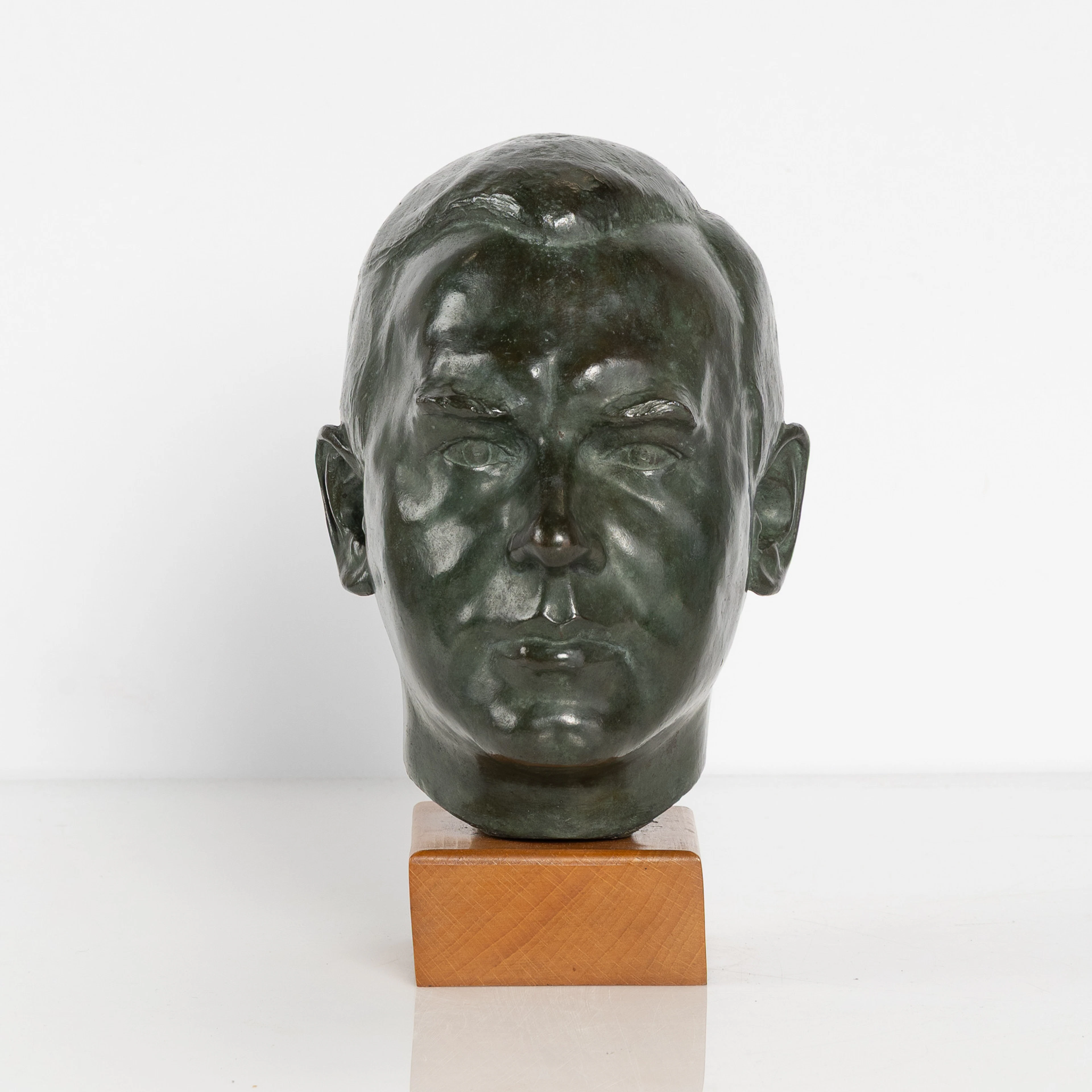
WILLIAM ZADIG (1884-1952). Skulptur, brons, omkring 1930, föreställande
10/19/2026
€359.52
Est.: €1,078.28
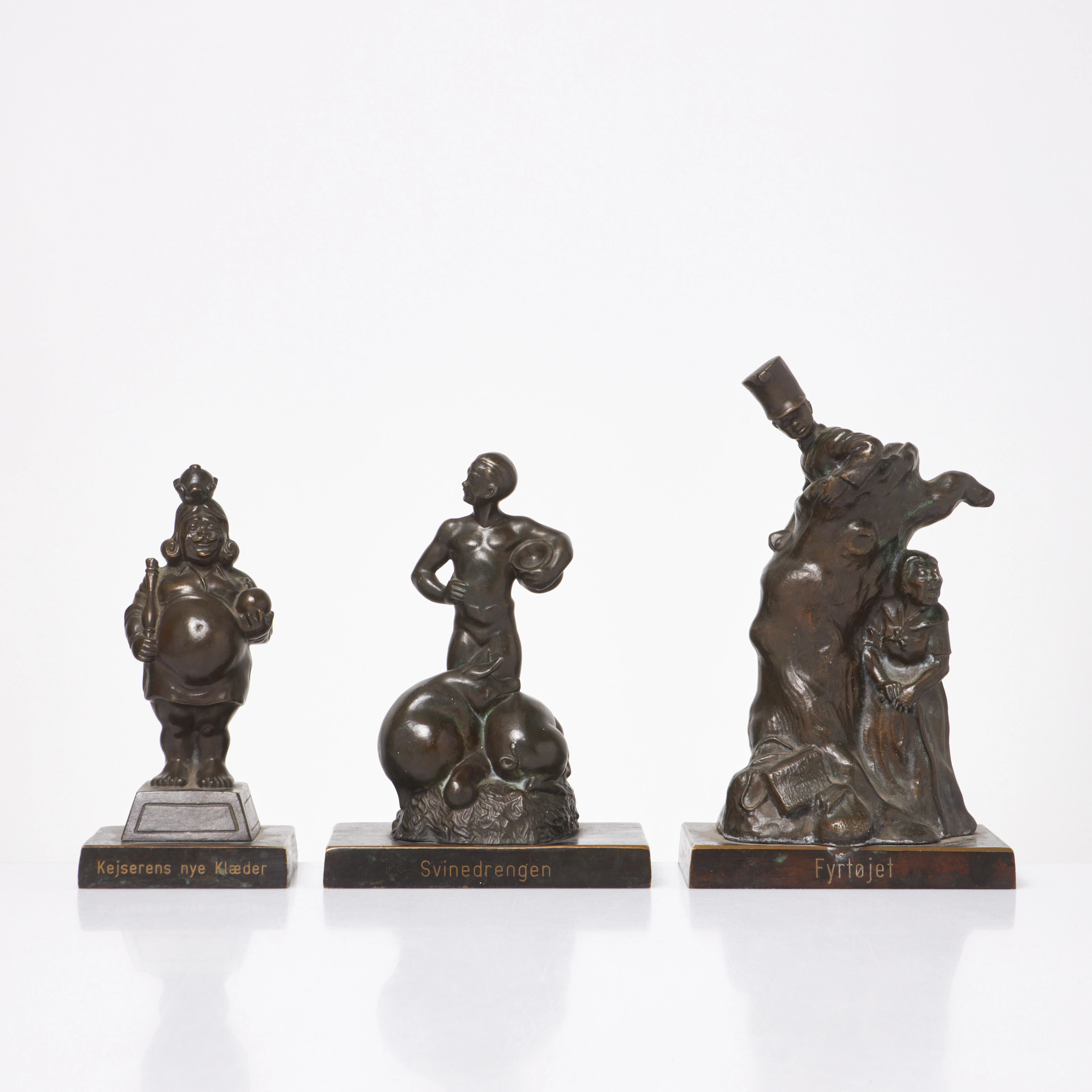
FIGURINER, 3 st, patinerad metall, ur HC Andersens sagor, Hans Kongslev
10/19/2026
€26.96
Est.: €89.77
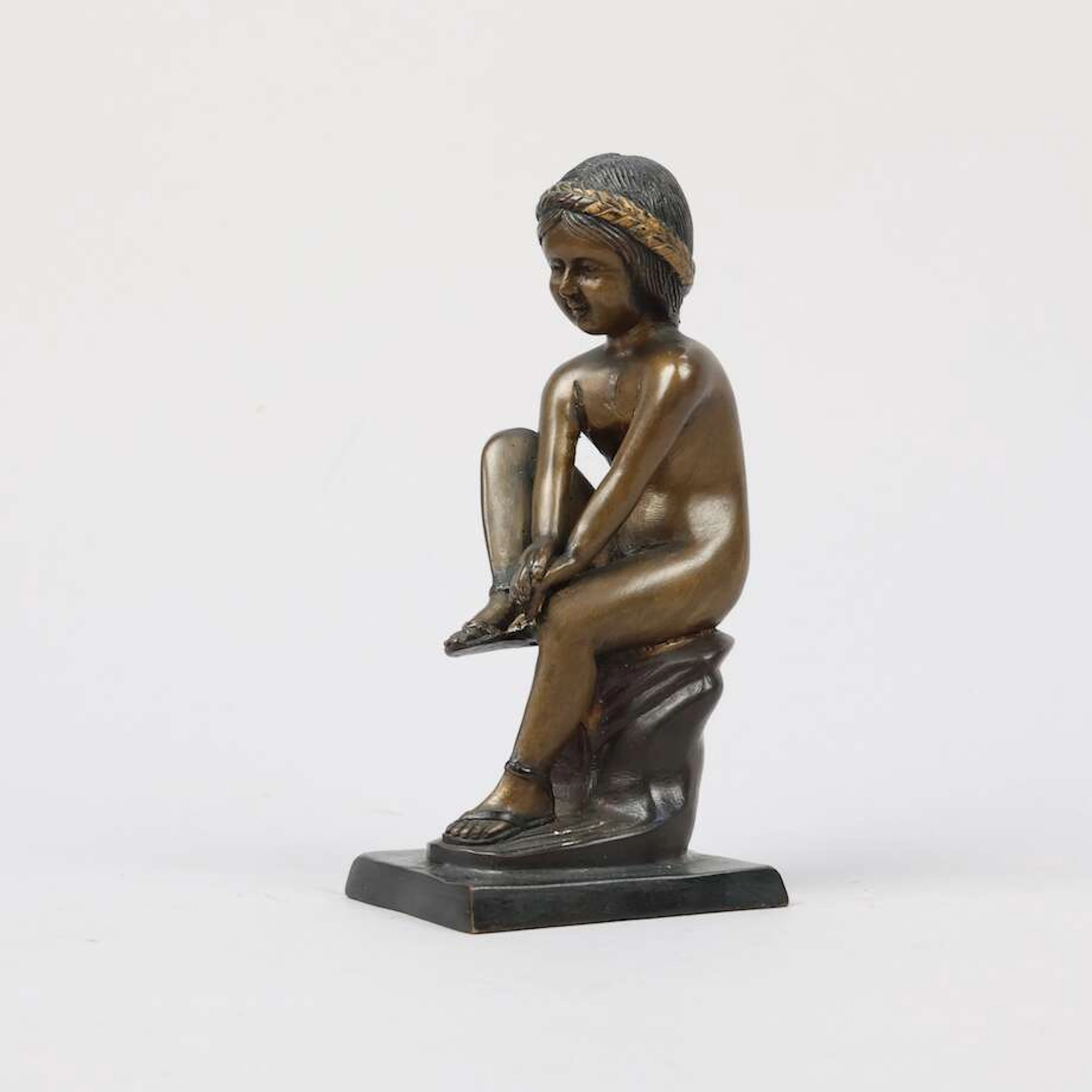


OCT 27 | 4:00 PM
¡Lleva tu subasta a coleccionistas de todo el mundo!
Publica ahoraAl suscribirte, aceptas la política de privacidad. Cancela tu suscripción en cualquier momento.
Barnebys HQ
Brahegatan 10
BOX 5038
114 37 Stockholm
