
Todas las subastas / Arte, Pintura & obra gráfica / French school (XVIII) - Trompe l'oeuil di un bassorilievo in marmo con putti

French school (XVIII) - Trompe l'oeuil di un bassorilievo in marmo con putti
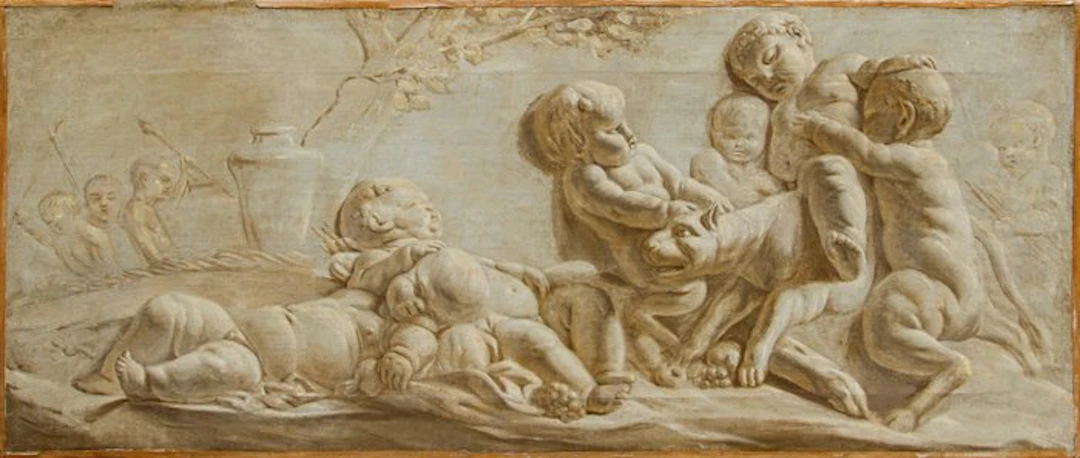
France, second half of the eighteenth century Trompe l’oeil of a marble bas-relief with putti Oil on canvas, 51 x 116 cm A group of cherubs and small fauns, rendered in grisaille on a horizontally oriented canvas, occupies the scene with the naturalness of an ancient frieze. The composition unfolds in three clearly distinct cores. In the foreground, on the left, a pair of sleeping putti lie abandoned on the ground: their plump bodies overlap in a disordered embrace, among clusters of grapes that allude to Bacchic processions. In the center and on the right, a more animated group shows several small figures, one of whom bears the traits of a little faun, intent on playing with an animal that looks like a dog or a cub, which they pull and ride with tender exuberance. In the background, beside a tree with slender branches and a vase, another squad of cherubs shakes arrows and darts. Here the technique becomes even more interesting: the farther figures are rendered using stiacciato, the sculptural technique of Donatello’s origin, which progressively reduces the relief’s thickness to suggest depth. The painter transfers this principle to the painted surface, softening contours and light/dark contrasts, so that space is built through the gradation of simulated reliefs. The genre to which the work belongs enjoyed great popularity in France from the late eighteenth century into the early nineteenth century. Grisaille with putti and ancient scenes, conceived to imitate marble or stucco bas-reliefs, were intended to decorate overdoors, panels, and boiseries, in perfect harmony with the neoclassical taste for antiquity and with the pleasure of visual deception, trompe-l’œil, which made painting indistinguishable from sculpture. The undisputed master of this production was Piat Joseph Sauvage, a Belgian-born painter from Tournai who specialized precisely in interior decoration, grisaille and illusionistic miniatures, as well as engraved portraits at reduced scale. He served as court painter to the ruler of the Southern Netherlands, to the Prince of Condé, and to Louis XVI, and was a member of the Académie royale de peinture et de sculpture. In 1808 he returned to Tournai to direct the Academy of Drawing, where Antoine Payen was among his students: it is plausible that it was precisely in that environment that the author of our painting encountered his work and reworked its stylistic lexicon. The comparisons are eloquent. The Amorini playing from the Metropolitan Museum of Art in New York share with the canvas the lightness of the infantile theme and the almost sculptural rendering of the bodies. The Infant Bacchanal from the English National Trust offers a direct precedent for the Dionysian atmosphere, with putti and animals in a playful procession. The Putti at Play from the Victoria and Albert Museum finally suggest the same treatment of relief, graded to nearly vanish in the distant planes. For paintings purchased abroad: after payment, the procedure to obtain an export license (ALC) will be initiated. All antique pieces sent abroad from Italy require this document, issued by the Ministry of Cultural Heritage. The procedure may take 3 to 5 weeks from the request, so as soon as we have the document the painting will be shipped.
Estimación:€2,000
Ir a la subastaVer todos los artículos deCatawikioArte, Pintura & obra gráfica
Estimación:
€2,000
Artículos similares
GINO SEVERINI, ALBERTO SAVINIO, GIORGIO DE CHIRICO E ALIGI SASSU -
€10
Resultados de subastas para artículos similares

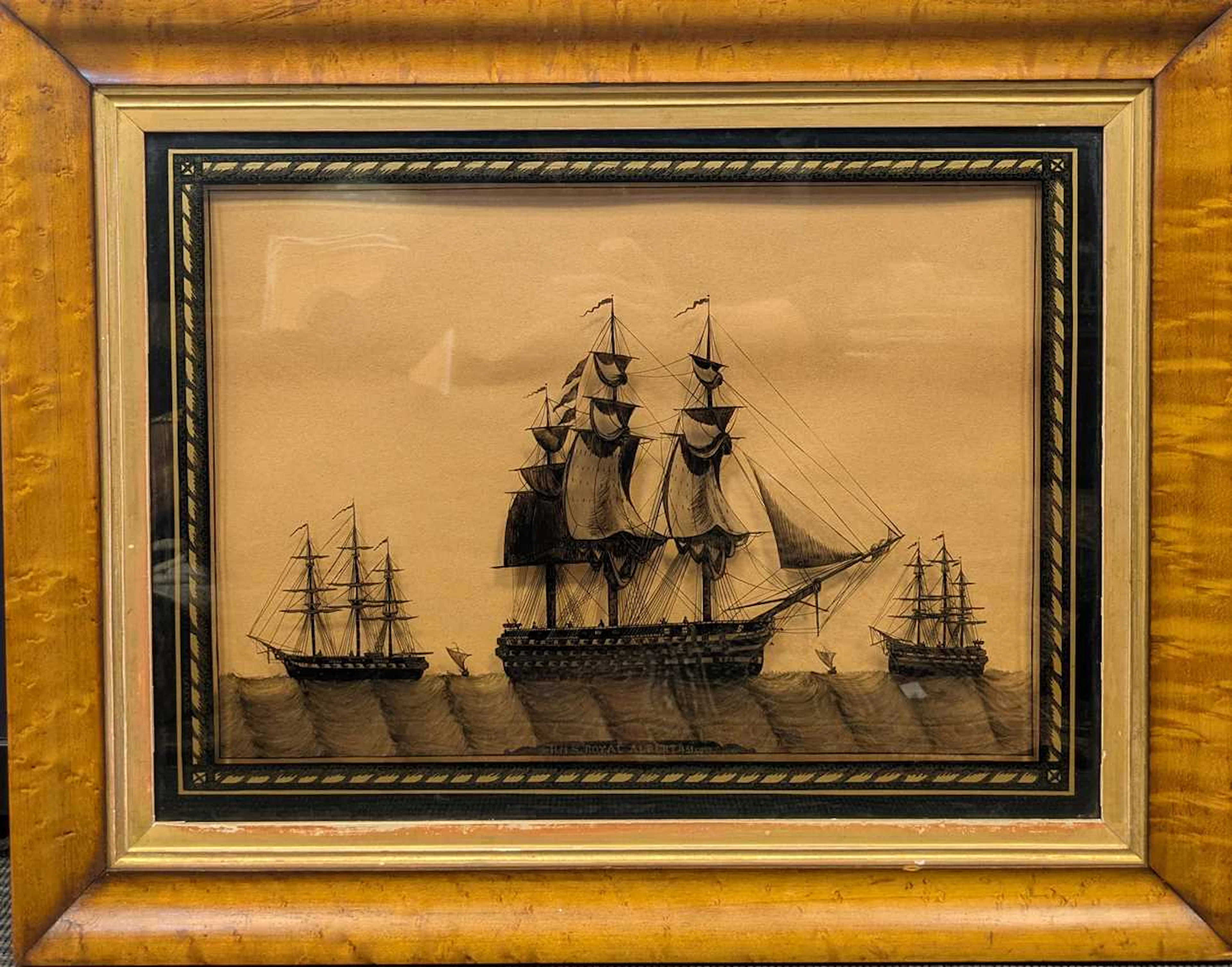
A 20th century reverse glass painting depicting HMS Royal Albert
10/03/2026

€106.05
Est.: €93.02


¡Lleva tu subasta a coleccionistas de todo el mundo!
Publica ahora