
Todas las subastas / Etnográfica / Cleoniceras Ammonite Fossil with Purple Iridescence...

Cleoniceras Ammonite Fossil with Purple Iridescence...
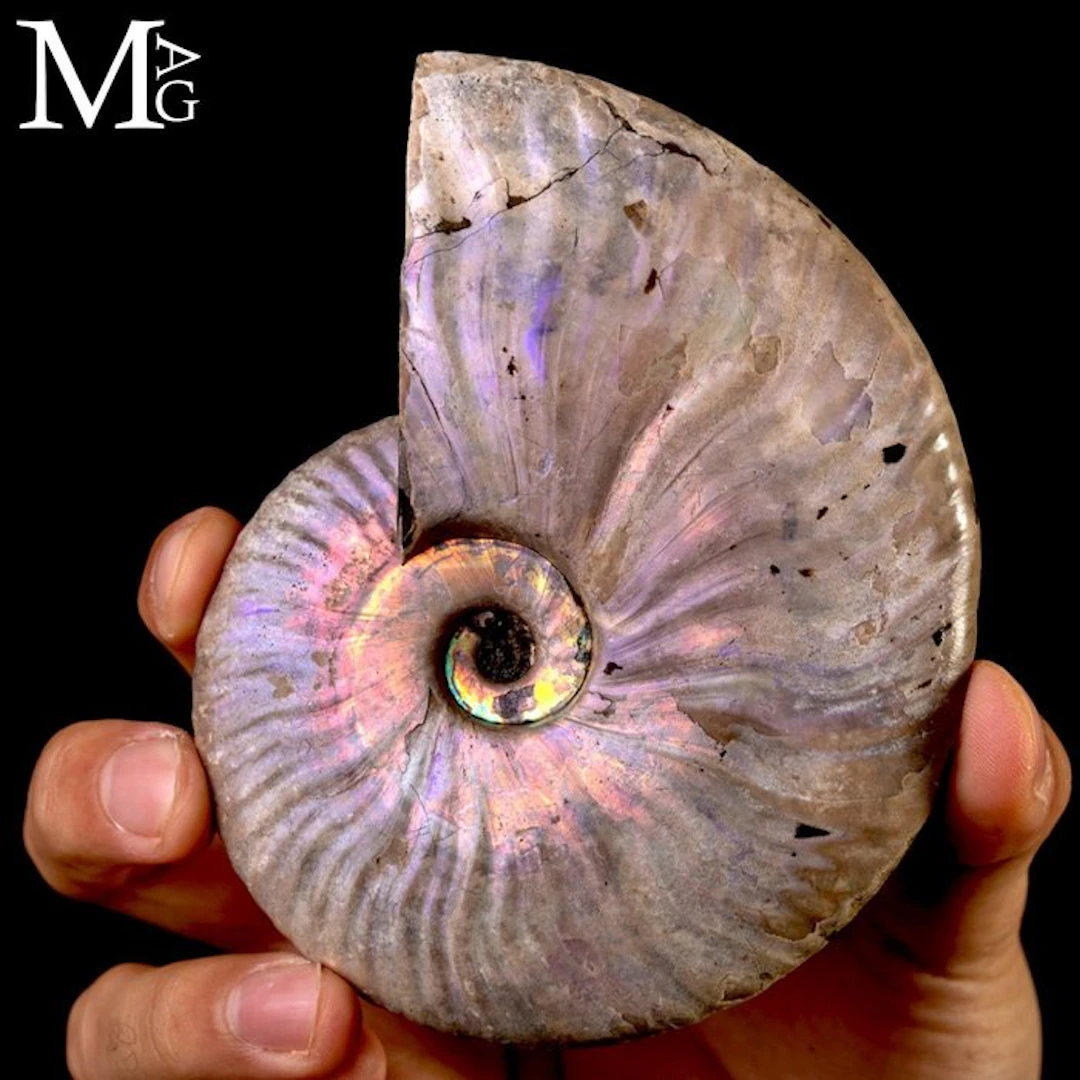
Preserved opalescent shell - Cretaceous, Madagascar — Presented at auction, this is a magnificent specimen of a fossil ammonite, an extinct cephalopod that dominated the oceans of the Mesozoic. This artifact, most likely belonging to the genus Cleoniceras, comes from the famous Cretaceous (Albian) deposits, about 110 million years old, in the Mahajanga province of Madagascar. Its most extraordinary feature, immediately visible, is the spectacular iridescence adorning the shell’s surface, a preservation phenomenon of exceptional quality that transforms a paleontological document into a natural work of art. The specimen exhibits the classic logarithmic spiral shape, one of nature’s most perfect geometries. The surface is lined with fine radial ribs that emphasize the fossil’s three-dimensionality. What catches the eye is the chromatic play of the preserved aragonite layer: an explosion of violet, pink, gold, and flashes of green that shift in intensity and hue with the angle of light. The iridescence is particularly vibrant in the central part of the spiral, creating a focal point with great visual impact. The living chamber, i.e., the last and largest section of the shell, is partially missing, a common feature that does not diminish its value, but rather provides an authentic testament to its geologic history and the fossilization process. There are some fine fracture lines on the surface, also witnesses to the time and pressure endured over millions of years. Ammonites, after their death, settled on the sea floor and were quickly covered by sediments. In anoxic conditions (oxygen-free), bacteria could not completely decompose the shell’s organic matter. This allowed the preservation of the inner layer of the shell, the nacre, composed mainly of the mineral aragonite. The iridescence is not a pigment but a phenomenon of structural coloration. Light, passing through the very thin layered plates of aragonite, is broken up and reflected at different wavelengths, creating the rainbow effect we admire. This type of preservation is rare and occurs only in a few locations worldwide, making fossils like this particularly valuable. An iridescent ammonite of this quality is a piece of great interest both for fossil collectors and for enthusiasts of mineralogy and natural history. Its intrinsic beauty makes it a top-tier collectible object, capable of enriching any display case. Beyond its scientific value as a testimony to prehistoric marine life, this specimen is a decorative element of rare elegance. Its iconic shape and changing colors make it perfect for display in a library, a study, or a contemporary design environment, where it can be admired as a sculpture created by nature itself. It is an ideal piece for a “Wunderkammer” or a modern Cabinet of Curiosities, in which science and aesthetics blend. Technical details Name: Ammonite (Cleoniceras sp.) Classification: Fossil, Cephalopoda Provenance: Madagascar Locality or mine: Mahajanga Province Geological period: Cretaceous (Albian, about 110 million years old) Conditions: Specimen with natural iridescence preserved. Shows natural fractures and the living chamber is partially missing, as typical for specimens of this age."}
Estimación:€275
Ir a la subastaVer todos los artículos deCatawikioEtnográfica
Estimación:
€275
Artículos similares

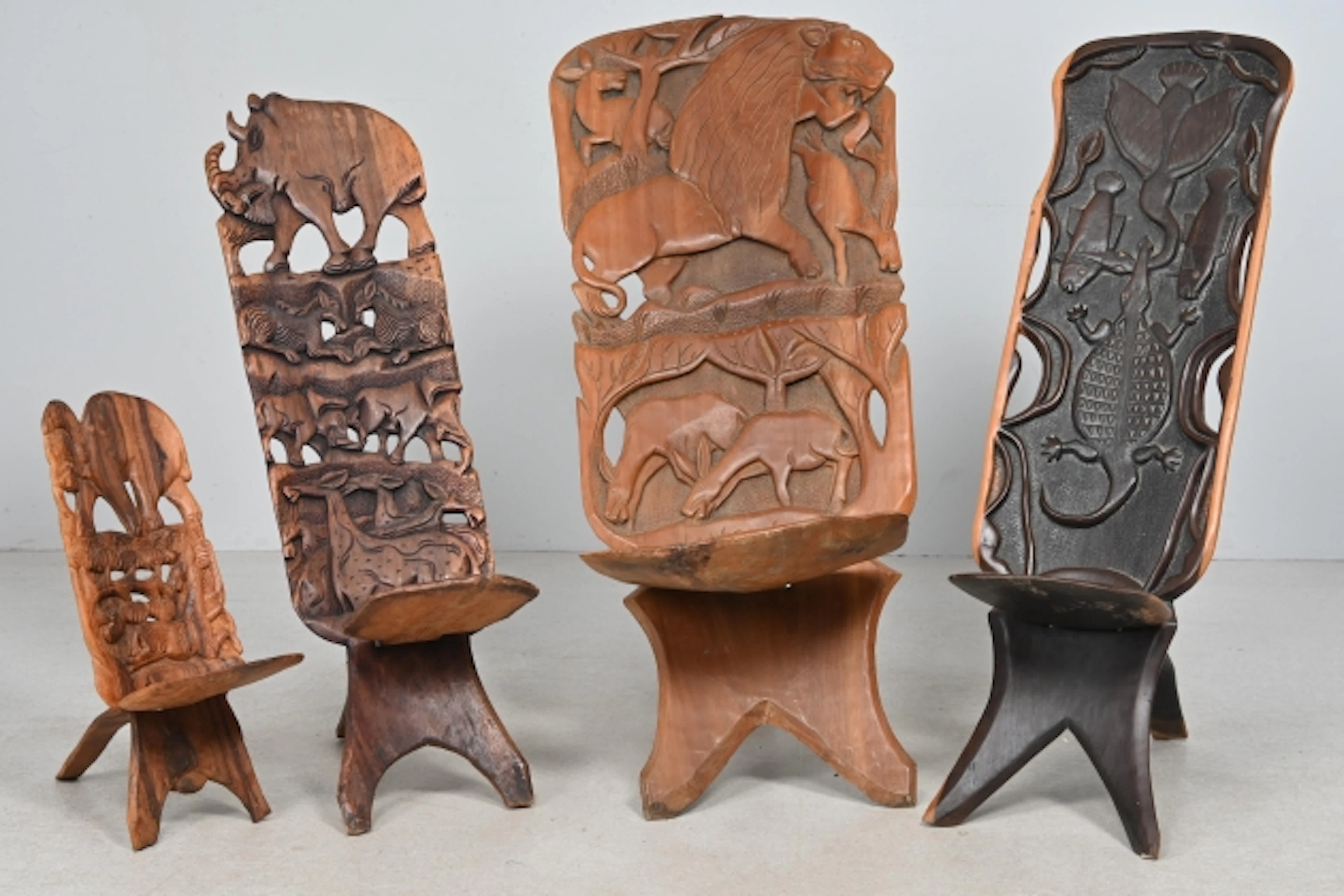
Resultados de subastas para artículos similares
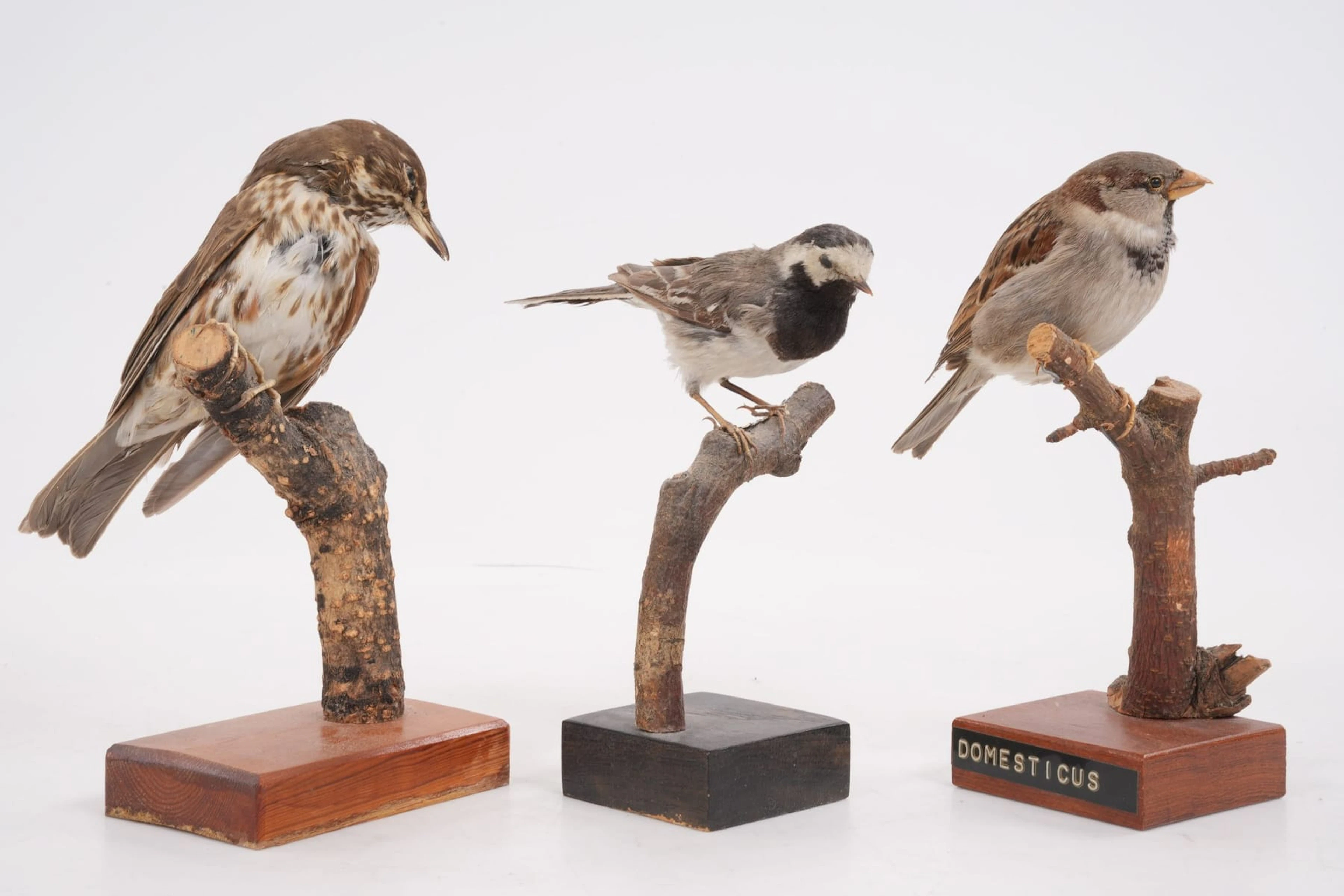
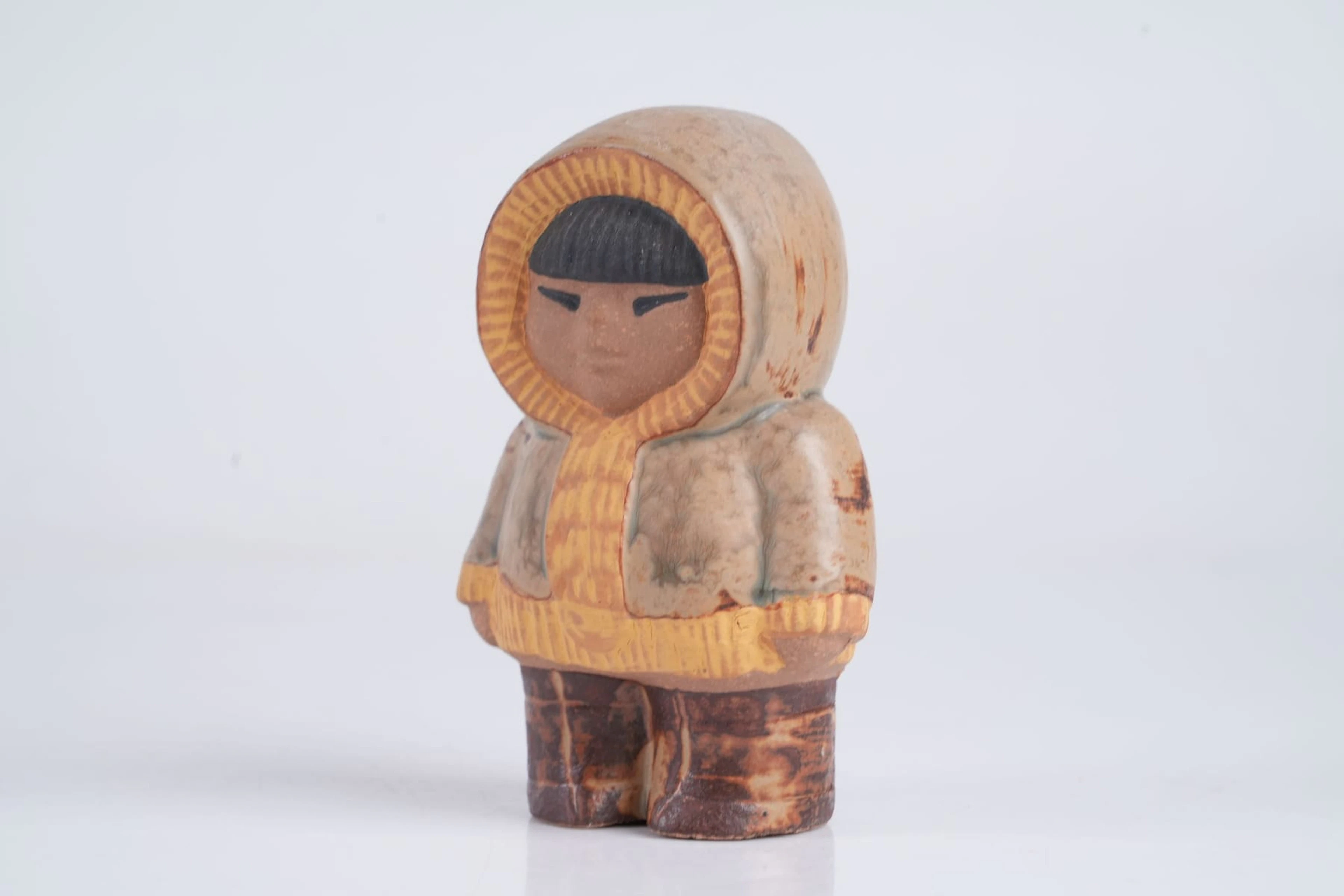
LISA LARSON (1931-2024), figurin, "Nord", ur serien All världens barn
10/11/2026
€44.63
Est.: €53.32

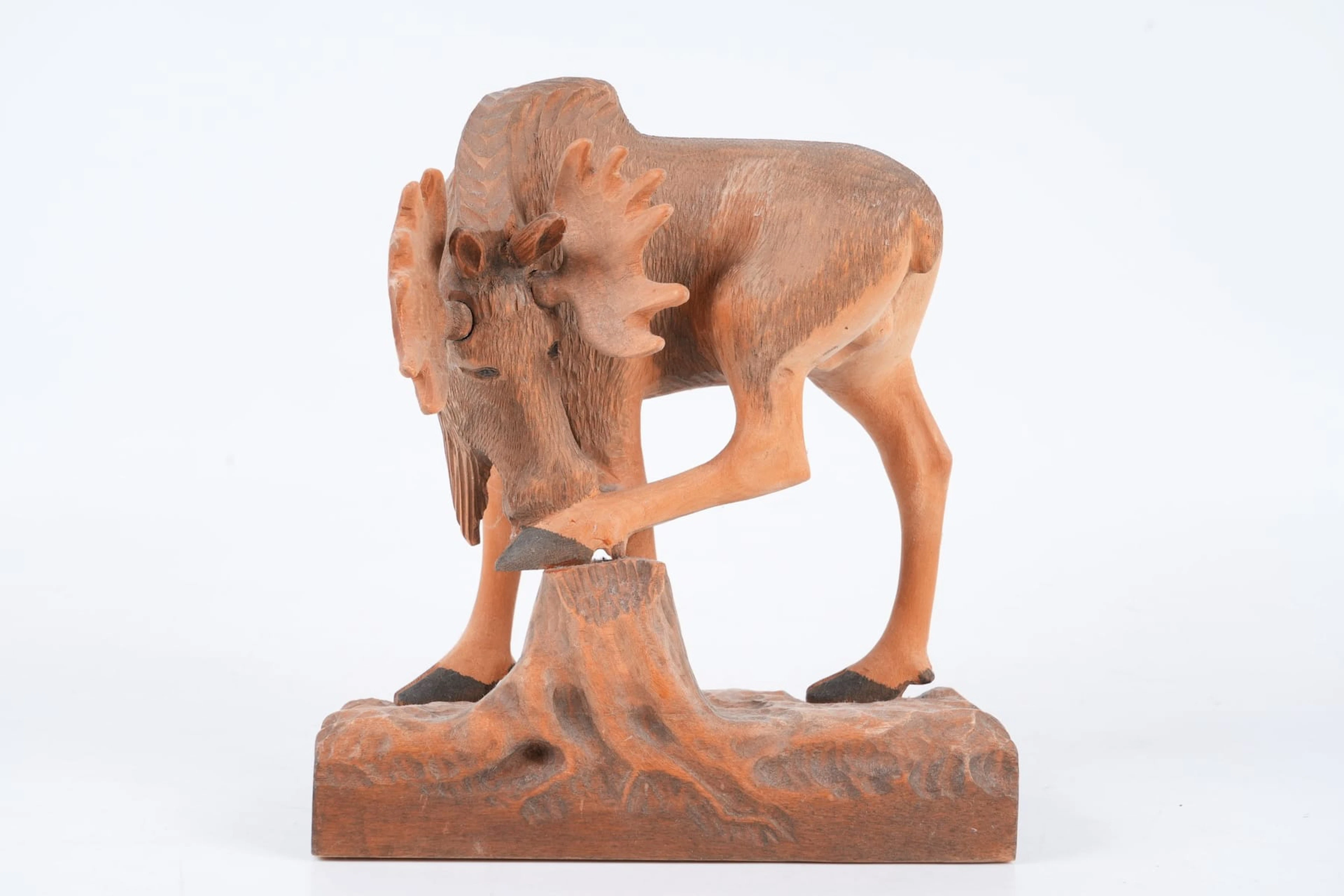
CARL JOHAN TRYGG (1887-1954), figuriner, 2 st, skuret trä, 1918 samt 1923
10/11/2026
€26.78
Est.: €53.32
¡Lleva tu subasta a coleccionistas de todo el mundo!
Publica ahora