


Todas las subastas / Arte Antiguo / Central Europe – Late Bronze Age Bronze Winged Axe with...

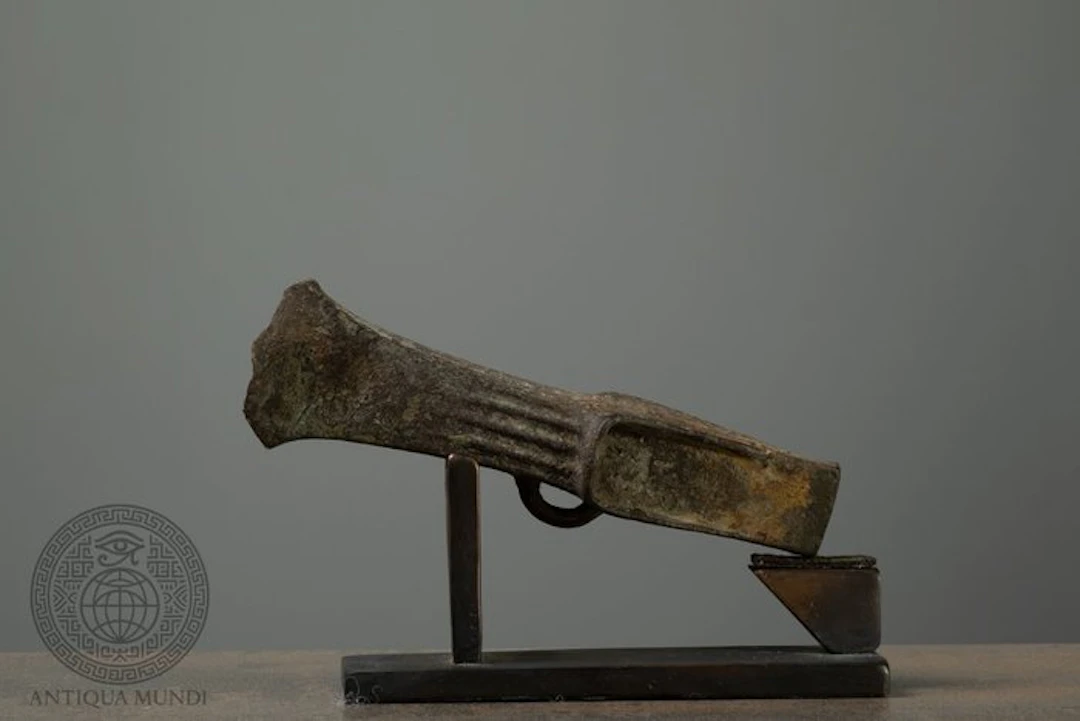
Characteristic Central European bronze winged axe dating to the Late Bronze Age and typologically attributable to the Hallstatt A cultural horizon. The axe has a long, solid body with a clearly differentiated hafting section and blade. Particularly characteristic are the pronounced raised lateral flanges or wings, which were designed to secure the axe head firmly within a wooden haft. The rectangular butt forms the main hafting area. The raised lateral wings would have enclosed and supported the wooden handle, creating a considerably more stable connection between the bronze axe head and its haft. Unlike later socketed axes, this form does not yet have a completely enclosed socket. On both sides of the central section are several strong, parallel longitudinal ribs or pronounced flanges. This sculptural construction reinforces the hafting area and is at the same time a characteristic typological feature of Late Bronze Age winged axes and palstaves. Of particular interest is the fully preserved side loop immediately below the hafting section. This loop was probably used to provide additional security by fastening the axe head to its wooden handle with a cord, thong or leather strap. From the narrower central section, the blade broadens distinctly towards a fan-shaped, expanding cutting edge. The cutting edge is slightly curved, with the outer extremities somewhat projecting. The substantial wedge-shaped cross-section is clearly visible when viewed from the front. Winged axes represent an important stage in the technological development of Bronze Age axe forms. The raised lateral flanges provided a significantly more secure method of hafting than earlier flat axes and flanged axes. Examples equipped with an additional side loop could be further secured to the haft by means of binding. Typological Classification and Dating The combination of a rectangular butt, pronounced lateral wings, fan-shaped expanding blade and side fastening loop supports its classification within the Late Bronze Age group of winged axes or palstaves. A particularly close comparison is preserved in the Museum of Archaeology and Anthropology, University of Cambridge, Inv. No. Z 11628. This example, measuring 15.3 cm in length, is described as a “Wing flanged palstave axe … of Hallstatt A type” and likewise features a rectangular butt, pronounced wings and a lateral loop. On this basis, a dating of the present example to the Late Bronze Age / Hallstatt A, circa 12th–11th century BC, is well supported typologically. A further comparable example published by Artemis Gallery / Bidsquare as a “Central European Bronze Palstave Axe Head” provides an additional parallel for the general form and the strongly developed hafting elements. Condition Good condition considering its considerable age. The axe is largely complete, including the cutting edge, lateral wings, hafting section and fastening loop. The bronze displays an attractive dark brown to olive-brown age patina, with areas of green patination and mineral deposits. Yellowish to orange-brown deposits and corrosion products are visible within the recessed hafting area. The cutting edge shows age- and use-related irregularities, surface wear and minor impacts or losses along the edge. The side loop is preserved. Please examine all photographs carefully, as they form an integral part of the condition description. Comparable Examples Museum of Archaeology and Anthropology, University of Cambridge, Inv. No. Z 11628: Late Bronze Age wing-flanged palstave of Hallstatt A type with lateral loop, length 15.3 cm. Artemis Gallery / Bidsquare: “Central European Bronze Palstave Axe Head”, length 15.5 cm. The sale includes only the ancient bronze winged axe. The modern display stand visible in the photographs is used solely for presentation and is not included in the sale. Provenance Formerly in the Madeleine & Erich Dammann Collection, Germany. Acquired during the collectors’ extensive travels between 1950 and 1970. The collection is documented in Germany by 1970 through historical photographs of the family residence and subsequently remained in continuous family ownership. The objects were acquired privately during the collectors’ travels. As was customary for private purchases made at local markets during the 1950s and 1960s, purchase receipts or invoices were generally neither issued nor requested. Historical photographs and biographical documentation relating to the Dammann Collection are available and support the long-standing provenance of the collection.
Estimación:€450
Ir a la subastaVer todos los artículos deCatawikioArte Antiguo
Estimación:
€450
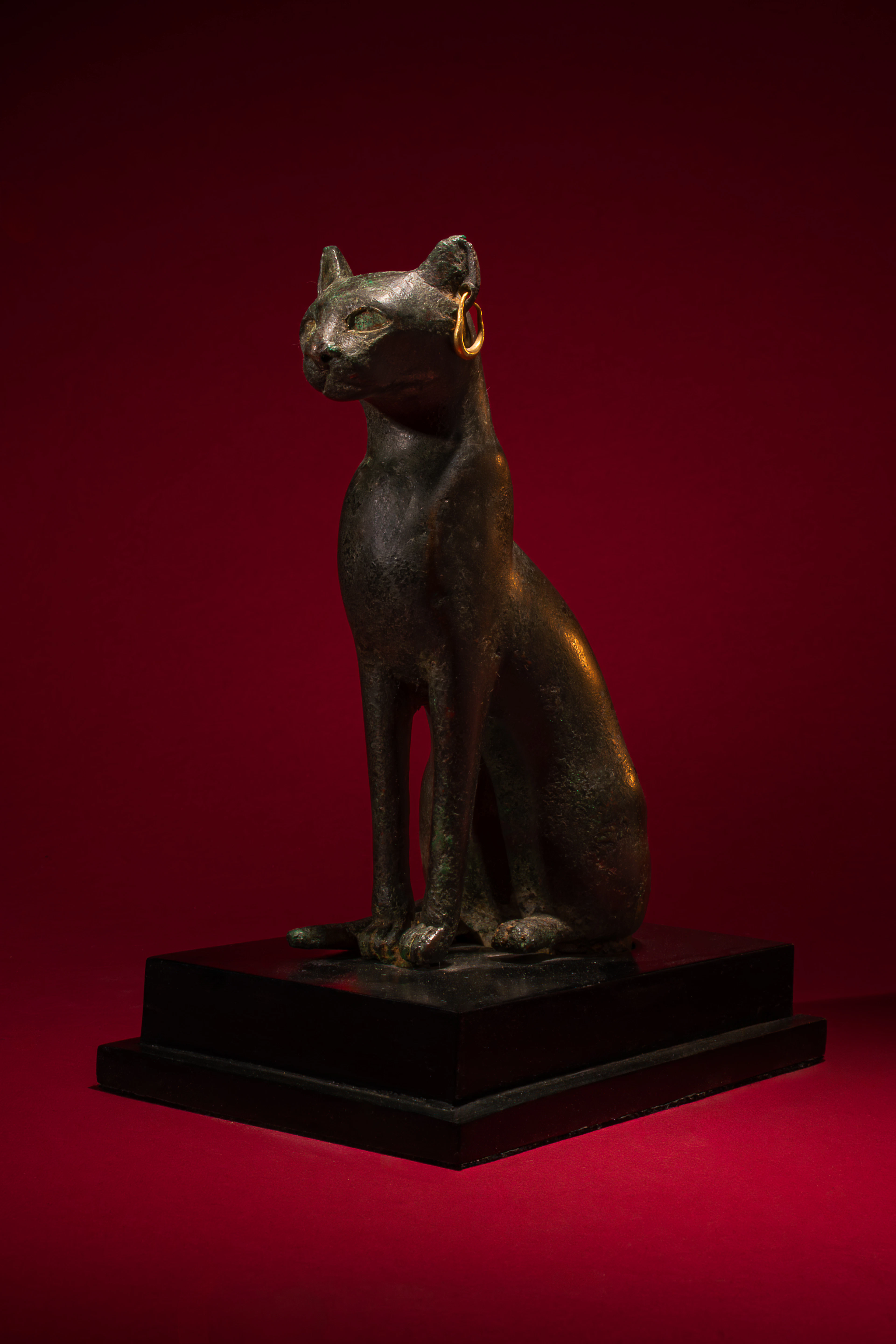
RARE EGYPTIAN BRONZE CAT STATUETTE WITH GOLD EARRINGS - LARGE SIZE
06/21/2026

€25,506.4
Est.: €23,095.64
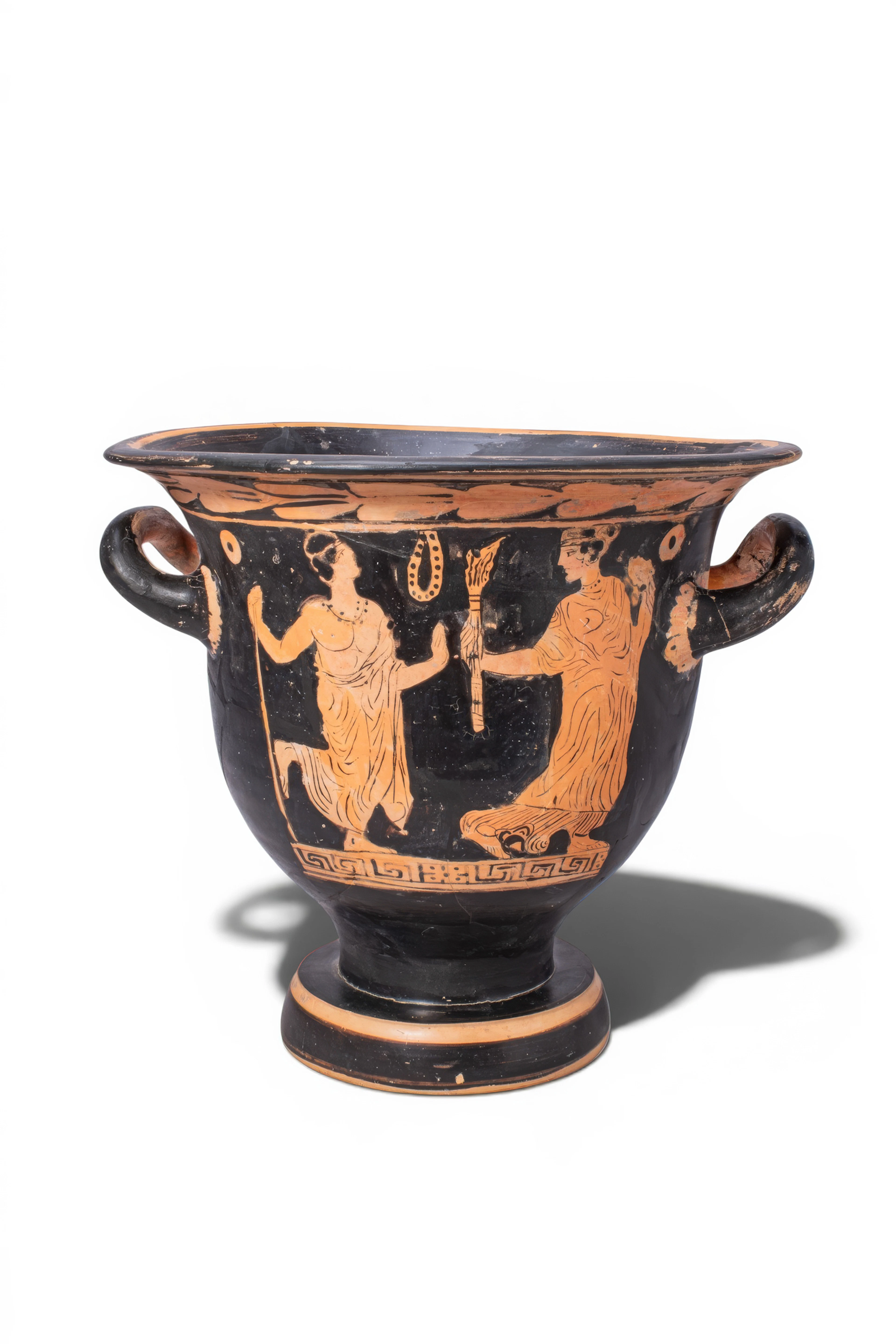
APULIAN RED-FIGURE BELL KRATER WITH KOMASTOS AND MAENAD - TL TESTED
06/21/2026
€3,014.39
Est.: €2,304.2
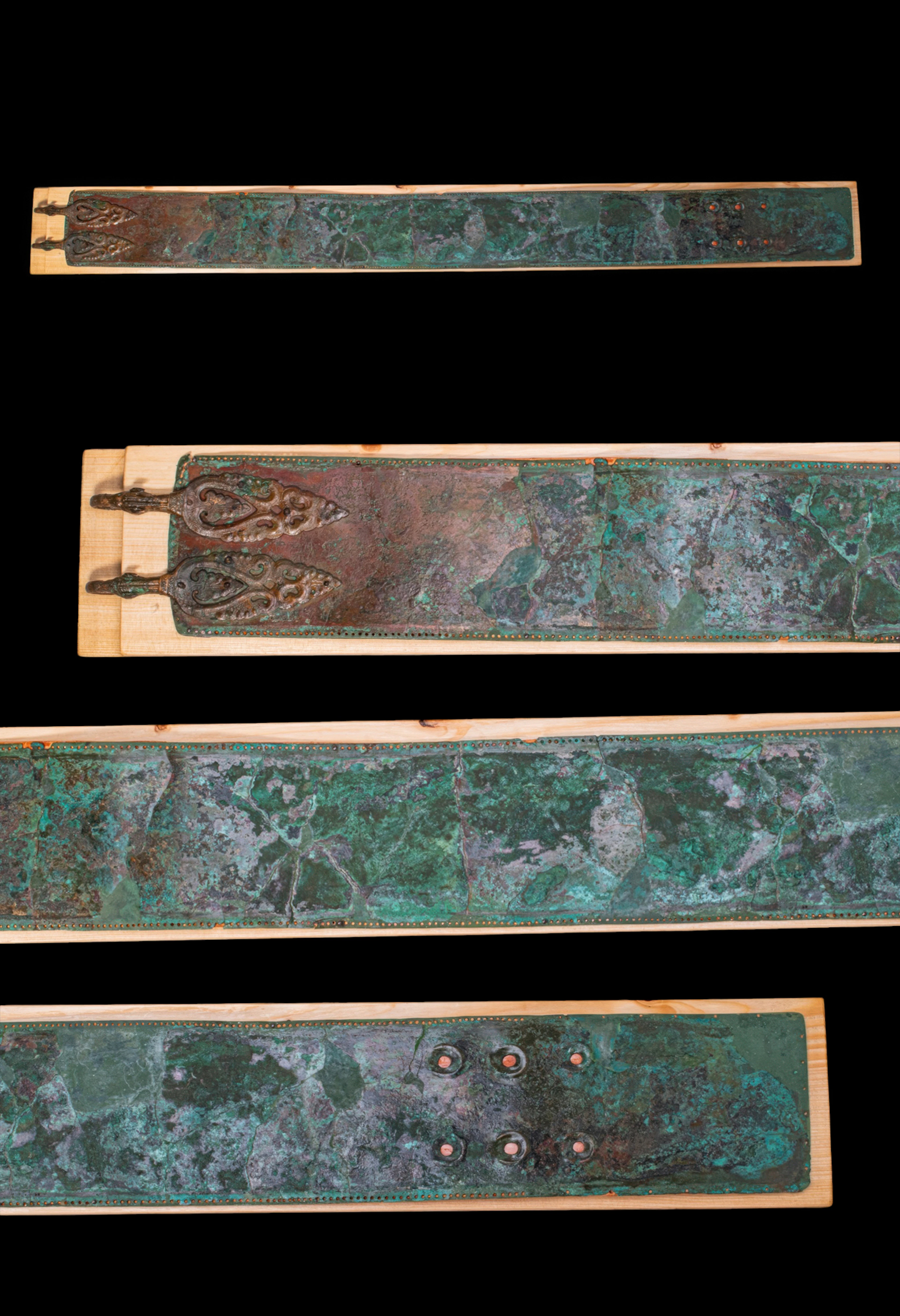


OCT 27 | 4:00 PM
¡Lleva tu subasta a coleccionistas de todo el mundo!
Publica ahoraAl suscribirte, aceptas la política de privacidad. Cancela tu suscripción en cualquier momento.
Barnebys HQ
Brahegatan 10
BOX 5038
114 37 Stockholm
