






Todas las subastas / Libros, mapas, papel & manuscritos / C. R. T. Krayenhoff / J

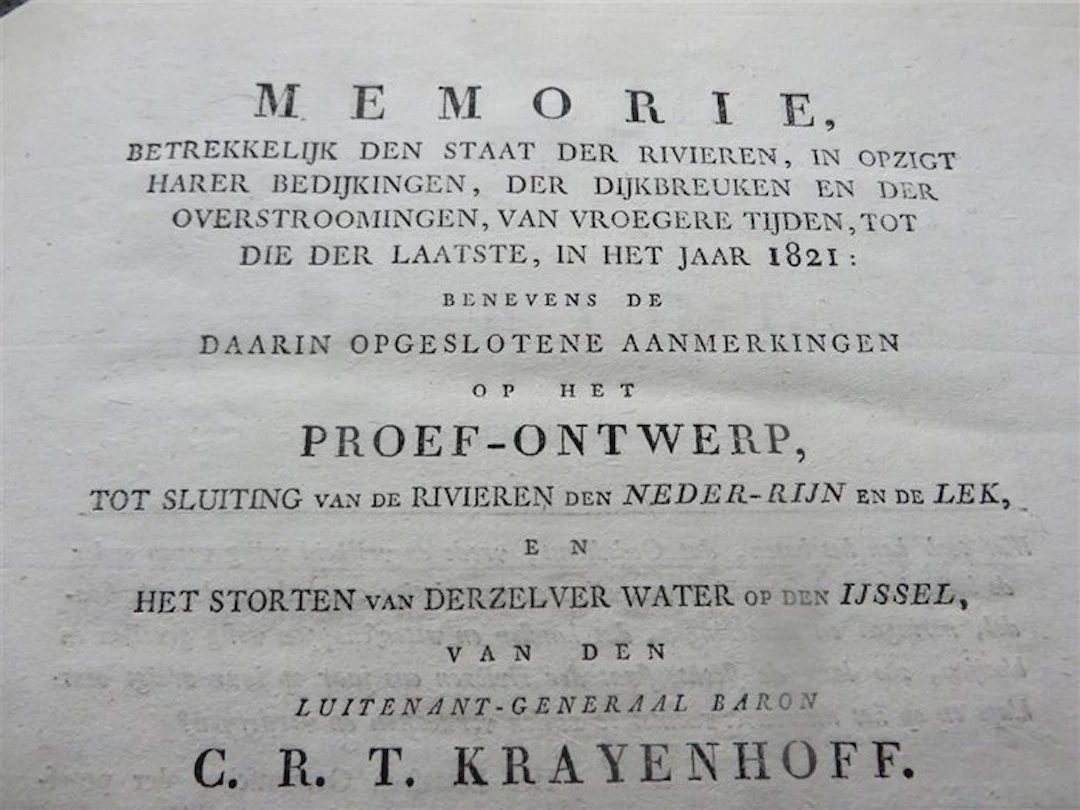
C. R. T. Krayenhoff / J. Blanken Jansz. - Memoir regarding the state of the rivers in relation to their dykes, dyke breaches and floods from earlier times up to those of the last in the year 1821, together with the contained remarks on the Trial Design for the closing of the Nederrijn and the Lek and the discharge of their water into the IJssel by C. R. T. Krayenhoff - Utrecht, O.J. van Paddenburg and O.J. van Dijk, 1823 - first and only edition - XVI + 184 pp. - publisher’s binding with linen spine - 25 x 20 cm (QUARTO format) Condition: fine / excellent - very neat binding; very neat, sturdy and compact block; clean and fresh paper! Complete. A treasure trove of information about the history and particulars of the Dutch rivers such as water levels, discharges, dyke breaches, hydraulic engineering measures, etc.! In the early 19th century the Netherlands was plagued by severe river floods (such as in 1809 and 1820/1821). This led to extensive debates among engineers and the government about how the rivers could best be regulated. Krayenhoff’s work contributed directly to these discussions, which ultimately laid the foundations for the modern Dutch water management and river improvements. First and only edition. Highly rare work. Discusses, among other things, a radical design to alter the distribution of water between the Rhine and IJssel. Very forward-looking: in the 20th century, for this reason the vizier dam at Driel was constructed... Collector’s item for connoisseurs of books on Dutch river science, dyke breaches and hydraulic engineering. Corneli(u)s Rudolphus Theodorus baron Krayenhoff (1758-1840) was a physicist, physician, general, hydraulic engineer, cartographer and Minister of War. In 1796 he became director of the Dutch fortifications and moved to Muiden. From 1798 he was involved in the newly organized Rijkswaterstaat, after the sovereignty of the provinces had been abolished. He attended the campaign against the Russian-British invasion of 1799 (see the Battle of Castricum) and advised the army leadership. Krayenhoff had meanwhile begun what would become his life’s work: triangulation, so that the Netherlands could be mapped in detail. He also worked on establishing the Amsterdam Level (Amsterdams Peil). From 1797 to 1812 Krayenhoff, together with other engineers and Rijkswaterstaat, conducted the first national leveling. The 17th-century-fixed “Stadtspeyl” of Amsterdam was used as the zero plane. The leveling lines ran mainly along the major rivers and the coast of the Zuiderzee.[6] When the city walls of Amsterdam were demolished between 1803 and 1811, he was asked in 1805 to design a plan for the city’s defense. This gave Krayenhoff the first impetus for the Krayenhoff Posts, sometimes also called the Old Fortifications of Amsterdam. He was assisted by Jan Blanken in this. Louis Napoleon was very fond of him and offered him several positions. Krayenhoff served as Minister of War for ten months and organized the defense of Amsterdam. The occasion was a looming invasion by Napoleon Bonaparte. When Napoleon learned of this, Krayenhoff had to be dismissed. During a meeting Napoleon nonetheless showed interest and appointed him as a member of the Committee of Fortifications in Paris and as a knight of the Legion of Honor. Krayenhoff also received an attractive offer from Russia, but he feared the emperor. His two sons visited Russia in 1812 and were taken prisoner. His eldest son fought at the Battle of Waterloo against Napoleon and was wounded. Willem de Clercq notes in his diary that Krayenhoff would have ordered his attackers to: if necessary, have everyone pick up the stones from his door, transport them to his front room, and greet the attacking French with a friendly volley of stones. In 1813 he lived at Herengracht 500, a building deserted by the French generals Dumonceau and Molitor[source?]. He worked diligently on the Restoration and in 1815 he was elevated to baron. In 1815 he was involved in the reestablishment of the Topographic Bureau for creating a nationwide map of the Netherlands at a scale of 1:115,200, the so-called Krayenhoff map[7].
Estimación:€250
Ir a la subastaVer todos los artículos deCatawikioLibros, mapas, papel & manuscritos
Estimación:
€250
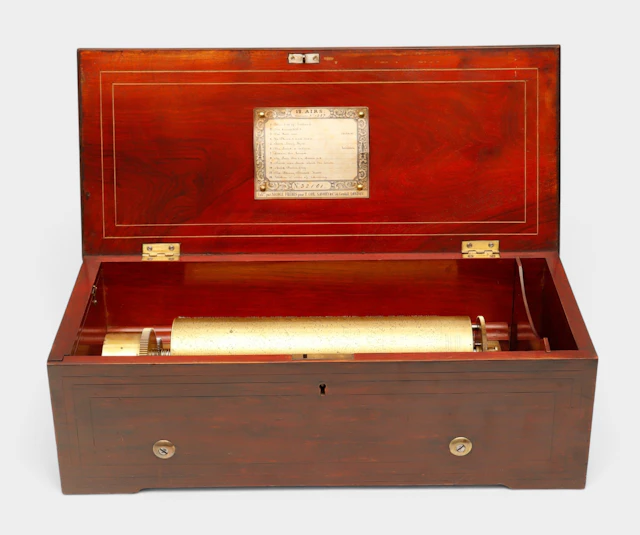
Caja de música suiza de doce canciones de Nicole Frères, hacia 1848-1852.
10/22/2026
€1,350
Est.: €1,300
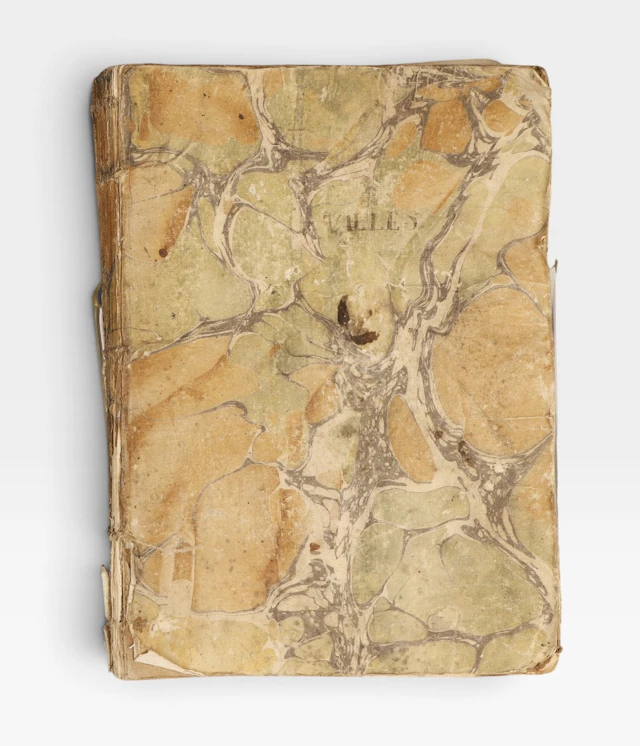
Guerra de la Independencia, Cataluña, 1808-1809.
10/22/2026
€130
Est.: €140


OCT 27 | 4:00 PM
¡Lleva tu subasta a coleccionistas de todo el mundo!
Publica ahoraAl suscribirte, aceptas la política de privacidad. Cancela tu suscripción en cualquier momento.
Barnebys HQ
Brahegatan 10
BOX 5038
114 37 Stockholm
