
OCT 8 | 3:00 PM

¡Lleva tu subasta a coleccionistas de todo el mundo!
Publica ahoraAl suscribirte, aceptas la política de privacidad. Cancela tu suscripción en cualquier momento.
Barnebys HQ
Brahegatan 10
BOX 5038
114 37 Stockholm
Todas las subastas / Joyería & gemas / Brooch - 18 kt. Yellow gold - Cameo, Victorian 1850

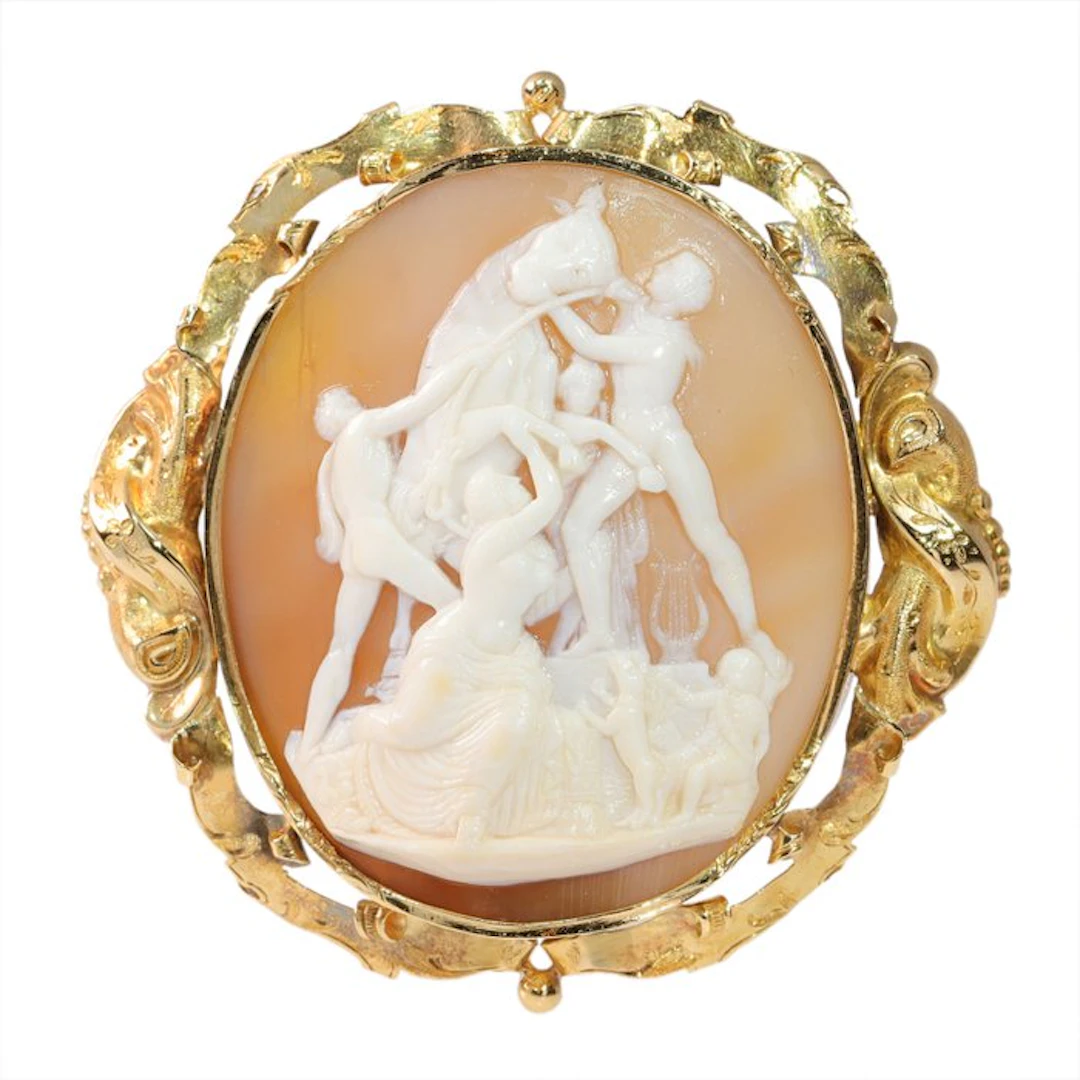
Elegant Victorian Era Cameo Brooch: This vintage antique cameo brooch, set in 18K yellow gold, features a detailed portrayal of "The Farnese Bull," a monumental Roman sculpture. Crafted during the Romantic Victorian Period (circa 1850), it reflects the era's sentimental and symbolic style. The cameo technique, using contrasting materials to create a raised relief image, is expertly employed here. With its intricate design and historic significance, this brooch is a delightful piece of artistry and history. Antique jewelry object group brooch Condition very good condition Country of origin unknown Style Victorian - Victorian decorative arts refers to the style of decorative arts during the Victorian era. The Victorian era is known for its eclectic revival and interpretation of historic styles and the introduction of cross-cultural influences from the middle east and Asia in furniture, fittings, and Interior decoration. Victorian design is widely viewed as having indulged in a regrettable excess of ornament. The Arts and Crafts movement, the aesthetic movement, Anglo-Japanese style, and Art Nouveau style have their beginnings in the late Victorian era. See also: Victorian Style specifics The Romantic Victorian Period - Experts divide the reign of Queen Victoria, also called The Victorian era (1837 - 1901) in to three periods of about twenty years each; The Romantic Victorian Period (1837 - 1860), The Grand Victorian Period (1860 - 1880), and the Late or Aesthetic Victorian Period (1880 - 1901). We consider this to be of the Romantic Victorian Period. This period covers the coronation of Victoria as Queen of Great Britain and Ireland, and her marriage to King Albert and their love, their devotion to their marriage and to their country are the sources of inspiration for this period. The jewels of this period are made of intricate carvings, special techniques where the enamel is subtly worked. These techniques allowed to give the jewel a certain opulence with less precious metal needed. As precious metals were really rare at that time. Highly favored (semi-) precious stones in this period are amethyst, coral, garnets, seed pearls and turquoises. The connotation is obviously sentimental, symbolic and romantic with reminiscent Gothic and/or Renaissance patterns and an abundant use of motifs like anchors, birds, branches, crosses, hearts and snakes. Period ca. 1850 Source of inspiration Mythology Theme The Farnese Bull, also known as Toro Farnese in Italian, is a monumental Roman reproduction of a Hellenistic masterpiece. This colossal marble sculptural group depicts the myth of Dirce, the first wife of King Lykos of Thebes. According to legend, Dirce was bound to a wild bull as punishment by Amphion and Zethus, the sons of Antiope, for her mistreatment of their mother. Pliny the Elder attributes the creation of this sculpture to Rhodian artists Apollonius of Tralles and Tauriscus. It is believed to have been commissioned at the end of the 2nd century BCE and is carved from a single block of marble. This masterpiece is renowned for its intricate portrayal of a dramatic and enduring mythological moment. Material 18K yellow gold (touchstone tested) Technique Cameo is a method of carving, or an item of jewellery or vessel made in this manner. It features a raised (positive) relief image. There are three main materials for Cameo carving; Shells or Agate (called a Hardstone cameo), and glass. Cameos can be produced by setting a carved relief, such as a portrait, onto a background of a contrasting colour. This is called an assembled cameo. Alternately, a cameo can be carved directly out of a material with integral layers or banding, such as (banded) agate or layered glass, where different layers have different colours. Sometimes dyes are used to enhance these colours. Cameos are often worn as jewellery. Stone cameos of great artistry were made in Greece dating back as far as the 6th century BC. They were very popular in Ancient Rome, and one of the most famous stone cameos from this period is the Gemma Claudia made for the Emperor Claudius. The technique has since enjoyed periodic revivals, notably in the early Renaissance, and again in the 17th, 18th and 19th centuries. Hallmarks Illegible remains. Dimensions 5,84 cm (2,30 inch) x 5,82 cm (2,29 inch) Weight 20,80 gram (13,37 dwt) Adin Reference Nº 23271-0317 - Accompanied by a professional report of authenticity for your peace of mind. - Shipped insured and registered for your security, though you're most welcome to collect in person. - For shipments outside the EU, import duties and other charges may apply. We advise checking this in advance. - We invite you to browse through our customer feedback to discover the level of satisfaction we consistently provide. - See more of our products, visit: https://auction.catawiki.com/lotsfrom/Adin - Antique and vintage jewellery often undergoes thoughtful refurbishment, remodelling, or repairs to enhance its longevity and wearability. Such pieces frequently bear marks of this tender care. Furthermore, we present our antique and vintage jewellery in its authentic state, refraining from removing scratches or applying rhodium plating to white gold items. Our priority is to preserve the genuine allure and history of each piece. However, as the new owner, you have the option to take it to a local goldsmith for a cosmetic refresh, should you choose.
Estimación:€2,400
Ir a la subastaVer todos los artículos deCatawikioJoyería & gemas
Estimación:
€2,400
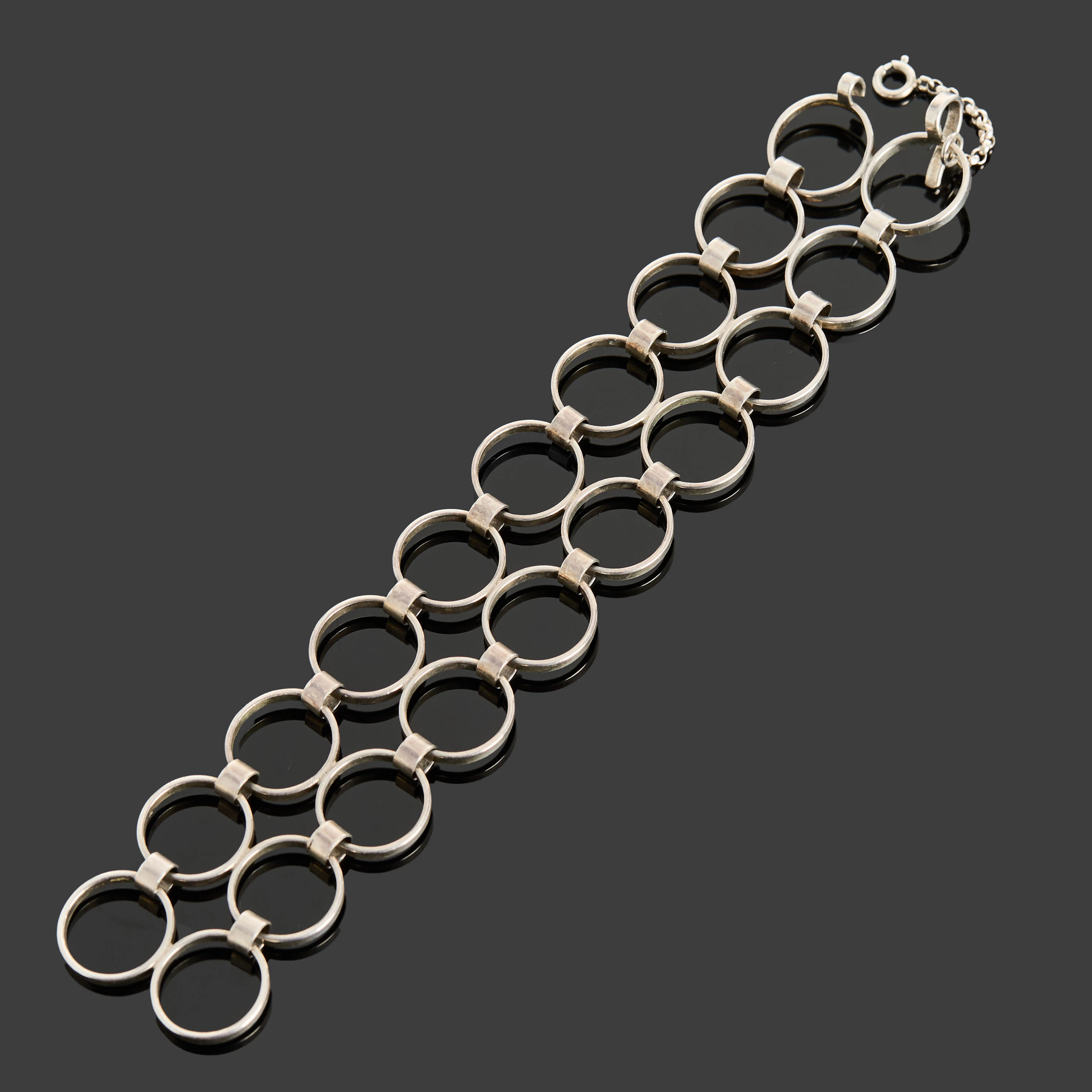
KAIJA AARIKKA (FINLAND, 1929-2014). Armband, silver, Finland, 1900-talets
10/06/2026
€99.55
Est.: €88.8
OCT 8 | 3:00 PM
¡Lleva tu subasta a coleccionistas de todo el mundo!
Publica ahora
€2,000
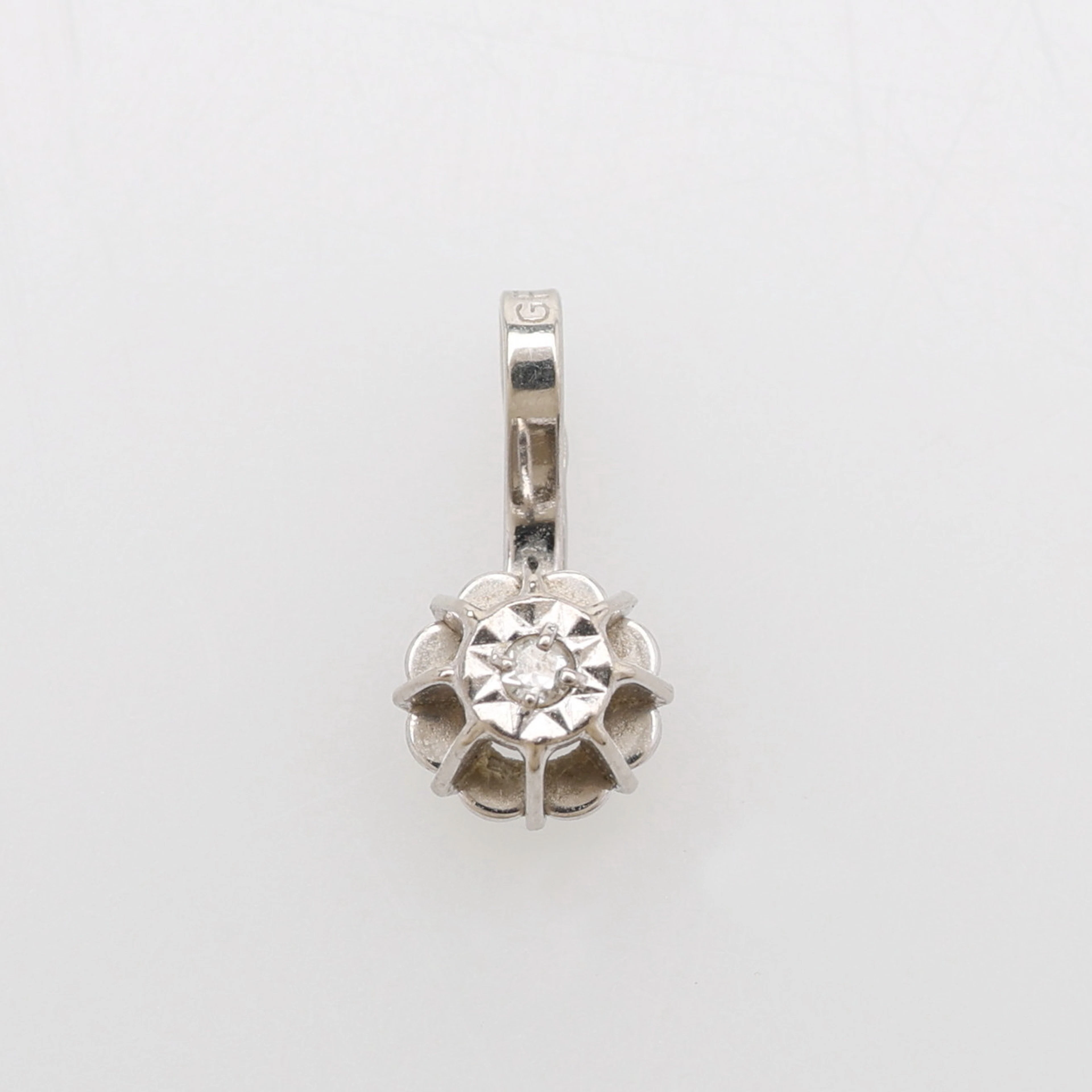
HÄNGE, 18K VITGULD & LITEN VIT STEN, TOTALT CIRKA 0,4 GRAM.
10/06/2026
€26.78
Est.: €53.28
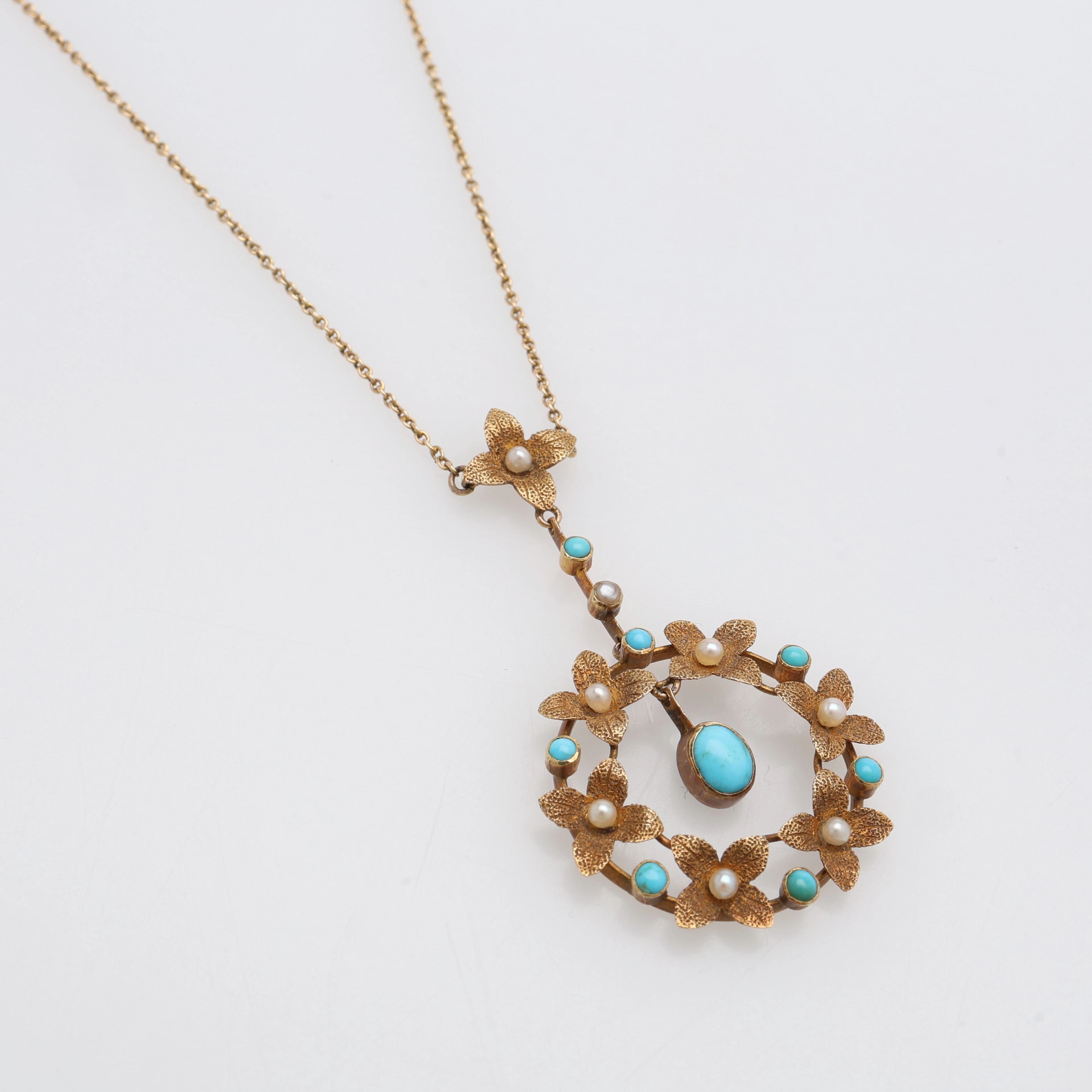
HALSKEDJA MED HÄNGE, 15K GULD, HALVPÄRLOR & TURKOSER, 1900-TALETS
10/06/2026
€312.5
Est.: €355.22
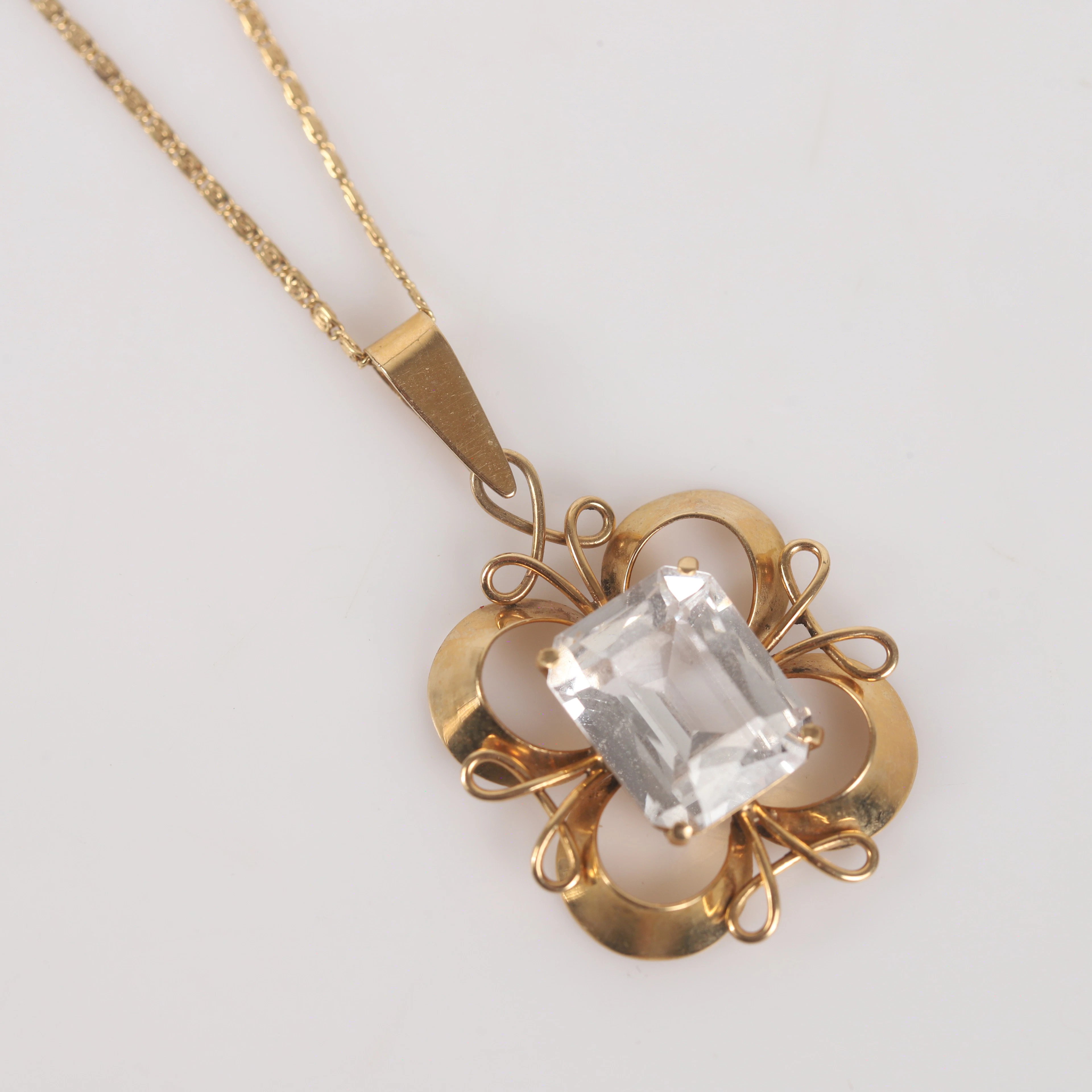
HÄNGE MED KEDJA, 18 K guld med korsslipad sten, Guldvaruhuset, Stockholm, 1955.
10/06/2026

€358.04
Est.: €355.22