Anonyme - Rare Collection de 13 Photos d'Époque...
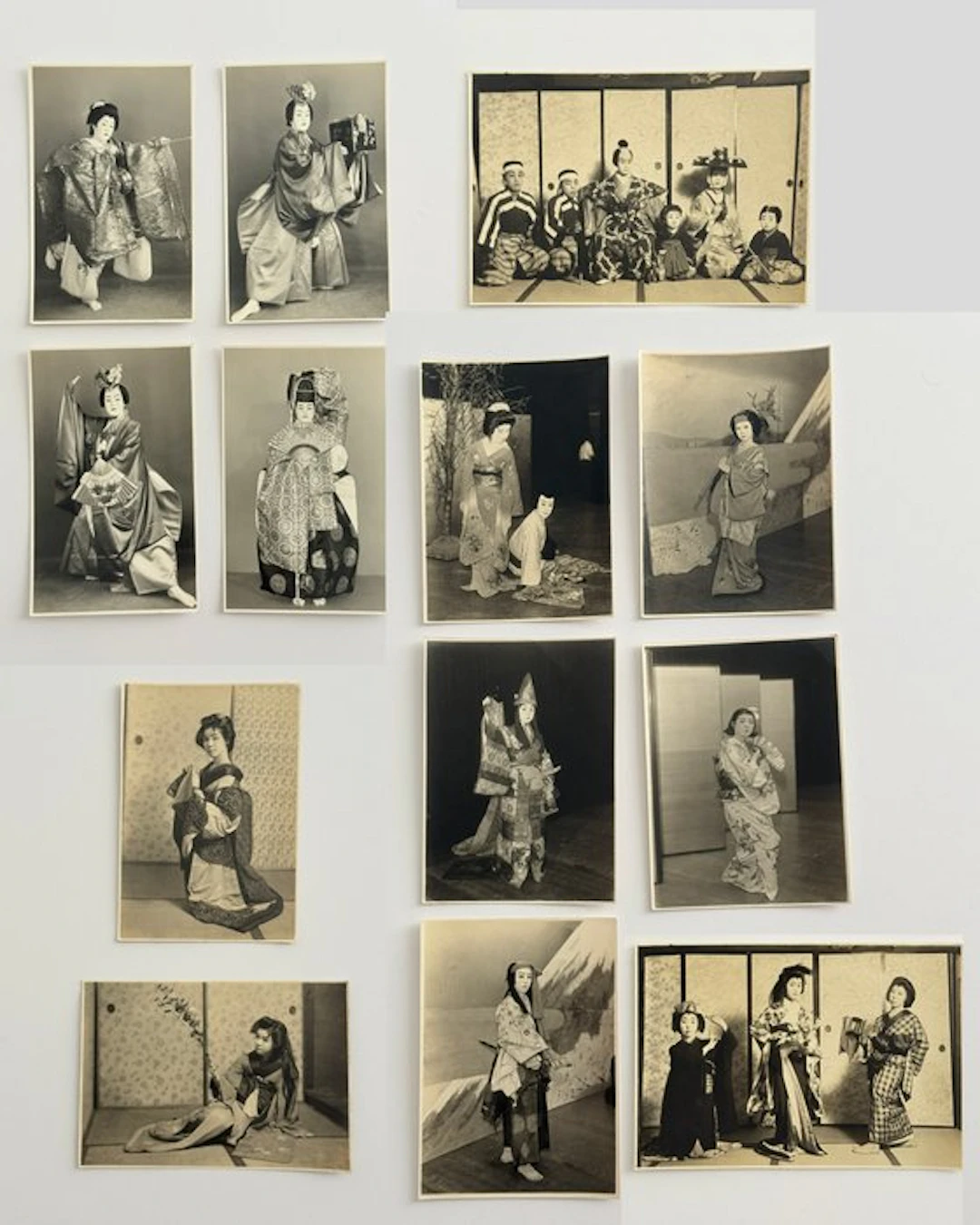
[Kabuki / Performing Arts] Exceptional set of 13 vintage gelatin prints – Portraits of actors and traditional Japanese theatre scenes Rare and prestigious homogeneous collection of thirteen vintage gelatin photographs (studio prints and archival proofs, circa 1910-1940). This exceptional lot documents with remarkable finesse the evolution of traditional Japanese performing arts (Kabuki theatre and Buyō dance) over three decades. It beautifully highlights the subtle art of Onnagata (male actors specializing in female roles) as well as grand narrative and ritual scenes. The ensemble illustratively traces the transition from early-20th-century tatami-stage compositions to the modernist lighting with cinematic and Art Deco influence of the 1930s. Detailed description series by series (Front) Series 1: Official Archives Proofs with Stamp (Circa 1920 – 4 Photos) This lot comes from a collection of Japanese theatrical photographic archives. It is distinguished by the presence on the reverse of an official stamp "見本" (Mihon / Specimen). * Card No.1 – The Onnagata in sacred crane costume (Static Dance): Full-length stage portrait of an Onnagata actor wearing an extremely delicate floral headdress. The fluid silk costume is adorned with a masterful, massive motif representing two white Japanese cranes (tsuru) facing each other, a symbol of longevity and nobility in the classical repertoire. He holds a black lacquered box decorated with branches of plum blossoms (ume). * Card No.2 – The Onnagata with an open fan (Dynamic Posture): Same actor captured in a dynamic, expressive, geometric dance pose (Mie), one arm raised to the sky. He wears the same ornamental headdress and wields a large pleated stage fan (ōgi) with a dark, contrasting graphic motif, accentuating the dynamism of the scene. * Card No.3 – The Dignitary or Ritual Imperial Dancer: Composition showing a figure in courtly ancient or Buddhist-inspired attire. He wears a tall rigid black headdress encircled by a white headband and an imposing ceremonial garment with a geometric honeycomb and floral medallion motif. A large unfolded fan partially masks his torso in a solemn posture. * Card No.4 – The Drummer and Ribbon Dancer: Image capturing a jumping, airy dance posture. The actor wears a simpler feminine headdress over a richly decorated flowing kimono with waves and botanical motifs. He firmly holds a small traditional wooden tambourine and a long rigid ribbon crossing the stage, simulating the movement of a lively staged play. Series 2: Onnagata in Traditional Interior (Circa 1910-1920 – 2 Photos) These vintage photographs document the subtle art of highly specialized actors in female-role interpretation of Kabuki. * Print No.1 – The Onnagata in a ritual pose: Studio art portrait of a kneeling actor on a tatami in a solemn pose. He wears an elaborate luxurious traditional female headdress, adorned with a comb and fine pins (kanzashi). His sumptuous heavy silk kimono features beautiful geometric needlework motifs (shibori) contrasting with broad light hems. * Print No.2 – The Onnagata with the flowering branch (Chrysanthemum): Narrative composition set in a traditional Japanese room, in front of floral-patterned shōji screens. The actor is depicted seated on the floor in a graceful, melancholic pose, long hair loose over the shoulder. He delicately holds a tall branch of dried chrysanthemums aloft, a symbolic stage accessory evoking autumn or the passage of time in the dramatic repertoire. Series 3: Studio Groups and Historic Scenes (Circa 1920-1925 – 2 Photos) Pair of studio prints of great rarity depicting aesthetic codes, ceremonial costumes and expressionist makeup. * Card No.1 (Top) – The Theatrical Troupe in ceremonial dress: Official portrait of a theater troupe in historic ceremonial dress, captured indoors on tatamis in front of sliding shōji screens. The central figure embodies a noble samurai or lord wearing the rigid official costume with broad shoulders (kamishimo), a warrior’s topknot (chonmage) and the famous stage white makeup. On the left, two supporting actors kneel in ritual poses, wearing contrasting vertically striped stage jackets. On the right, a performer wearing a flat ceremonial hat (jingasa) poses beside two young children (apprentice actors), confirming the family tradition and early transmission of Kabuki roles. * Card No.2 (Bottom) – The dynamism of the three major roles: Full-length portrait showing the bodily dynamics and expressiveness of three major repertoire roles. Central figure: a male actor playing a female role (Onnagata), recognizable by his tall, voluminous feminine coiffure, expressive hands and a sumptuous silk kimono draped with floral motifs. Right figure: an actor in a dynamic walking pose, wearing a kimono with a traditional checkered geometric pattern (ichimatsu), holding a small reliquary or a box of theatrical accessories. Left figure: a kneeling actor miming a sacred dance gesture or a codified fear, wearing a ceremonial headband. Series 4: Pre-War Showa Era and Graphic Modernism (Circa 1935-1940 – 5 Photos) A set of striking rarity benefiting from modern, cinema-influenced, Art Deco lighting. * Card No.1 – The Young Warrior with the Sword (Katana): Three-quarter portrait of a character embodying a young samurai or traveler-hero. He wears a light fabric headband draped over the shoulder, a floral-patterned kimono over a dark brocade hakama. A katana in its sheath hangs at his waist. He poses before a stunning painted backdrop of cherry blossoms in front of a snow-capped Mount Fuji. * Card No.2 – The Dancer with the Ritual Cone Hat (Eboshi): Full-length portrait of a courtly or sacred-dance figure against a black background. Clad in a sumptuous rigid garment with a complex patchwork motif alternating flowers and diamonds, he sports a tall, pointed ceremonial headdress (eboshi), captured in a dynamic pose with a folded fan. * Card No.3 – The Pose Before the Byōbu Screens: A minimalist composition featuring a performer in a flowing kimono decorated with lilies and sparse flowers, influenced by 1930s graphic modernism. She sports a short Moga-style bob and performs a graceful traditional dance pose with a pleated fan opened in front of her face. The background consists of a sequence of neutral gold folding screens arranged in steps. * Card No.4 – The Stage Duo (Domestic Drama): Narrative scene capturing two characters on a wooden stage. On the left, the principal actress in a richly flower-embroidered silk kimono gazes intensely at another actor kneeling at her feet. The latter, dressed in a light-toned outfit with fine geometric motifs and bearing the white makeup of a young lead, is surrounded by draped fabrics at the foot of an artificial stage tree. * Card No.5 – The Onnagata with the Branch on the Shoulder: Portrait of the principal performer wearing a traditional updo adorned with foliage and a formal kimono featuring a bamboo motif. She firmly holds a long wooden branch or ritual dance prop on her shoulder, in front of a painted wooden bridge in the background. Reverse descriptions, features, and condition Reverses: * Series 1: The backs are blank of any postal or correspondence markings, confirming exclusive studio or archive usage. One of the backs bears the damp violet ink stamp "見本" (Specimen). * Series 1, 2 & 3: The backs directly attest to the authenticity and age of these documents: they show significant historical traces of glue and fiber detachment from brown strong glue. These period elements indisputably prove that these prints come from an archive album or a theater troupe’s scene register of early 20th century Japan. * Series 4: The backs are entirely blank of any correspondence or handwritten inscription. The baryta paper shows a natural light beige patina, perfectly uniform, with no glue or album traces, indicating an exceptional level of preservation. Global dating: Chronology spanning from 1910 to 1940 (End of the Meiji era, Taishō era, up to pre-war Showa). Studio dimensions: Depending on the piece, standard studio sizes range from 14 x 9.5 cm to 15 x 11 cm per photograph. Condition: Excellent overall. The front visuals boast a superb warm, period patina with strong contrast. The front emulsions are very clean, offering superb sharpness and deep blacks in the studio tones. The white borders of the most recent series are impeccable.
Estimación:€4
Ir a la subastaVer todos los artículos deCatawikioMedallas, armas & armaduras