



NOV 27 | 3:00 PM

Todas las subastas / Arte Antiguo / Ancient Roman Roman terracotta pipe with a gargoyle in...


Terracotta Roman pipe with a lion-head protome, 1st–4th centuries AD. Historical period: 1st–4th centuries AD, Ancient Rome. Material: baked terracotta clay. A beautiful example of terracotta piping from the Roman Imperial Period used for the supply of drinking water. Object: Final long, heavy pipe decorated with a protome of a lion. Protome with robust features, open jaws, frowning brow, and disheveled mane. The posterior end opposite the gargoyle features a concave tongue-shaped projection to fit with the next pipe, a traditional Roman system of water conveyance by terracotta pipe. The interior is hollowed to allow connection of this decorated final segment to a piping system (often lead or ceramic) so that water could flow through the opening. At the end of the protome there is a smooth section where it presumably was mortised into the wall. Along the object the bore narrows to increase water speed and to fit with the next section. From 9.4 cm bore at the outlet to 12.5 cm at the posterior end. Decoration: Symbolism, although common designs include a cylindrical form, other pieces like the present object adopted the form of a lion’s head. The lion was often chosen for its symbolic strength and its supposed ability to ward off evil. Dimensions: 31 cm long, bore 9.4 cm at the protome end. Bore 12.5 cm at the posterior end. Interior diameter 7.9 cm. Weight: (+/-) 2.6 kg. Condition: good; the surface bears an eroded patina and losses at the edges, mineral deposits on the surface and interior of the pipe clearly visible, product of centuries of exposure to water and the elements. No restorations. This is a historical collectible object, and its use as a decorative element in a real water-conduction installation is not recommended. Context and function of the pipe: made from a common and durable material for Roman infrastructure, its architectural use is present in ancient Roman and Greek architecture. These gargoyles were used as similar taps in public fountains that supplied water to households. Simpler models were also used in drainage, placing these elements at regular intervals along a chasm (gutter). Their function was to channel rainwater away from walls and columns of buildings to prevent water damage. Similar terracotta water pipes can be found in Etruscan art, 4th century BC. Provenance: A. gallery specialized, 2006, Spain. Previously: American private collection, acquired before 1965, Prestigious International Auction Gallery of New York, reference 21-22, no. 45, illustrated. The object comes with a copy of the gallery’s certificate of authenticity and a copy of the catalog if the object is listed therein. The object belongs to a larger lot of two lion-protome pipes. Bibliography: The MET Art New York, Bronze water spout with lion mask, Late Hellenistic Object Number: 74.51.5676; Rome, gargoyle in the form of a lion’s head, 3rd–2nd century BC, Roman Antiquities in the Grassi Museum; Pafos Museum, Cyprus. Temple of Bel in Nippur, Babylon, ca. 4000 BC. Since this is a heavy and delicate object, shipping costs are somewhat higher than usual — only what is charged as the average price by transport agencies. Sale ONLY Europe (EU). See details and dimensions in the description and attached images. Due to factors such as lighting of the object at the time of photography, the color may vary slightly from the original. Copies of authenticity certificates and catalog pages are sent with the object(s) if they appear in them. Data and other information provided come from the Gallery where the objects were acquired. According to this information: The pieces in the catalog, unit, collection, or lot are considered genuine, traded ethically and professionally, with Spanish and foreign specialists from the different admission committees of Antiquities fairs, both national and international. Due to new laws on export of archaeological-cultural goods, WE DO NOT SELL outside the EU. Shipping is insured/declared value and certificate. With the object(s) copies of acquisition and authenticity information are sent. The Seller can prove that the lot was obtained legally, provenance declaration reviewed by Catawiki. Certified shipping. The seller will arrange necessary permits, such as an export license if required. The seller will inform the buyer of the status if this takes more than a few days. The seller was informed by Catawiki of documentation requirements and guarantees the following: – The object was obtained legally. – The seller has the right to sell and/or export the object, as applicable. – The seller will provide the necessary provenance information and manage the required documentation and permits/licenses, as applicable and compliant with local law.
Estimación:850€
Ir a la subastaVer todos los artículos deCatawikioArte Antiguo
Estimación:
850€
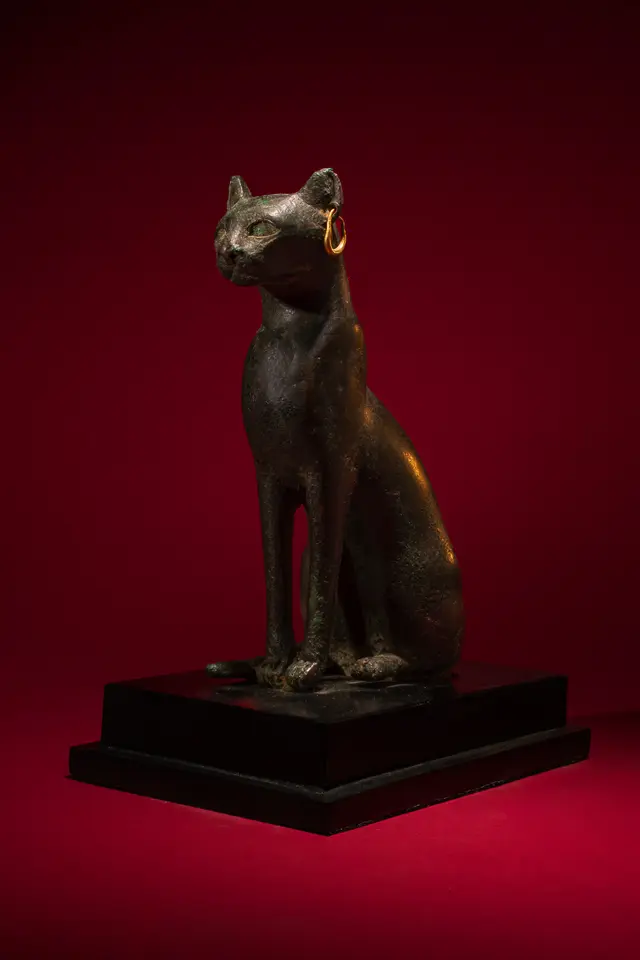
RARE EGYPTIAN BRONZE CAT STATUETTE WITH GOLD EARRINGS - LARGE SIZE
06/21/2026

25.506,40€
Est.: 23.095,64€
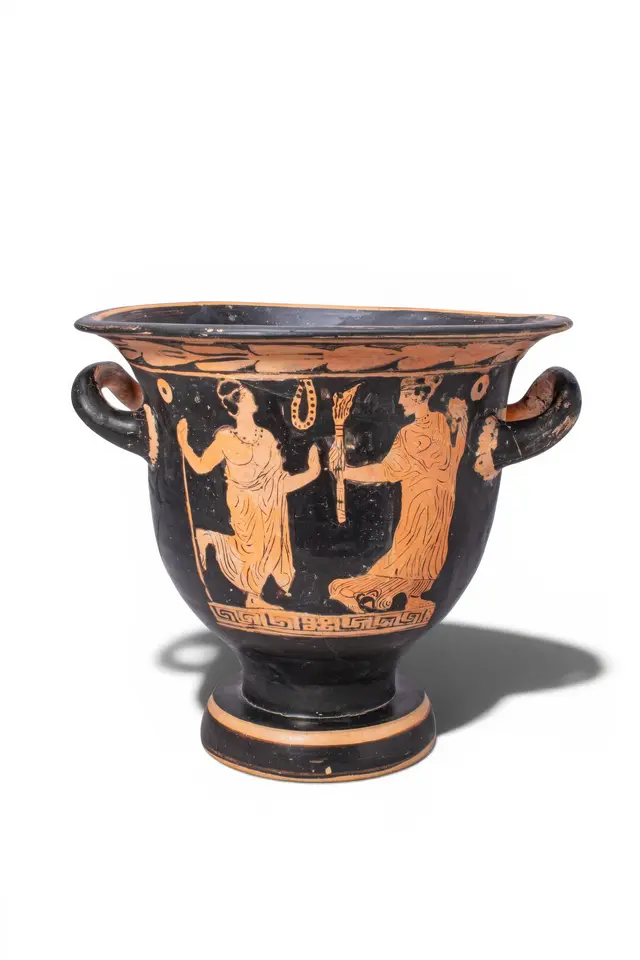
APULIAN RED-FIGURE BELL KRATER WITH KOMASTOS AND MAENAD - TL TESTED
06/21/2026
3.014,39€
Est.: 2.304,20€
NOV 27 | 3:00 PM


NOV 28 | 4:00 PM
¡Lleva tu subasta a coleccionistas de todo el mundo!
Publica ahoraAl suscribirte, aceptas la política de privacidad. Cancela tu suscripción en cualquier momento.
Barnebys HQ
Brahegatan 10
BOX 5038
114 37 Stockholm
