



Todas las subastas / Arte Antiguo / Ancient Roman, Empire Legionary Gladus Amulet (No reserve price)

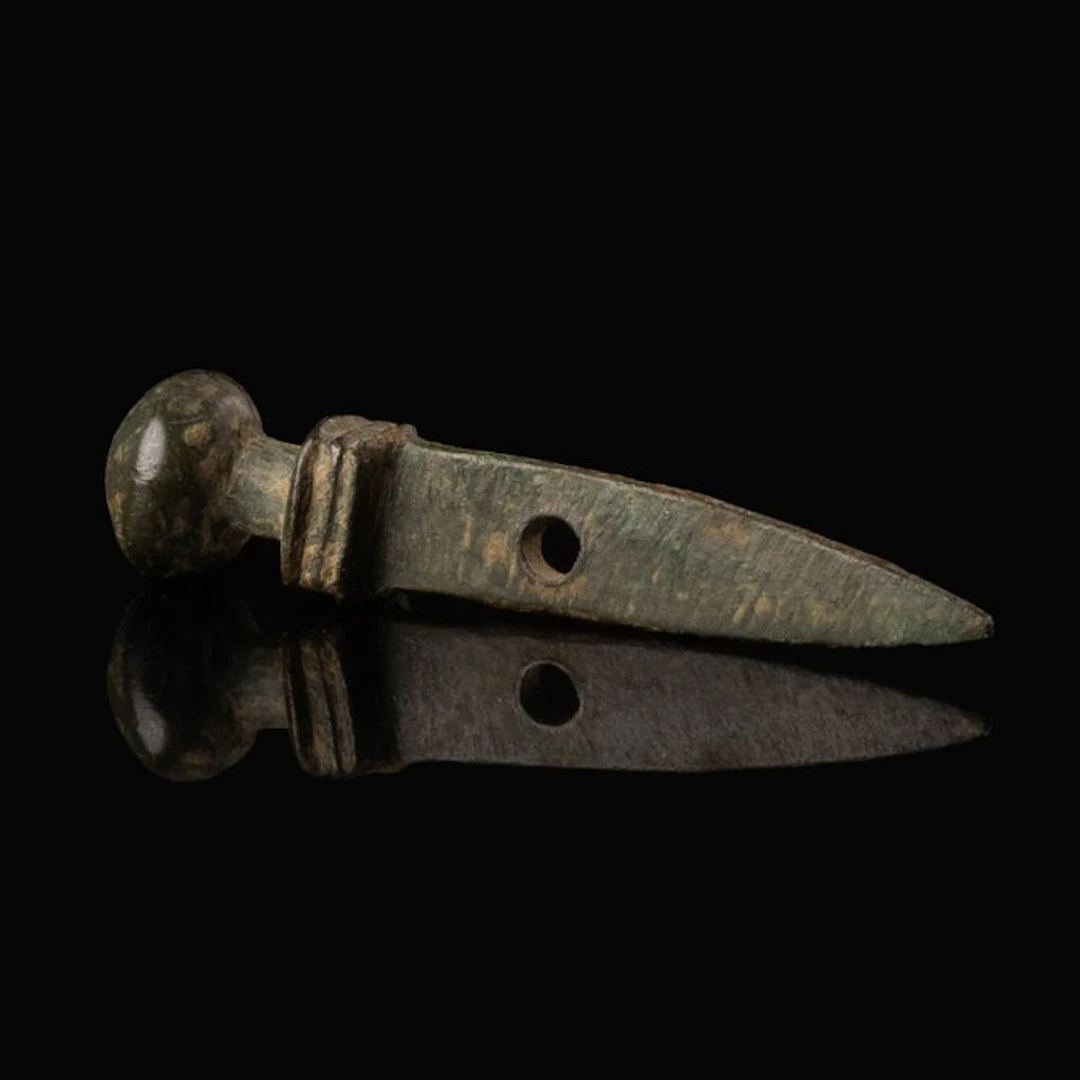
Attention: due to customs regulations we can only ship inside the European Union. Please ensure you have a valid EU shipping address before placing a bid. Ancient Roman bronze amulet in the form of a miniature Legionary Gladius (short sword), featuring a tapering blade, pierced with a circular opening along the body. At the end is a stepped collar, leading to a solid spherical pommel. -> Miniature weapon pendants were worn throughout the Roman world as personal amulets. Such objects symbolised strength, protection, and martial power, reflecting the importance of military culture within Roman society. -> Small representations of weapons such as swords, daggers, and axes are known from Roman contexts and were often worn as symbolic talismans, possibly intended to invoke protection or the virtues associated with Roman soldiers. Length: ± 43.5 mm Condition: Well-proportioned amulet in good and solid condition with a smooth olive-green patina, typical of ancient bronze. Minor surface irregularities and signs of wear consistent with age and use. Certificate of Authenticity: available upon request (pdf-format) for items with a hammer price of € 100 or more. -> A Gladius amulet is one of the most attractive and desirable ancient amulets. These were issued to soldiers in combat. The Roman Gladius was the primary sword for Roman foot soldiers. Early Roman swords were based on the Greek xiphe. From the 3rd century BC the Romans adopted and improved the swords of the Celtiberians in Hispania (modern-day Spain), known as a 'gladius hispaniensis'. A Roman Legionair was equipped with a gladius (sword), pugio (dagger), scutum (shield), a pila (javelin). Gladii were two-edged for cutting and had a tapered point for stabbing. A solid grip was provided by a knobbed hilt added on, possibly with ridges for the fingers. The hilt (capulus) was often ornate. The gladius was sheathed in a scabbard mounted on a belt or shoulder strap. A centurion wore it on the opposite side as a mark of distinction. Towards the end of the 2nd century AD and during the 3rd century the spatha gradually replaced the gladius in the Roman Legions.
Estimación:€210
Ir a la subastaVer todos los artículos deCatawikioArte Antiguo
Estimación:
€210
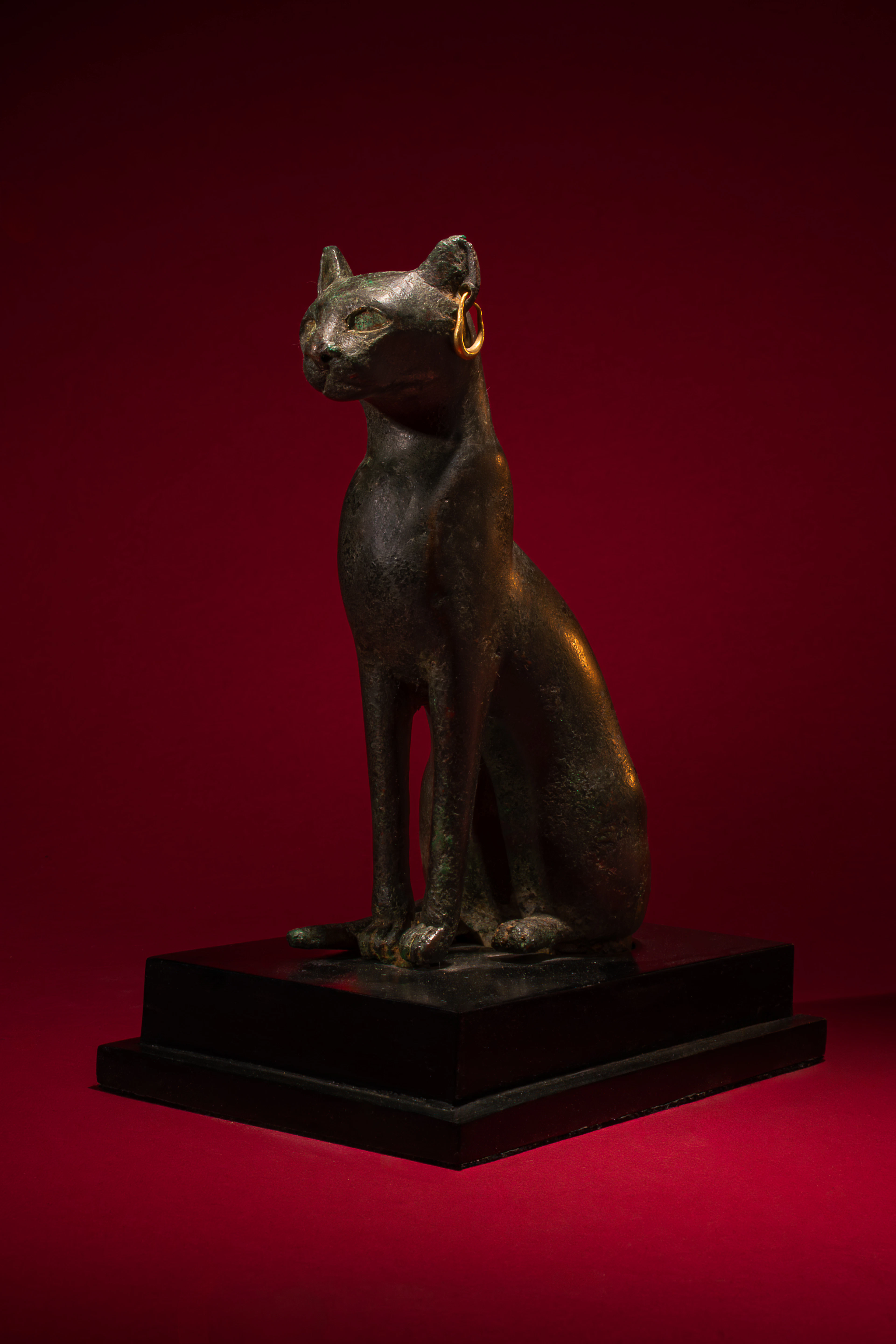
RARE EGYPTIAN BRONZE CAT STATUETTE WITH GOLD EARRINGS - LARGE SIZE
06/21/2026

€25,506.4
Est.: €23,095.64
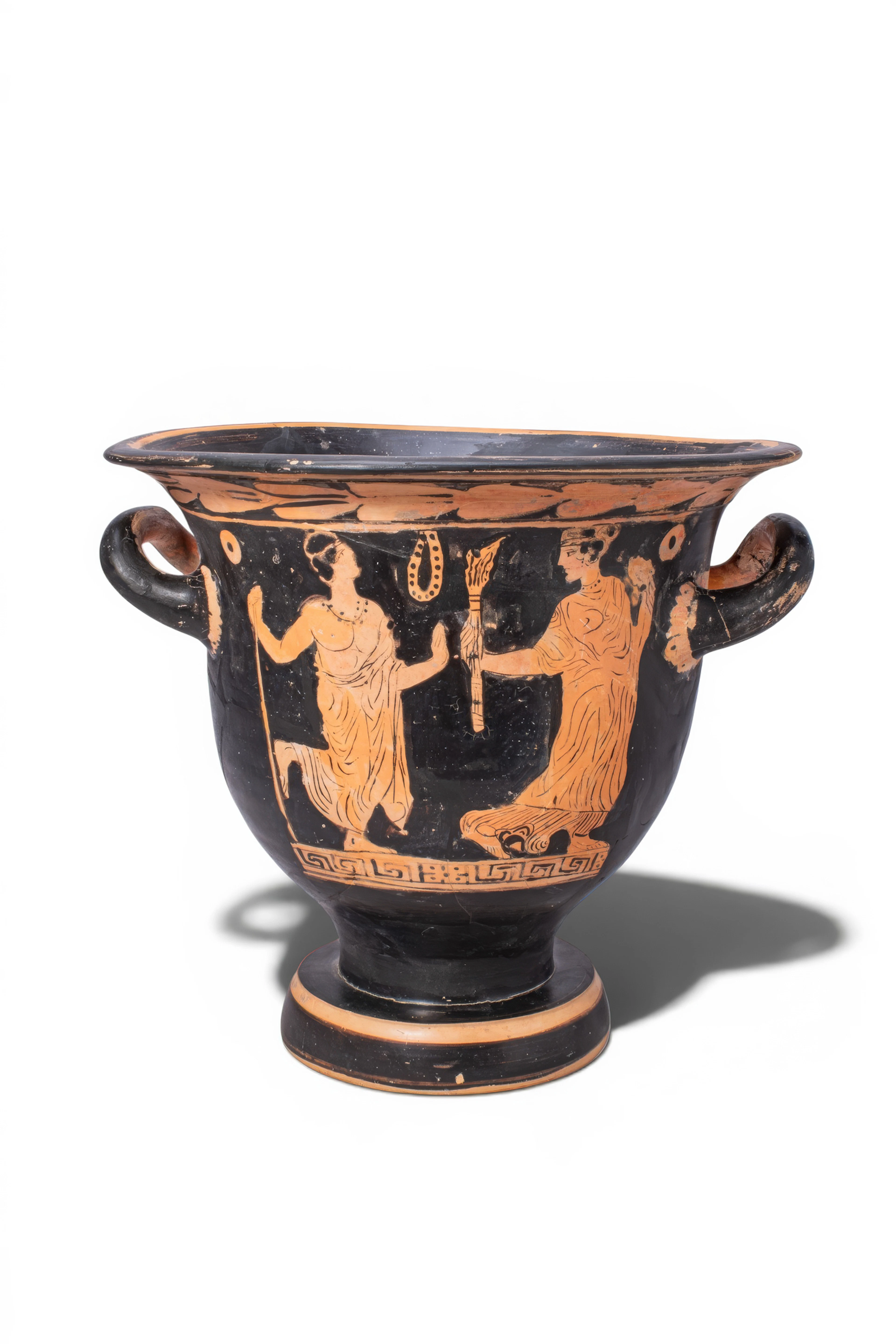
APULIAN RED-FIGURE BELL KRATER WITH KOMASTOS AND MAENAD - TL TESTED
06/21/2026
€3,014.39
Est.: €2,304.2

OCT 27 | 4:00 PM
¡Lleva tu subasta a coleccionistas de todo el mundo!
Publica ahoraAl suscribirte, aceptas la política de privacidad. Cancela tu suscripción en cualquier momento.
Barnebys HQ
Brahegatan 10
BOX 5038
114 37 Stockholm
