


OCT 27 | 4:00 PM

Todas las subastas / Arte Antiguo / Ancient Roman Bronze Ten Roman Bronze Coins – Collection...

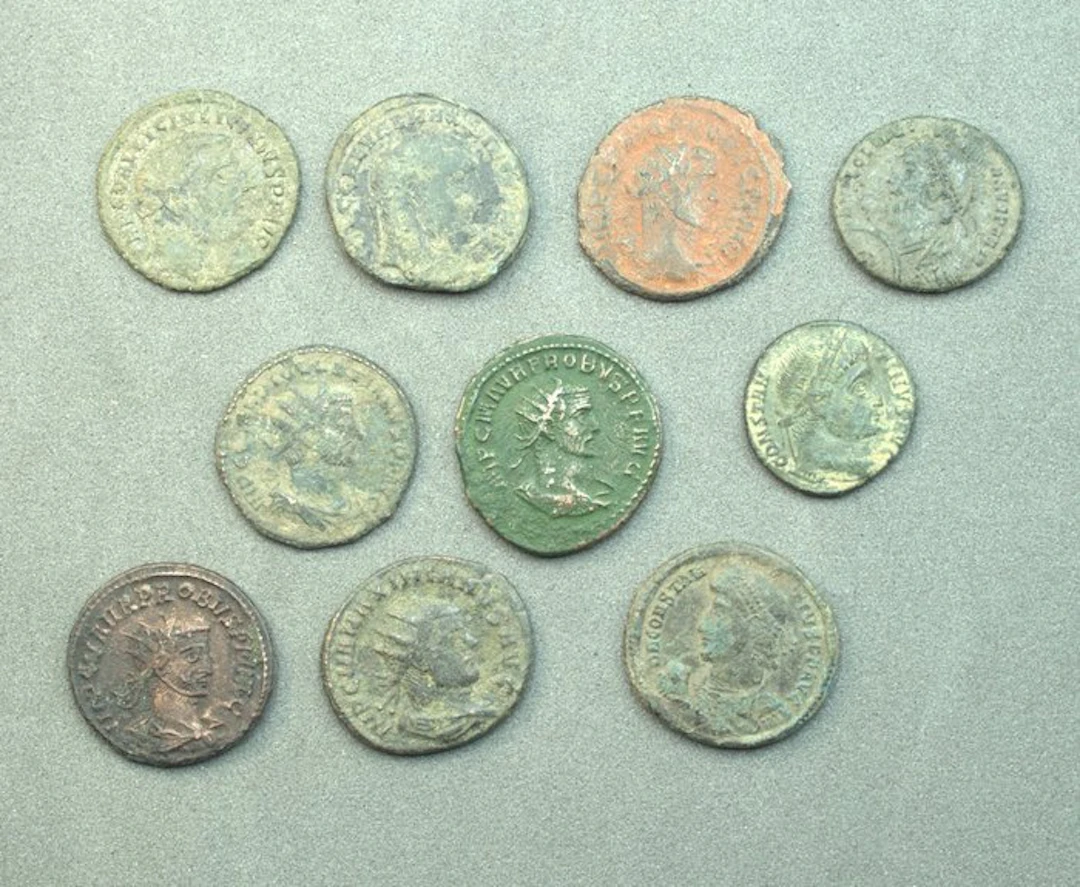
en Roman Bronze Coins – Collection including Probus and Late Roman Imperial Issues Culture / Period: Ancient Roman Date / Period: 3rd–4th century AD Material: Bronze / copper alloy Dimensions: 17–25 mm Condition: Good archaeological condition, with varying degrees of wear, patination, surface deposits and oxidation consistent with age No shipping outside theopean Union. Due to complex export regulations concerning cultural goods, this item cannot be shipped outside the EU. Please ensure you have a delivery address within theopean Union before placing a bid. Provenance information: Object Registration ID: 885 The current owner (S.N.J. S.) purchased this collection of ten Roman bronze coins. The supplied provenance information contains incomplete placeholder entries concerning the previous owner, place of acquisition and acquisition date. These details therefore cannot be reliably stated. No further information concerning the earlier ownership history of the collection is available. Background Information: This collection comprises ten Roman bronze and copper-alloy coins dating predominantly from the later 3rd and early 4th centuries AD. The group includes radiate antoniniani and later Roman bronze denominations, representing the changing monetary system of the Roman Empire during the period between the Crisis of the Third Century and the Tetrarchy. Several coins can be securely associated with Emperor Probus (AD 276–282). His name is clearly preserved in legends including forms such as IMP C M AVR PROBVS AVG, accompanied by the characteristic radiate imperial portrait. Probus ruled during a period in which the Empire was recovering from decades of military and political instability. His extensive antoninianus coinage was produced at several imperial mints and frequently combined distinctive imperial portraits with reverses emphasising military strength, divine favour and political stability. The collection also contains later issues belonging to the monetary environment of the Tetrarchic period, around the turn of the 4th century AD. Architectural reverses and standing imperial or divine figures are visible on several specimens. Because not every obverse legend is sufficiently preserved or legible in the photographs, these coins are deliberately not assigned to individual emperors where a secure attribution cannot be made. Particularly characteristic are the radiate imperial portraits. The radiate crown originally distinguished the antoninianus from the denarius, although during the 3rd century the denomination underwent substantial debasement and was eventually produced largely in copper alloy with only a limited silvered surface. These coins circulated in enormous quantities and became an important component of everyday monetary exchange. Roman coinage also served as an official means of communication. Portraits and inscriptions identified the ruling emperor, while reverses promoted concepts such as victory, concord, military loyalty, security and divine protection. Roman mints operated under state supervision and supplied coinage for taxation, military payments, administration and commerce throughout the provinces. Coins of this type circulated through markets, workshops, military settlements and households and could travel considerable distances through commercial and military networks, reaching regions including present-day Germany and the Netherlands. The surviving wear on individual pieces reflects their original function as practical objects repeatedly handled in everyday transactions. Together, these ten coins illustrate the changing portraiture, denominations and political messages of the later Roman Empire. The clearly identifiable issues of Probus provide a firm chronological element within the group, while the remaining late Roman pieces demonstrate the broader development of imperial bronze coinage around the late 3rd and early 4th centuries AD. They form a tangible connection to the ancient Roman monetary system and to the people who once used such coins in everyday economic life.
Estimación:€210
Ir a la subastaVer todos los artículos deCatawikioArte Antiguo
Estimación:
€210
OCT 27 | 4:00 PM
¡Lleva tu subasta a coleccionistas de todo el mundo!
Publica ahoraAl suscribirte, aceptas la política de privacidad. Cancela tu suscripción en cualquier momento.
Barnebys HQ
Brahegatan 10
BOX 5038
114 37 Stockholm
