


Todas las subastas / Arte Antiguo / Ancient Roman

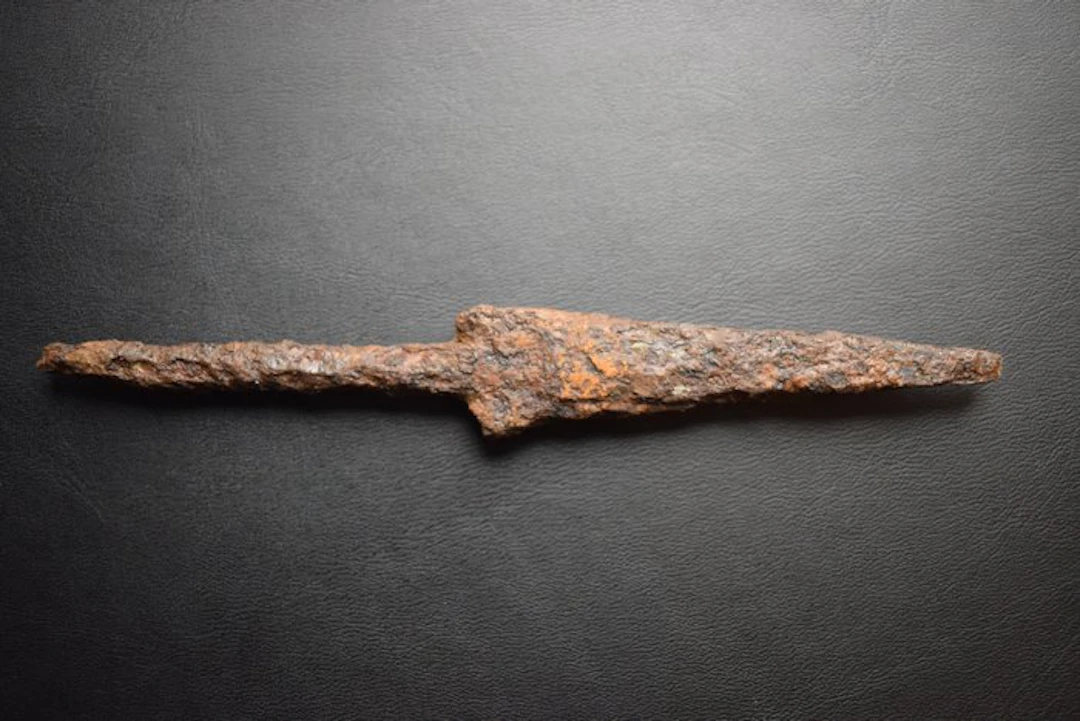
Ancient Roman Iron Ballista Bolt Head – Heavy Military Artillery Projectile Roman Imperial Period, circa 1st–3rd century AD Material: Iron Weight: 51.6 g Length: 14.2 cm Maximum width: 1.9 cm Maximum thickness: 0.9 cm From a Private European Collection. An impressive and exceptionally substantial Ancient Roman iron artillery bolt head, associated with the powerful torsion artillery employed by the Roman army. Forged from iron, the projectile displays a formidable elongated pyramidal / bodkin-shaped penetrating head, reaching a maximum width of approximately 1.9 cm and continuing into a long, narrow attachment element for mounting onto the original wooden shaft. At 14.2 cm in surviving length and 51.6 g, this is an unusually large and imposing example of Roman projectile weaponry. A projectile of the Roman war machine: The Roman army was not dependent upon the sword, spear and bow alone. Roman legions employed sophisticated mechanical artillery capable of launching heavy bolts with considerably greater force than could be achieved by the human arm. Machines generally referred to as ballistae and scorpiones could propel specially constructed bolts towards enemy troops, defensive positions and fortifications. Their ammunition was designed for one overriding purpose: penetration. The present object's long, narrow and strongly reinforced point is characteristic of this concept. Rather than possessing the broad cutting blades encountered on many conventional arrows, the heavy pyramidal point concentrated the energy of impact onto a very small area. Roman artillery bolt heads of comparable principle are preserved in important archaeological collections. Examples from the Roman legionary fortress at Caerleon are described by Museum Wales as pyramidal iron ballista heads originally mounted on wooden shafts, while the celebrated Roman military finds from Hod Hill include Manning Type I iron ballista bolts dating to the middle of the 1st century AD. Directly associated with Roman military artillery: This distinction makes such objects particularly fascinating pieces of Roman military archaeology. Whereas ordinary arrows could serve both civilian and military purposes, torsion artillery belonged fundamentally to the sphere of organised military warfare. Academic discussion of Roman projectile finds consequently regards the presence of ballista bolts as significant evidence for military activity. Roman legions used such machines to launch bolts against enemy positions and personnel. The London Museum likewise notes that ballistae were employed by the legions to fire arrows or bolts and that artillery machines could even be positioned above fortified gateways. The object therefore represents something far more evocative than an ordinary ancient iron implement: it belongs to the technological tradition of Roman battlefield artillery. An unusually substantial surviving example: Ancient iron weaponry is particularly vulnerable to corrosion during centuries of burial. The survival of such a long and substantial projectile head is therefore especially attractive from a collector's perspective. The heavily mineralised reddish-brown surface bears the characteristic appearance of ancient iron, while the overall silhouette of the weapon remains immediately recognisable. The considerable weight and dimensions give the piece an impressive physical presence in hand. At 14.2 cm, the present specimen is also notably larger than numerous museum-recorded Roman ballista heads. Examples in the London Museum measure approximately 65–115 mm, while the British Museum records Manning Type I examples from Hod Hill measuring 75 and 79 mm. A particularly large example excavated at Caerleon measures 120 mm. The combination of its substantial dimensions, heavy construction, distinctly military character and surviving ancient iron surface makes this a particularly evocative example of Roman projectile weaponry. A rare and highly attractive piece of Roman military equipment – a tangible survivor of the sophisticated artillery technology that accompanied the Roman legions across the Empire. I prove that the lot was obtained legally , provenance statement seen by Catawiki Important information. I guarantee that I am entitled to ship this lot. I will take care that any necessary permits will be arranged. I will inform the buyer about this if this takes more than a few days.
Estimación:€450
Ir a la subastaVer todos los artículos deCatawikioArte Antiguo
Estimación:
€450
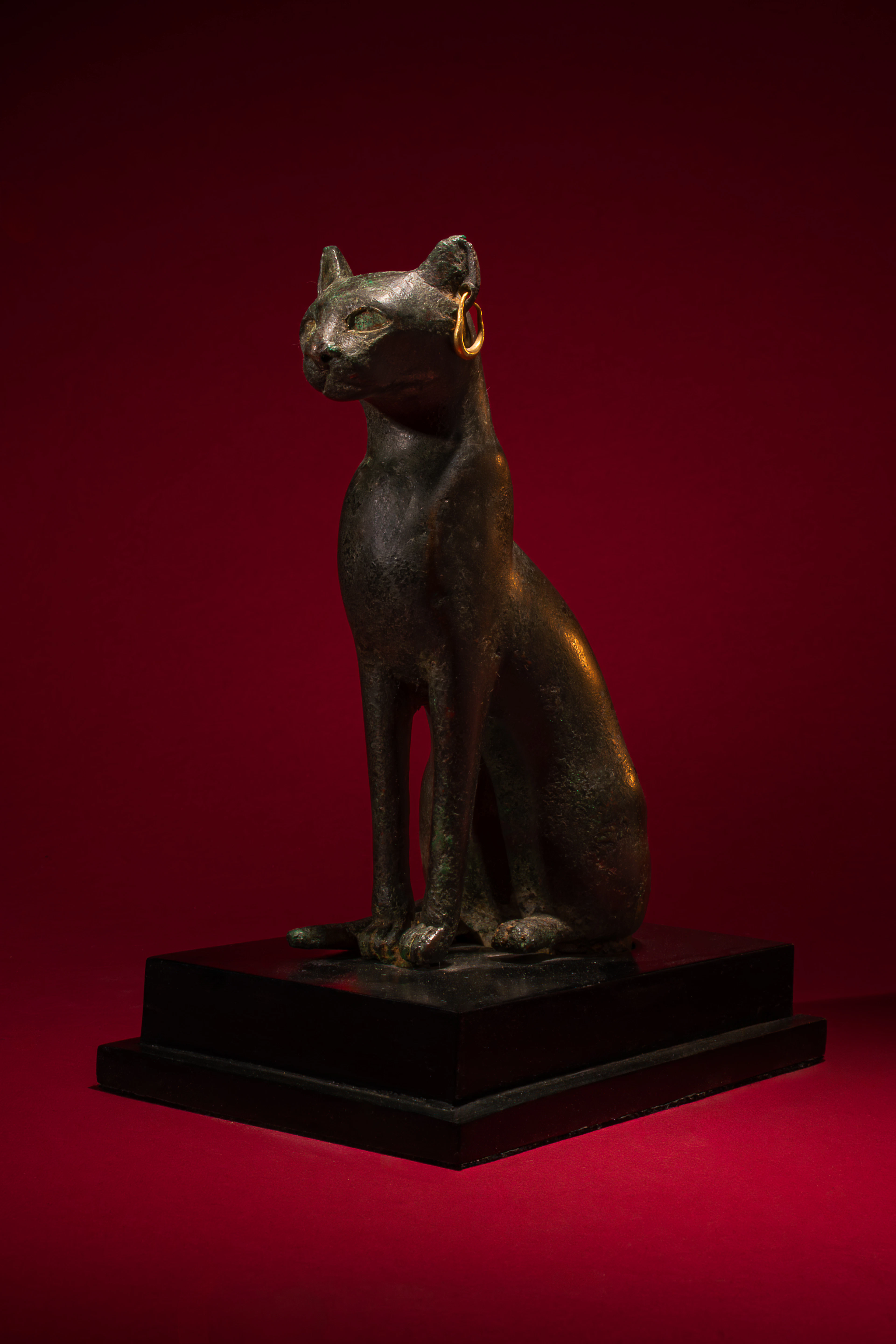
RARE EGYPTIAN BRONZE CAT STATUETTE WITH GOLD EARRINGS - LARGE SIZE
06/21/2026

€25,506.4
Est.: €23,095.64
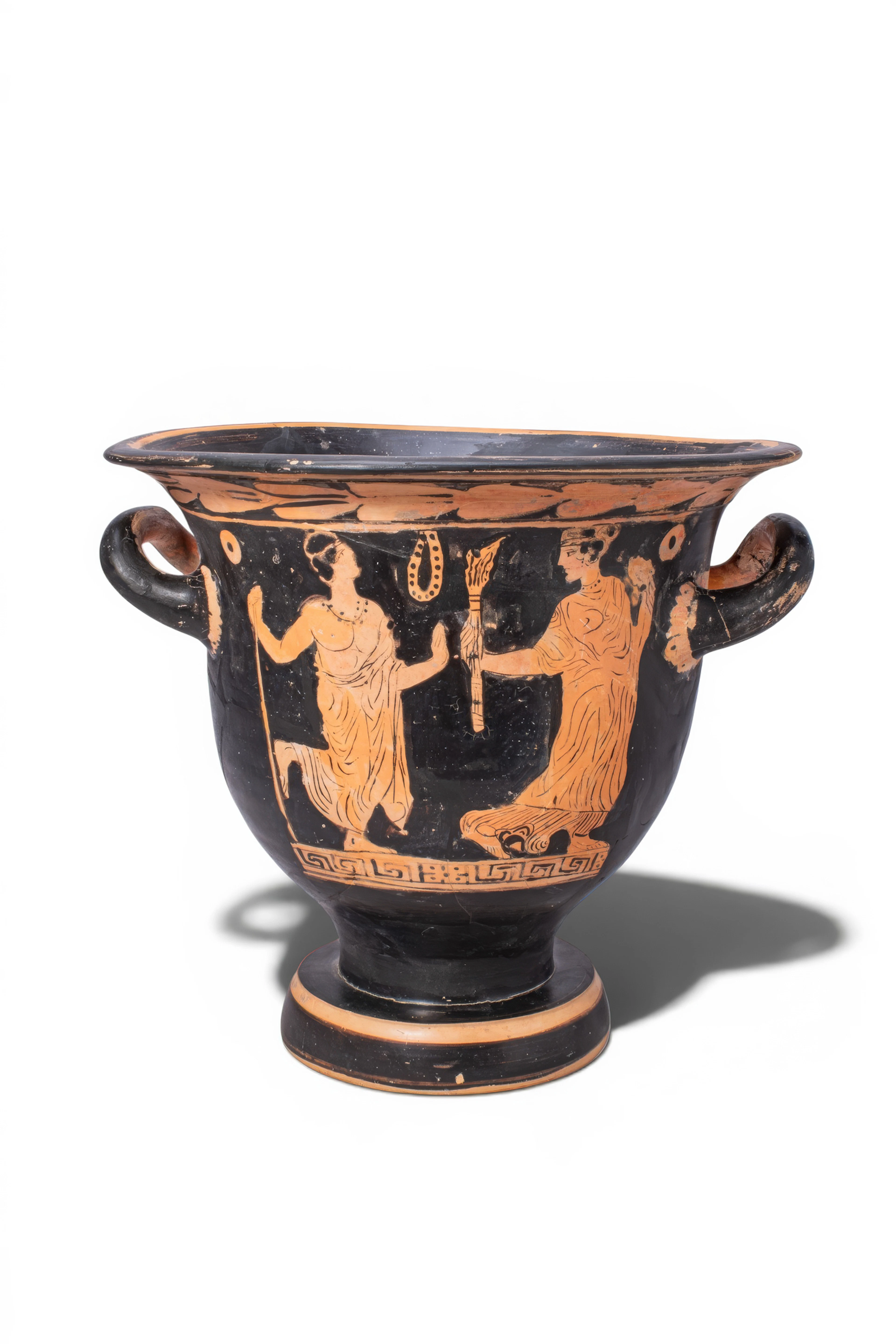
APULIAN RED-FIGURE BELL KRATER WITH KOMASTOS AND MAENAD - TL TESTED
06/21/2026
€3,014.39
Est.: €2,304.2
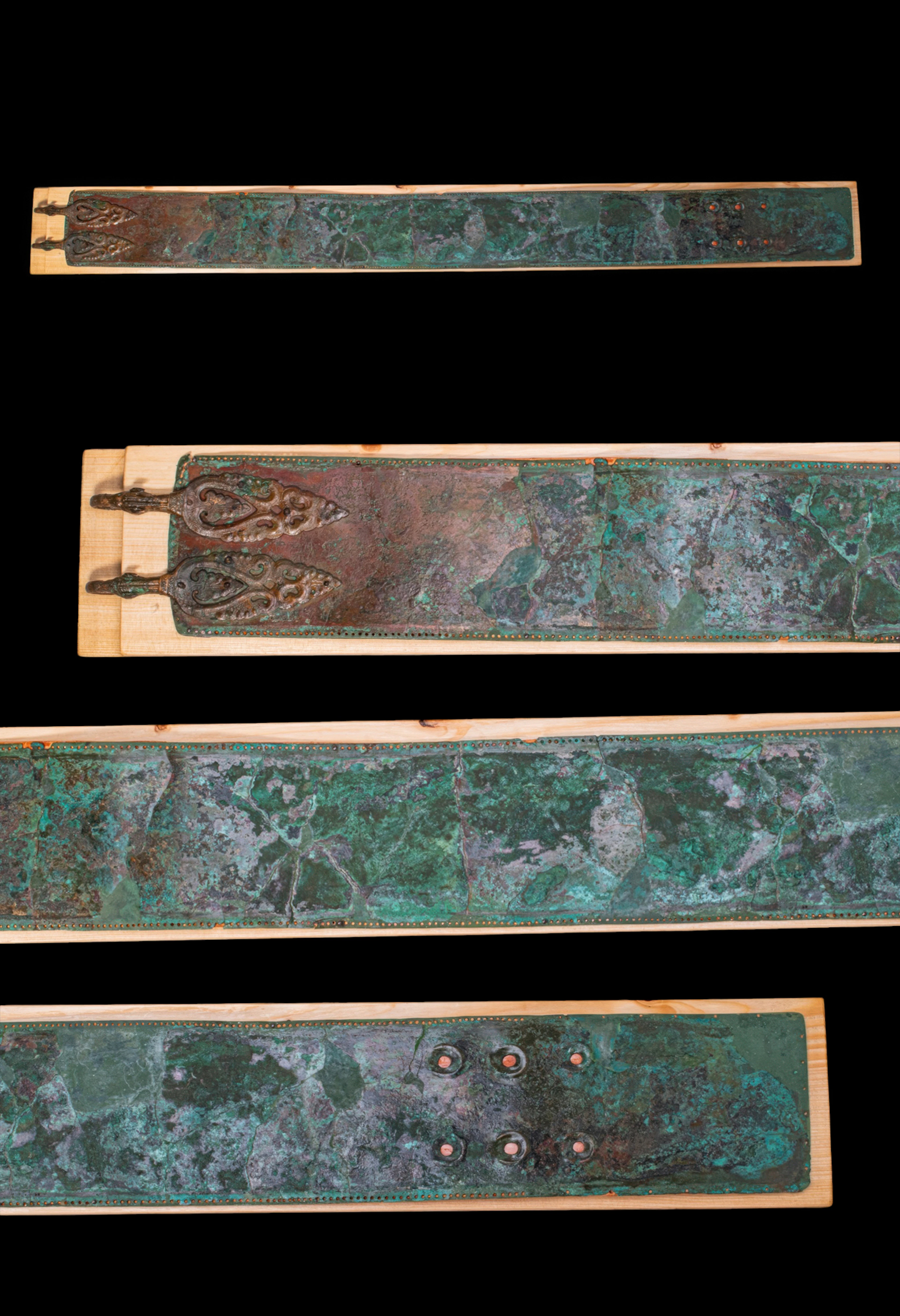


OCT 27 | 4:00 PM
¡Lleva tu subasta a coleccionistas de todo el mundo!
Publica ahoraAl suscribirte, aceptas la política de privacidad. Cancela tu suscripción en cualquier momento.
Barnebys HQ
Brahegatan 10
BOX 5038
114 37 Stockholm
