
Todas las subastas / Arte Antiguo / Ancient Egyptian Granodiorite Horus Falcon Sculpure

Ancient Egyptian Granodiorite Horus Falcon Sculpure
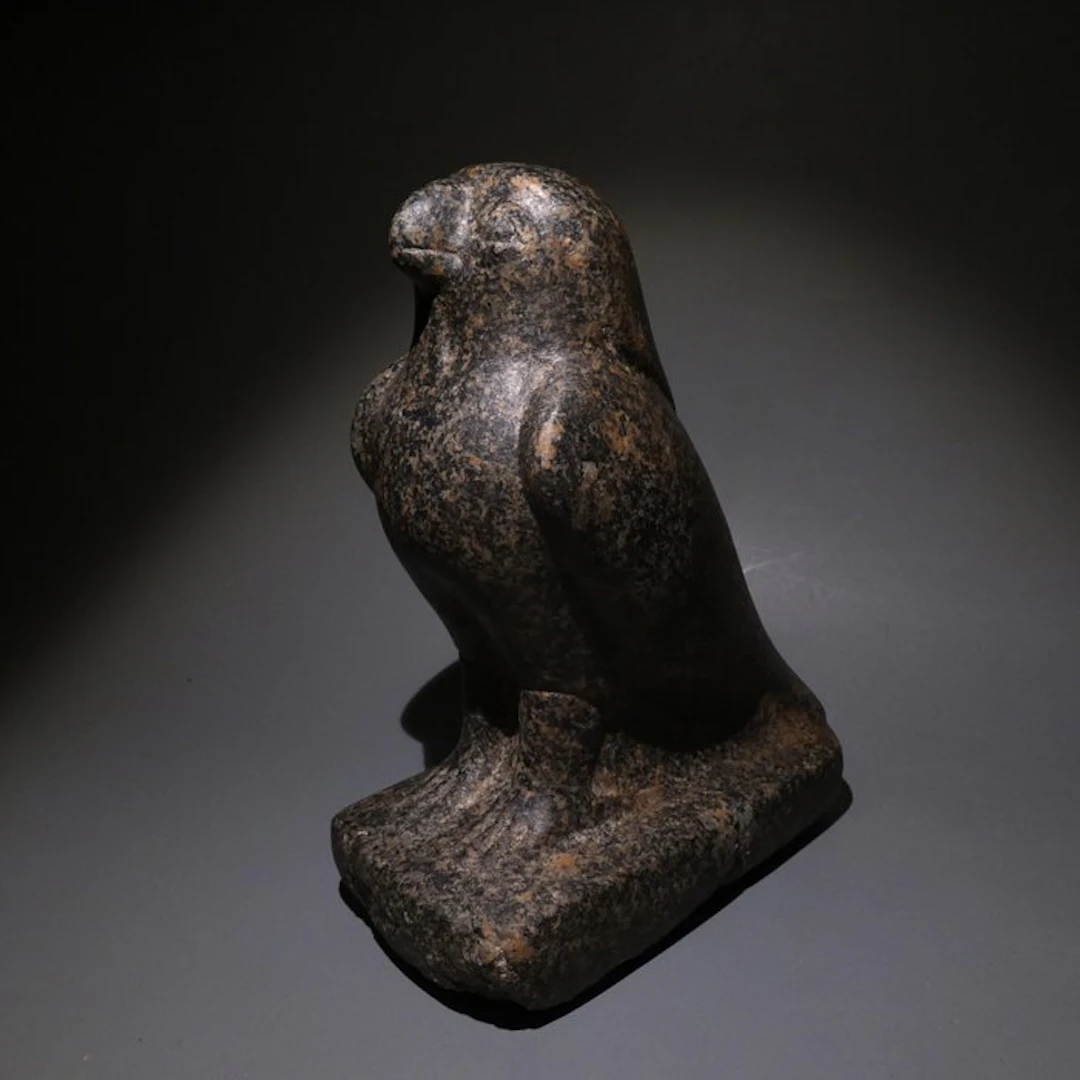
Falcon Horus God Figure - very rare, heavy piece - Ancient Egypt, Late Period 664-332 BC Granodiorite 19,5 cm height, 15 cm width and 8 cm thickness. Provenance Private collection of Peter Itzvart (1943 - 2023), Paris, formed bettween 1975 – 1990. Thence by descent. Ancient Egyptian sculpture in granodiorite offers a remarkable window into the artistic, religious, and political values of one of the world’s earliest civilizations. Among the most striking examples are falcon-shaped sculptures representing the god Horus, a central deity associated with kingship, the sky, and divine protection. These works, carved from hard, dark granodiorite stone, demonstrate both extraordinary craftsmanship and deep symbolic meaning. Granodiorite, a durable and visually imposing material, was chosen deliberately. Its hardness made it difficult to carve, requiring highly skilled artisans and considerable time, which in itself reflected the importance of the subject. The stone’s dark, speckled appearance conveyed a sense of permanence and power, qualities closely linked to the divine and to the eternal nature of the gods in Egyptian belief. Sculptures made from such material were intended to last forever, reinforcing the idea of immortality. The falcon form was directly connected to Horus, who was believed to manifest as a falcon or a man with a falcon’s head. In Egyptian mythology, Horus was the son of Osiris and Isis and the rightful ruler of Egypt. He symbolized order, legitimacy, and the divine authority of the pharaoh. As a result, falcon sculptures were not merely religious objects; they also carried strong political significance. Pharaohs were often considered the earthly embodiment of Horus, and these statues reinforced their divine right to rule. Artistically, these sculptures are notable for their balance between stylization and realism. The falcon is typically depicted in a poised, upright stance, with carefully defined wings folded against its body. The feathers may be rendered with subtle incisions, while the eyes are often emphasized, giving the figure an alert and watchful presence. This sense of vigilance reflects Horus’s role as a protector deity, watching over both the king and the land of Egypt. Many of these granodiorite falcon statues were placed in temples or sacred spaces, where they functioned as intermediaries between humans and the divine. Offerings and prayers would be made before them, reinforcing their role as living symbols of Horus’s presence. Today, these sculptures continue to captivate viewers, not only for their technical mastery but also for the profound cultural and spiritual meanings they embody.
Estimación:€19,000
Ir a la subastaVer todos los artículos deCatawikioArte Antiguo
Estimación:
€19,000
Artículos similares
Resultados de subastas para artículos similares
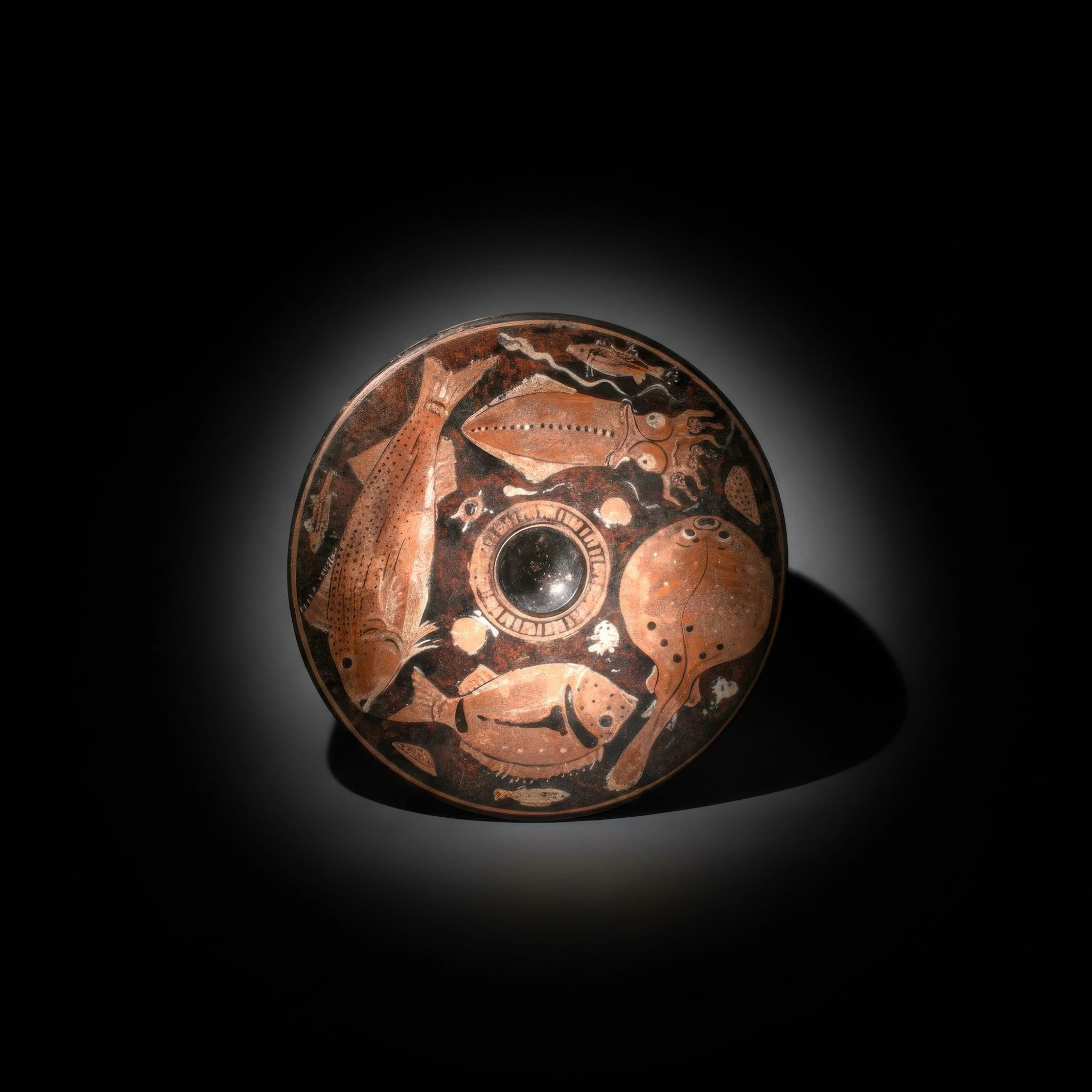
VERY RARE APULIAN RED-FIGURE FISH PLATE WITH 15 SEA CREATURES
06/21/2026

€23,187.64
Est.: €11,540.27
¡Lleva tu subasta a coleccionistas de todo el mundo!
Publica ahora