




Todas las subastas / Arte Antiguo / Ancient Egypt, Late Period Earrings with Multicoloured Faience Beads


Attention: due to customs regulations we can only ship inside the European Union. Please ensure you have a valid EU shipping address before placing a bid. Earrings with Egyptian multicoloured faience beads. The authentic ancient beads are carefully restrung with modern materials and wearable. The set will be delivered in a jewellery box, a perfect gift for any occasion. Total length: ± 45,1 mm Diameter beads: ± 4,4 mm Certificate: Certificate of Authenticity (PDF) is available upon request for all lots with a hammer price of €100 or higher. Condition: Good condition and wearable. The ancient beads have been restrung and combined with modern gold-plated spacer beads and fittings. Minor surface irregularities and signs of wear consistent with age and use. Provenance: Composed of beads originating from various old collections, acquired in the UK between 2016–2024. Character: Each ancient bead displays subtle variations and signs of age, reflecting its long history and adding to the unique charm of every composition. Please note: Photographed in a professional studio against a deep black background to enhance contrast and detail. Studio lighting and individual screen settings may slightly affect the appearance of colours. Carnelian: The Egyptians believed carnelian had magical powers; it was believed it could ward off evil, help the blood circulation and make the skin look healthy and youthful. Carnelian was known as the 'Blood of Isis' (Goddess of nature and guide of souls to the Underworld). Accordingly, a carnelian amulet called a 'thet' was placed on mummies to assist the dead in their journey to the afterlife. The Egyptian faith in carnelian was so strong that, along with turquoise and lapis lazuli, it was the most used stone in ancient Egyptian jewellery. Faience: Faience was very popular and widely used in ancient Egypt. The earliest evidence of faience production was discovered in a 7500 year old workshop near the temple in Abydos. The production and style of faience changed through Egyptian history. Different colourants were used for aesthetic and symbolic purposes, or to imitate the more expensive and rare semi-precious gemstones like turquoise, carnelian, lapis lazuli, garnets or obsidian. Egyptians believed that faience in the colour of gemstones had the same properties. Red had protective powers, dark lapis blue gave strength, courage and wisdom, bright turquoise was associated with fertility and offered protection to the wearer. As faience was more available than semi-precious gemstones it became a popular and widely used material for small objects like scarabs and other forms of amulets, beads, jewellery, small size statuettes, cosmetic vessels and ritual objects. In ancient Egypt, faience objects were seen as magical, reflecting the eternal shimmer of the sun and infused with the powers of rebirth and sparkle with the brilliance of eternity.
Estimación:€180
Ir a la subastaVer todos los artículos deCatawikioArte Antiguo
Estimación:
€180
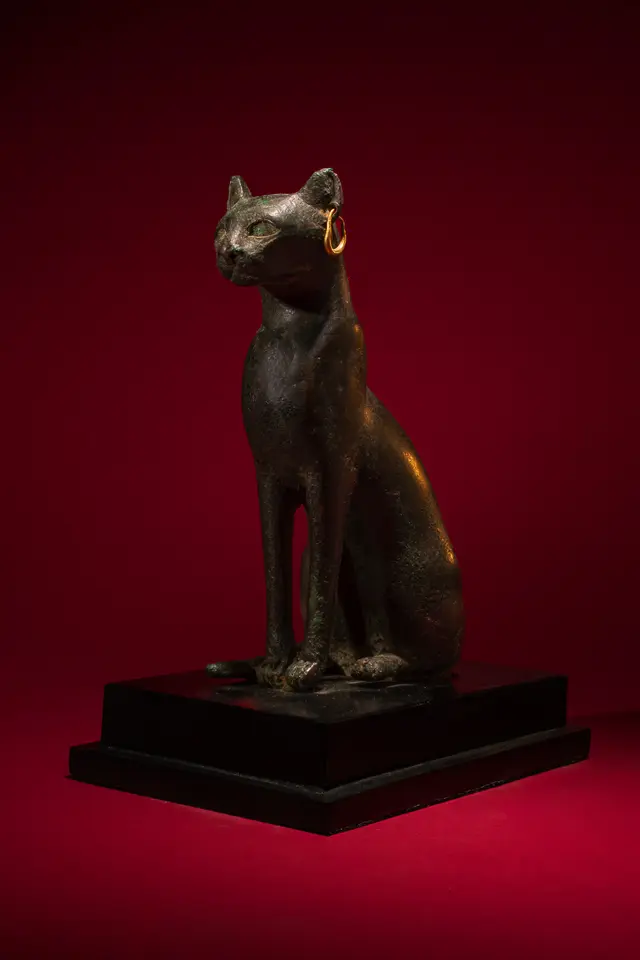
RARE EGYPTIAN BRONZE CAT STATUETTE WITH GOLD EARRINGS - LARGE SIZE
06/21/2026

€25,506.4
Est.: €23,095.64
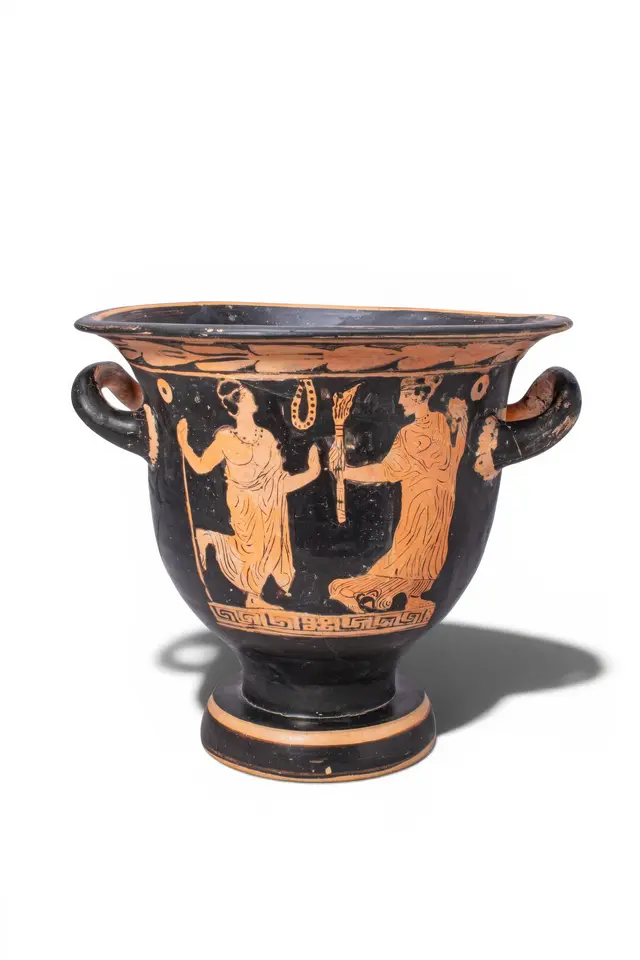
APULIAN RED-FIGURE BELL KRATER WITH KOMASTOS AND MAENAD - TL TESTED
06/21/2026
€3,014.39
Est.: €2,304.2
¡Lleva tu subasta a coleccionistas de todo el mundo!
Publica ahoraAl suscribirte, aceptas la política de privacidad. Cancela tu suscripción en cualquier momento.
Barnebys HQ
Brahegatan 10
BOX 5038
114 37 Stockholm
