
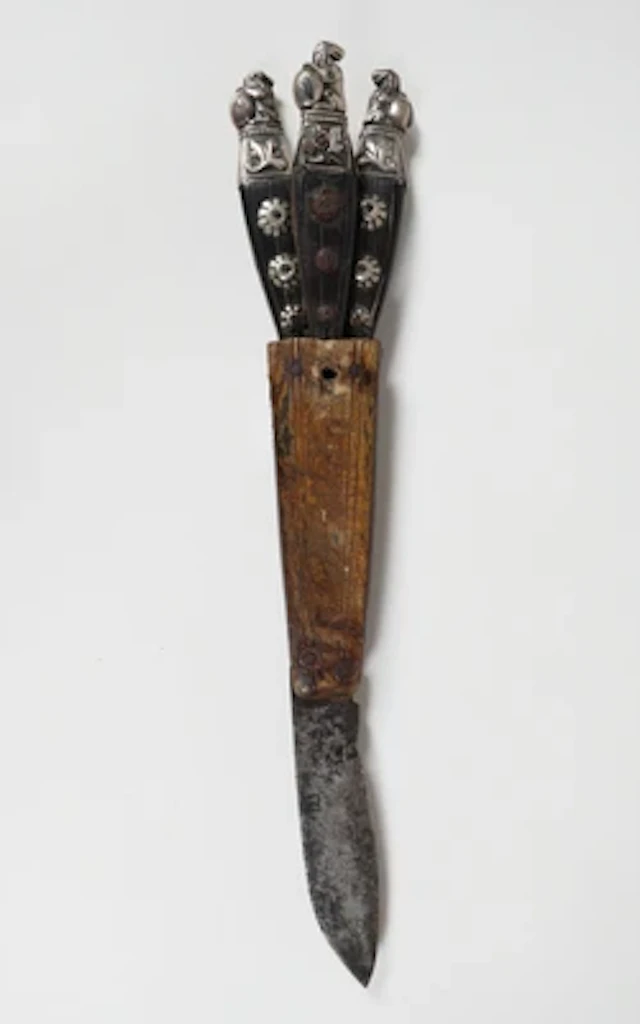
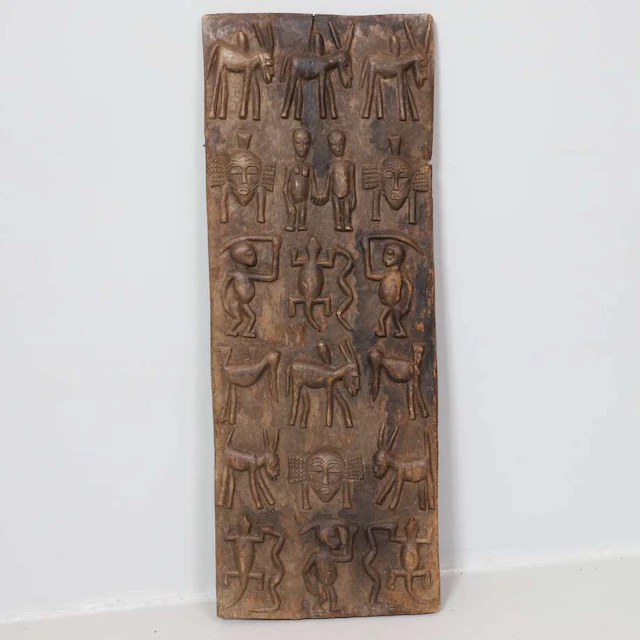



Todas las subastas / Etnográfica / A wooden sculpture - Losso - Togo (No reserve price)

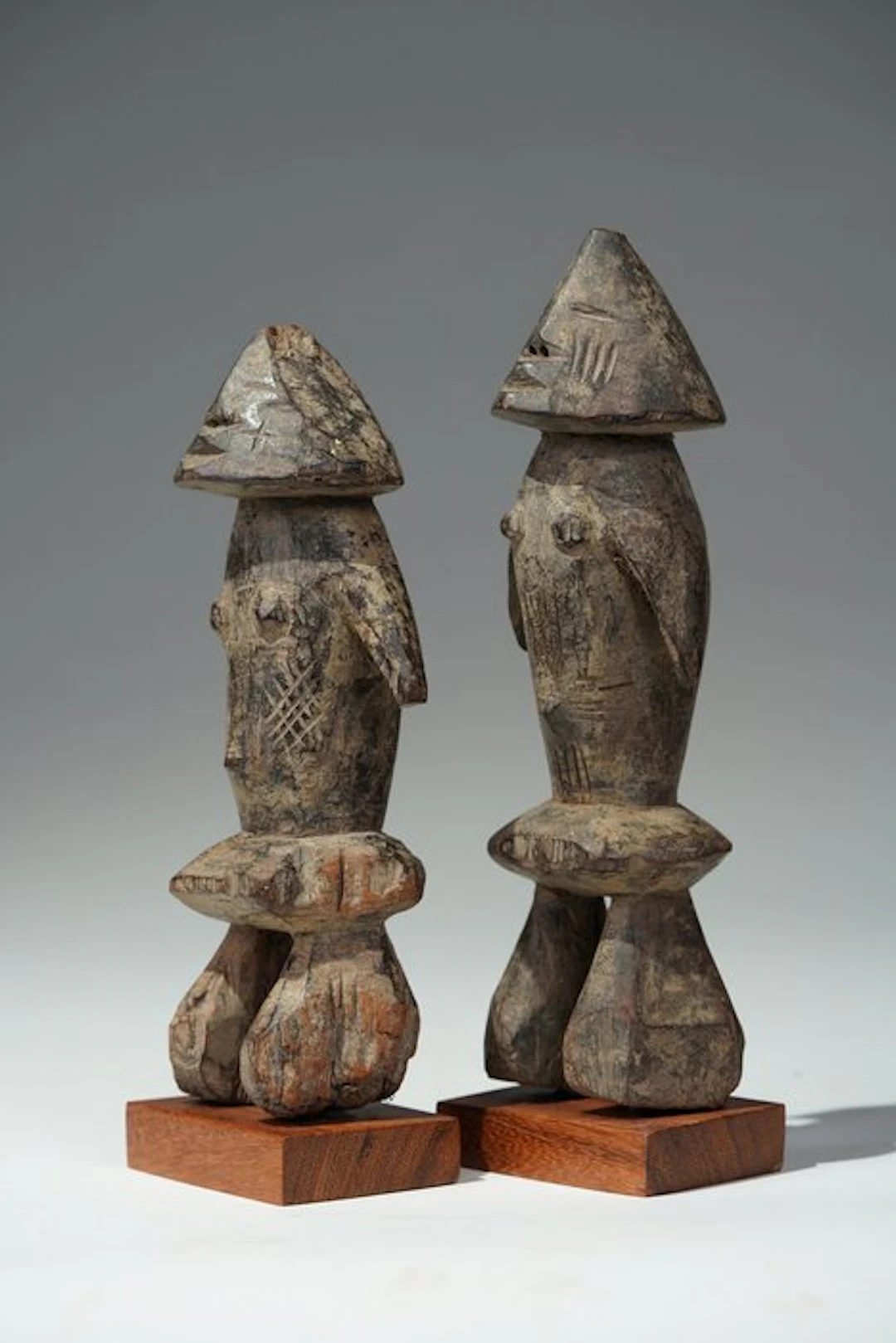
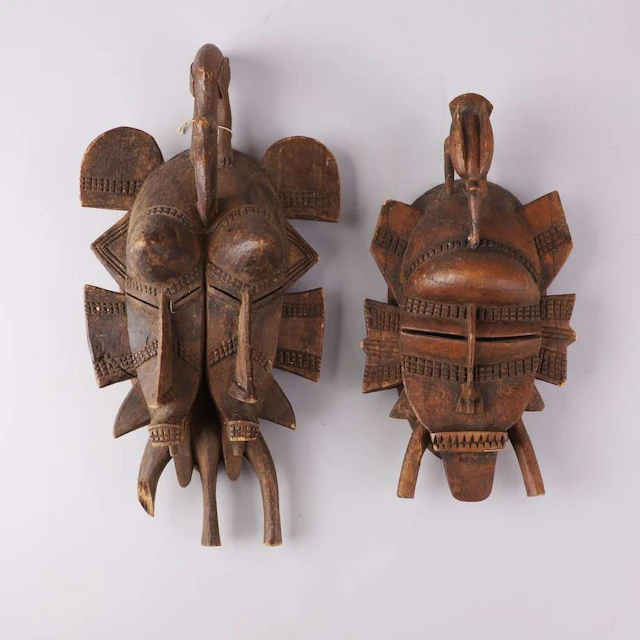
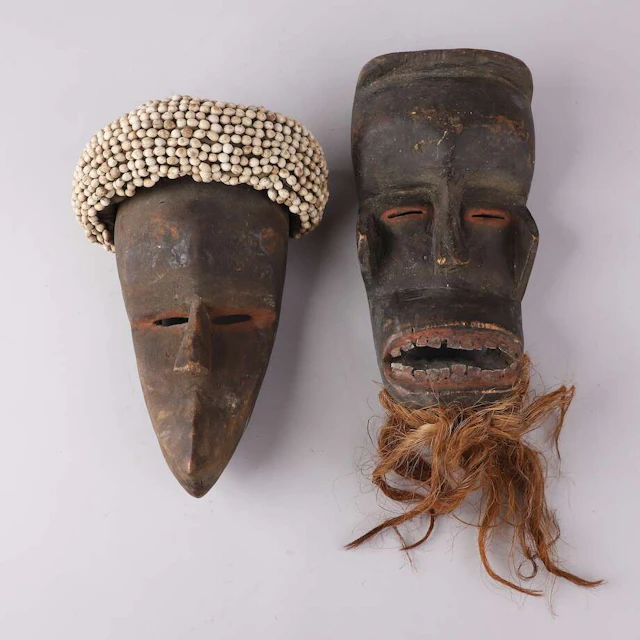
Pair of Losso Wooden Sculptures – Anthropomorphic Figures with Triangular Heads Losso (Nawdba), attributed Siou Village, Niamtougou Region, Northern Togo Material: Carved wood with dark brown patina, pale surface deposits and incised geometric decoration Dating: Undetermined, possibly 20th century Cultural Attribution: Losso, according to the informant Function: Undetermined; possibly associated with ancestral or protective ritual practices Description This striking pair of wooden sculptures represents two standing anthropomorphic figures distinguished by their sharply triangular heads, elongated cylindrical bodies, projecting breasts, and exceptionally powerful lower extremities. Although closely related in their overall conception, the figures display individual variations in proportion, ornamentation, and surface treatment. Their remarkable formal coherence suggests a shared sculptural tradition and possibly a common workshop. The heads are the most immediately recognizable features. Each takes the form of a broad, flattened triangle, with a pointed upper extremity and a nearly horizontal lower edge. Rather than being modeled in the round, the faces are incorporated into the triangular surfaces through shallow incisions and projecting relief elements. The eyes are represented by narrow horizontal lines, while the noses and mouths are reduced to angular forms. Additional vertical and diagonal markings suggest facial scarification, decorative patterns, or other identifying characteristics. The figure on the right possesses a particularly pronounced triangular head with an elongated profile and several parallel incisions extending across the cheek. The smaller figure on the left displays a more compact head, with an irregular upper contour and a somewhat different arrangement of facial markings. Both figures have elongated, approximately cylindrical torsos that widen toward the shoulders and taper slightly toward the lower body. Small projecting breasts indicate that the sculptures may represent female figures, although their gender identification should remain provisional. The arms are simplified into elongated forms descending alongside the torso, with little anatomical differentiation between upper and lower limbs. The surfaces of the bodies are decorated with incised lines, including diagonal cross-hatching, vertical grooves, and short horizontal markings. These details interrupt the otherwise smooth cylindrical volumes and contribute to the sculptures' expressive character. The lower sections are particularly distinctive. Both figures possess broad, projecting horizontal elements around the hips or upper legs, beneath which two massive, separately articulated supports extend downward. These supports resemble exaggerated legs or feet, although their proportions depart considerably from naturalistic human anatomy. The smaller sculpture terminates in two rounded, bulbous lower elements, while the taller figure displays more angular, tapering supports. Both stand on modern wooden display bases. Their surfaces exhibit dark brown and greyish coloration, with extensive lighter deposits, abrasion, and localized reddish areas. These characteristics suggest a complex surface history, but the nature of the deposits and the sculptures' precise age cannot be determined from the photograph. Art-Historical Context The sculptures are attributed to the Losso, also known as the Nawdba, a population inhabiting the Niamtougou region of northern Togo. The Losso cultural sphere belongs to a wider landscape of closely interacting communities, including the Lamba, Kabyè, and neighboring groups of the northern Togolese highlands. Wooden sculpture from this region displays considerable formal diversity, ranging from relatively naturalistic representations of the human body to highly abstract figures characterized by geometric simplification and unusual anatomical proportions. The present pair belongs to the latter category. Its triangular heads, cylindrical bodies, and strongly emphasized lower extremities demonstrate an artistic approach in which the human form is transformed into a carefully balanced arrangement of elementary volumes. The sculptural traditions of northern Togo have historically received less extensive scholarly attention than those of several neighboring West African regions. Nevertheless, specialized studies of Lamba and Losso statuary have demonstrated the originality and complexity of local woodcarving traditions. Within this artistic environment, anthropomorphic sculptures may have been associated with ancestral relationships, domestic shrines, protective practices, or other forms of ritual activity. Their meanings, however, depend upon specific local contexts and cannot be inferred solely from their formal characteristics. The attribution to Siou village is particularly valuable because it situates the sculptures within a specific cultural and geographical environment. Siou is associated with the Nawdm-speaking communities of the Niamtougou area, although the precise distribution of individual sculptural styles between neighboring settlements remains insufficiently documented. The striking similarity between the two figures raises the possibility that they were created by the same sculptor or within a closely related workshop tradition. Their original association as a pair, however, cannot be established without further provenance information. Symbolism and Possible Ritual Function The sculptures' anthropomorphic characteristics suggest that they represent human or human-like beings, although their extreme abstraction complicates any attempt at precise identification. The projecting breasts may indicate female identities. If this interpretation is correct, the figures could conceivably relate to concepts of motherhood, fertility, lineage continuity, or female ancestral presence. Such associations occur in several West African sculptural traditions, but their relevance to these particular objects remains hypothetical. The triangular heads are especially intriguing. Their sharply defined geometry gives the figures an unusual visual authority and establishes a strong contrast with the rounded bodies beneath them. The incised facial markings may represent scarification, ornamental conventions, or symbolic signs. In various West African communities, facial markings have historically communicated identity, affiliation, or social distinction. Nevertheless, the precise patterns visible on these sculptures cannot be assigned to a particular Losso social category without documented comparisons. The exaggerated lower extremities may also have carried symbolic significance. Their substantial proportions give the figures a pronounced sense of stability, while the projecting horizontal elements above them create an impression of bodily segmentation. Such formal characteristics might have been understood in relation to strength, permanence, or spiritual presence, but these interpretations cannot be confirmed. The apparent pairing may be significant. Figures produced in related forms sometimes represent complementary individuals or spiritual entities. However, the sculptures may equally have been independent objects brought together because of their stylistic similarity. No surviving information identifies their original owners, ritual setting, or possible consecration. Their precise function therefore remains undetermined. Regional Characteristics: Siou and the Niamtougou Region Siou lies within the Niamtougou area of northern Togo, a region characterized by a complex cultural geography shaped by historical settlement, agricultural traditions, and interaction between neighboring communities. The Losso or Nawdba inhabit parts of this landscape, particularly around Niamtougou and associated settlements. Their cultural environment has historically maintained close relationships with neighboring Lamba and Kabyè populations, although each community possesses distinct linguistic and social traditions. The region's sculptural production is notable for its diversity and the importance of localized artistic practices. Unlike traditions strongly associated with centralized royal courts, much of the wooden sculpture of northern Togo developed within domestic, lineage-based, or community-specific contexts. This background is important for understanding the present pair. Their unusual proportions and geometric decoration may reflect a localized aesthetic rather than a standardized regional type. The triangular heads are especially distinctive and merit comparison with documented examples of Losso and neighboring Lamba sculpture. Their broad, flattened forms differ markedly from the rounded or elongated heads found on many other anthropomorphic figures from northern Togo. The treatment of the lower body is equally unusual. The large, projecting supports suggest an artistic emphasis on structural solidity and geometric rhythm rather than anatomical realism. The incised decoration also deserves attention. Cross-hatched patterns and parallel grooves are integrated into the surfaces without overwhelming the overall composition. These markings may reflect local decorative conventions, but their exact significance remains uncertain. The reported origin in Siou offers an important starting point for comparative research. Nevertheless, the village attribution should not be used to define a distinct Siou sculptural style without further evidence. The sculptures are best understood within the broader Losso artistic environment, while preserving the specific geographical information supplied by the informant. Art-Historical Appreciation The artistic distinction of this pair lies in its remarkable combination of geometric abstraction, expressive proportions, and carefully controlled surface ornamentation. The triangular heads establish a powerful visual emphasis. Their sharp outlines contrast with the rounded cylindrical bodies, creating a striking interplay between angular and curved forms. The elongated torsos reinforce the vertical orientation of the sculptures, while the projecting breasts and simplified arms introduce recognizable human characteristics into otherwise highly abstract compositions. Particularly noteworthy is the treatment of the lower extremities. The broad horizontal elements and massive supports create a strong sculptural foundation, giving the figures a sense of weight and permanence despite their relatively slender upper bodies. The two sculptures also demonstrate an interesting relationship between repetition and variation. Their corresponding structural features suggest a common artistic conception, while differences in their heads, surface decoration, and lower supports give each figure a distinct identity. The worn surfaces contribute significantly to their visual character. Pale deposits and areas of abrasion emphasize the carved contours and create a complex interplay of light and dark tones. The incised patterns further enrich the compositions, introducing a subtle decorative rhythm that complements the larger geometric volumes. These sculptures represent compelling examples of the abstract anthropomorphic vocabulary associated with northern Togolese woodcarving. Their unusual triangular heads, strongly articulated lower bodies, and reported origin in Siou make them particularly interesting for the study of regional variation within Losso sculptural traditions. Although their precise ritual function, historical date, and original association remain uncertain, the pair demonstrates a distinctive artistic conception in which the human figure is transformed into an expressive arrangement of elementary geometric forms. Selected Literature Amrouche, Pierre. Corps & décors: Statuaire Lamba et Losso du Togo. 2008. The most directly relevant comparative reference for the present sculptures, addressing the artistic traditions and formal characteristics of Lamba and Losso statuary in northern Togo. Froelich, Jean-Claude, Pierre Alexandre, and Robert Cornevin. Les populations du Nord-Togo. Paris: Presses Universitaires de France, 1963. A foundational ethnographic study of northern Togolese communities, providing important historical and cultural context for the Losso and neighboring populations. These publications provide relevant art-historical and ethnographic context for the sculptures. Neither establishes their precise function, dating, or original association as a pair. Informant: Ouro Copyright and Scientific Documentation Some of the information and photographs have been generated with the assistance of artificial intelligence and are based on published sources in ethnography, archaeology, and art history. Original texts and photographs may be protected by copyright. All rights held by the respective copyright holders are reserved. Inv. No. MAZ32861 Height: 25 cm / 27 cm Weight: 630 g / 660 g (incl. stand)
Estimación:€210
Ir a la subastaVer todos los artículos deCatawikioEtnográfica
Estimación:
€210


OCT 27 | 4:00 PM
¡Lleva tu subasta a coleccionistas de todo el mundo!
Publica ahoraAl suscribirte, aceptas la política de privacidad. Cancela tu suscripción en cualquier momento.
Barnebys HQ
Brahegatan 10
BOX 5038
114 37 Stockholm
