



Todas las subastas / Esculturas / A RARE SANDSTONE FIGURE OF PARVATI INDIA, MADHYA PRADESH OR ...

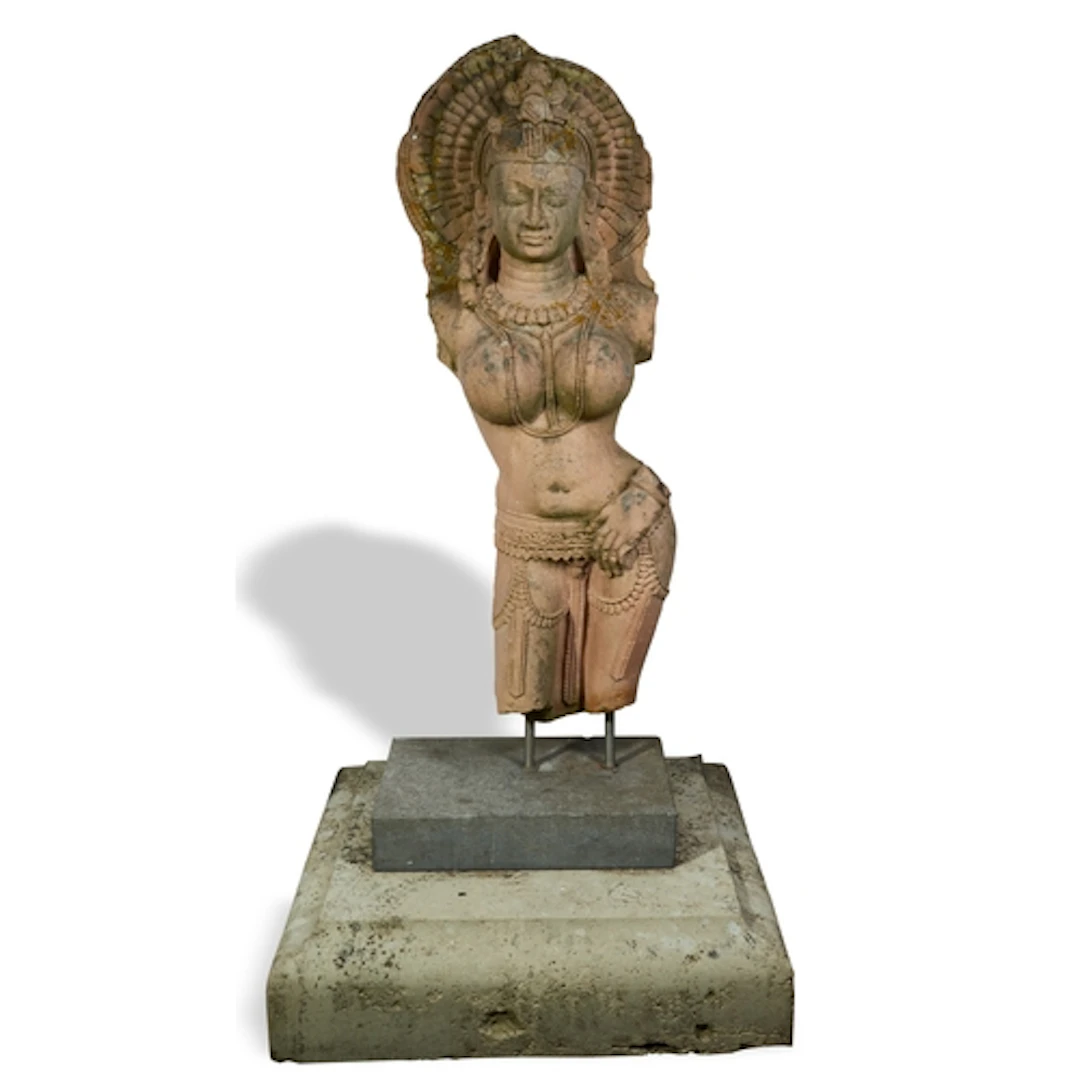
A RARE SANDSTONE FIGURE OF PARVATI INDIA, MADHYA PRADESH OR RAJASTHAN, 11TH/12TH CENTURY PROVENANCE: From the Collection of the Late Anthony John Lippitt (1928-2019), Deputy Secretary Department of Industry, Group Export Director GEC,Chairman and Managing Director MSTC and latterly Chairman of Aurelian Gas and Oil, acquired from Gordon Reece gallery, London, sold together with a copy of the original invoice. This figure with a voluptuous figure and a halo-like headdress has enormous presence and is most likely the Indian goddess, Parvati. She is bejewelled but otherwise naked. The jewellery around the neck and the waist is strategically placed so as to highlight the sensuality of the figure and the elegant pose she strikes is a mudra which sadly we can not see the entirety of because the arms have been mutilated at some untold point in history perhaps in its transfer from temple to us. The slight swell around her midriff contained by a girdle is indicative of the attention to life-like detail the artisan has rendered her with. The smile is as subtle and enigmatic — and pre-dates the most famous smile in western art by four to five hundred years — making this, in all likelihood, from the medieval period, possibly the 11th or the 12th century; and stylistically from Madhya Pradesh though there is as yet no definitive attribution. Deities abound in the Hindu and Buddhist religions. Many are revered jointly by both. They are often part of an intricate relational network that adheres to a strict hierarchy in which one god prevails and to whom others defer. Their depiction can take numerous forms. Throughout India’s long history, the tradition of image-making has flourished at many levels - from the most elementary and rudimentary form of a mother goddess from the lost Indus Valley civilisation circa 3000 BC and a more elaborate one from the third century BC, to the most sophisticated and stunningly beautiful and complex products of medieval India Whether grand or modest, Indian sculpture speaks of a remarkably consistent and sustained visualisation of the transcendent in an abundant variety of images, personifying the innumerable aspects of an essentially unknowable and formless God. (`Khanna and Michell 10) Indian sculpture is primarily an art of the figure. The human body is used to portray the gods and goddesses of Hinduism, as well as the saviours and saints of Buddhism and Jainism. There is a miscellany of forms and styles that developed in different regions of India and in the arts associated with these religions, male and female human bodies are altered and elaborated so as to express super-human powers. While such physical transformations lie at the core of this sacred imagery, Indian sculptors never abandon their concern with the natural world: the figures that they created through the centuries, in terra cotta, stone, metal, wood and ivory, are at the same time human and divine. Deities are represented according to a given set of conventions. Essentially, the deities are represented in four modes: Meditative, Pleasurable, Heroic, Terrifying. Accordingly, they must observe specific postures, gestures, ornaments and bodily and facial expressions appropriate to their roles. Postures are specified. Close scrutiny of the figures — as can be seen clearly here —reveals definite stylisation. The ideal of female beauty includes full round breasts, wasp waists, broad hips and legs that taper to the feet. Bodies are prominently unclothed except for ornaments: bracelets, amulets, large ear-rings. To this day Hindu men and women remove the hair from under the arms and in the pubic regions: none of the sculptures show evidence of hair in those zones. (Gichner 15 - 16) Hand and arm gestures (mudras and hastas) play an important role in communicating the dieties’ message, and employ the language of gesture borrowed from dance. These are shared by deities of all faiths in India. The god Siva is much adored as the lover and husband of the goddess Parvati. Despite Parvati’s efforts at mastering advanced asceticism and protracted lovemaking, Siva would not shed his seed. Procreation only happened in a later age. Siva also took a second wife - Parvati’s sister, the irascible river goddess Ganga - much to Parvati’s chagrin. (Guy 142) Parvati performs yogic austerities in order to win the favour of Siva and overcome his asceticism. Her penance also gives her the name, Anapurna. Parvati is ethereally beautiful and has a fleshly generosity as witnessed in the statuette here. Many of the other important goddesses emanate from her as she is the consort of or energy of Siva. Born of the mountain, Himavana, she is called Parvati (mountain) and two of her names Uma and Gauri are closely associated with this aspect and find mention in the iconographic texts. Kali, the original mother goddess is shakti, power or force and can also appear as Uma, Parvati or as Durga, the unapproachable warrior queen. She is described as the mother of the whole universe, bestower of boons and responsible for all prosperity in the world. (Trivedi 23) Depiction of sensuous pleasure has never been suppressed in Hinduism, because the human body is not seen as separate from the spirit. (Khanna and Michell 28) Vatsyayana’s Kamasutra (fourth century AD), the world’s first and most celebrated book on the art of love-making, is not a mere sex manual. Rather, it is a poetic treatise in which, according to Hindu principles, the joys of the erotic are extolled as essential to a balanced life. And the the tenth to eleventh century temples of Khajuraho in Madhya Pradesh and Konarak in Orissa, are festooned with explicit erotic imagery which, particularly at Khajuraho, is astoundingly beautiful. Bibliography Gichner, Lawrence E. Erotic Aspects of Hindu Sculpture. Kessinger,1949. Guy, John. Indian Temple Sculpture. V&A, 2007. Khanna and Michell, Balraj and john. Human and Divine: 2000 Years of Indian Sculpture. Hayward Gallery, 2000. Mitchell, A. G. Hindu Gods and Goddesses. V&A, 1982. Trivedi, R. D. Iconography of Parvati. Agam Kala Prakarhan, 1981.
Estimación:€35,832.96
Ir a la subastaVer todos los artículos deEASYLIVEAUCTIONoEsculturas
Estimación:
€35,832.96
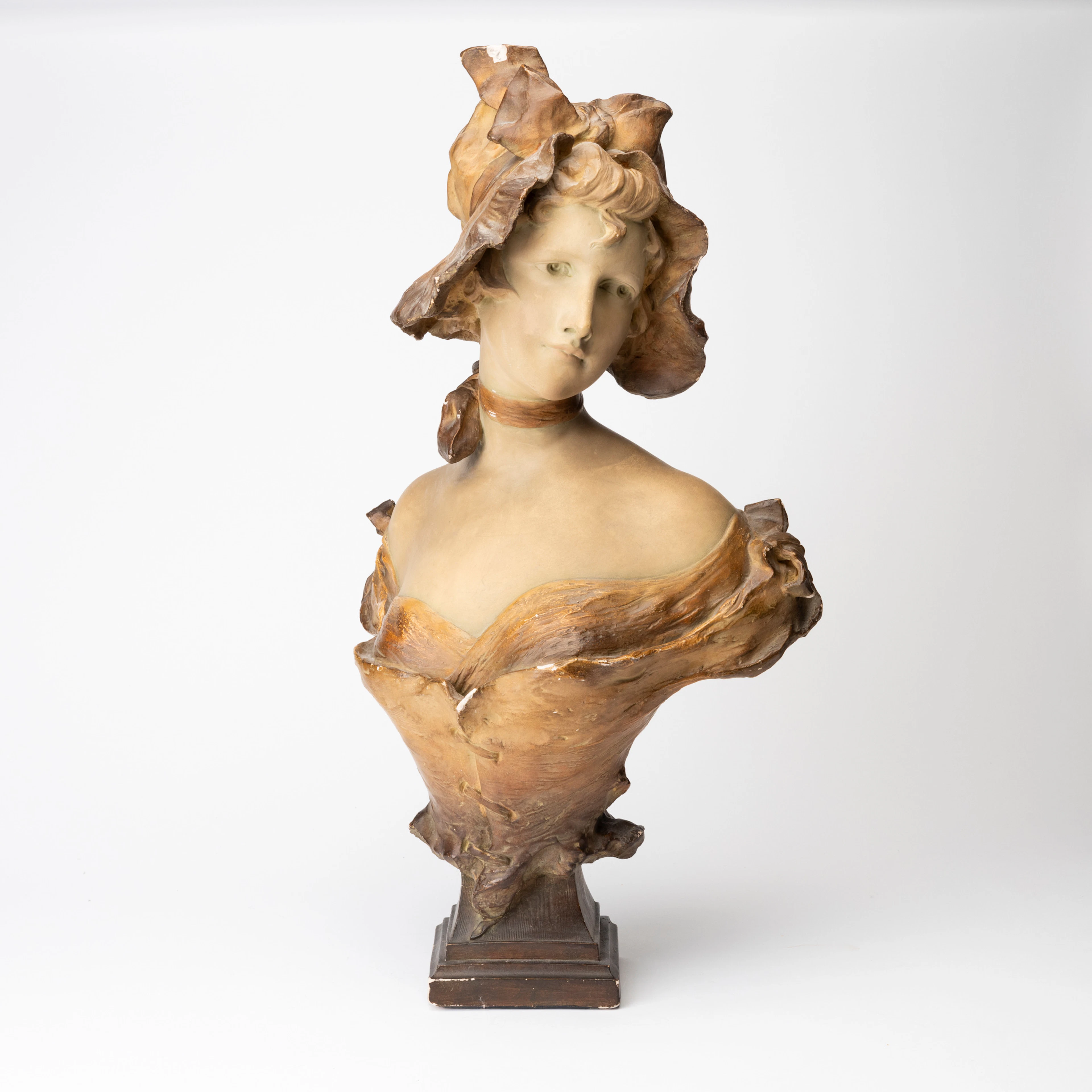
CAMILLE LEFÈVRE (1853-1933). EFTER. BYST, gips, Kvinna med hätta
10/21/2026
€152.91
Est.: €269.64
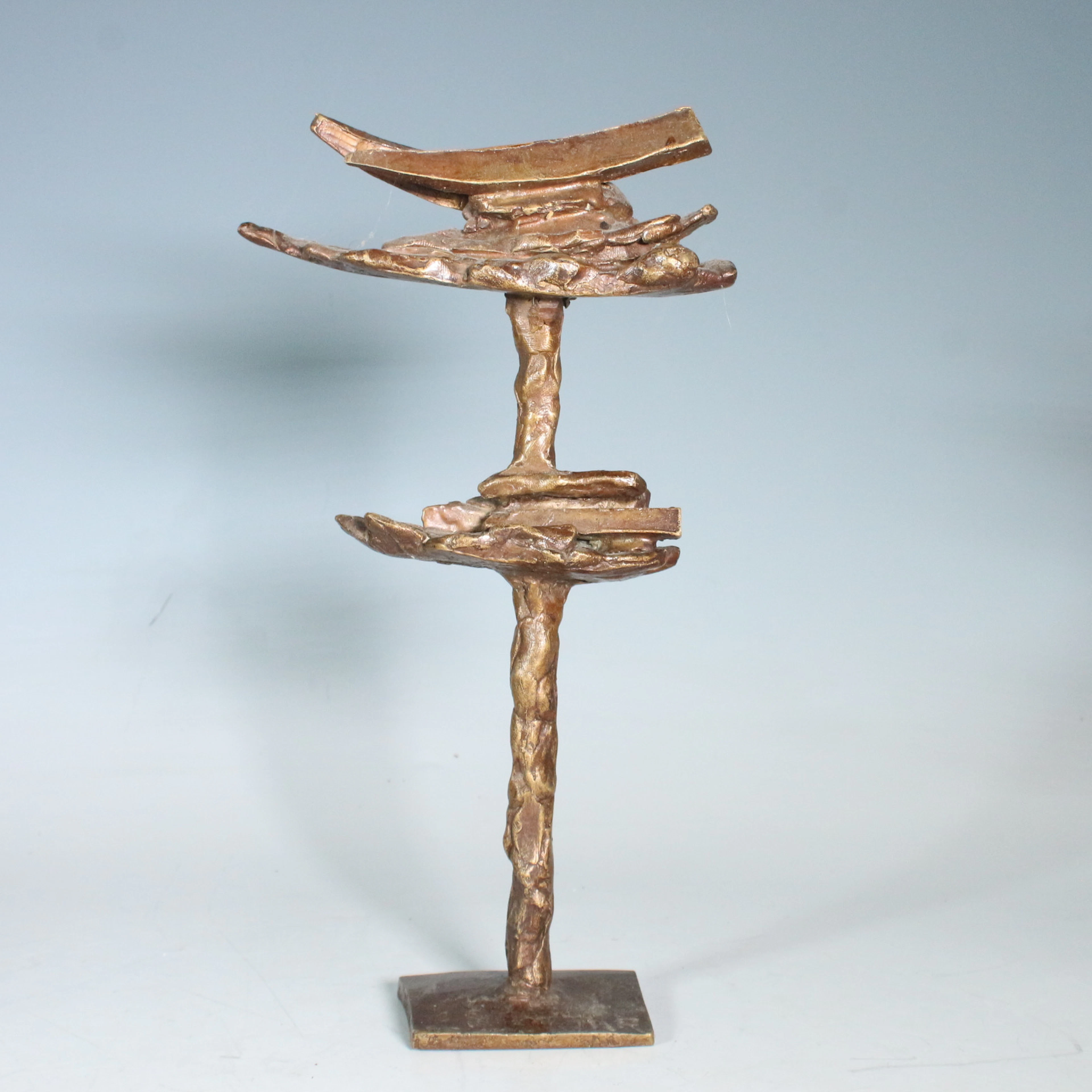
UNBEKANNTER KÜNSTLER. Brutalistische Bronzeskulptur, signiert, '' Th R ''.
10/21/2026
€134
Est.: €250
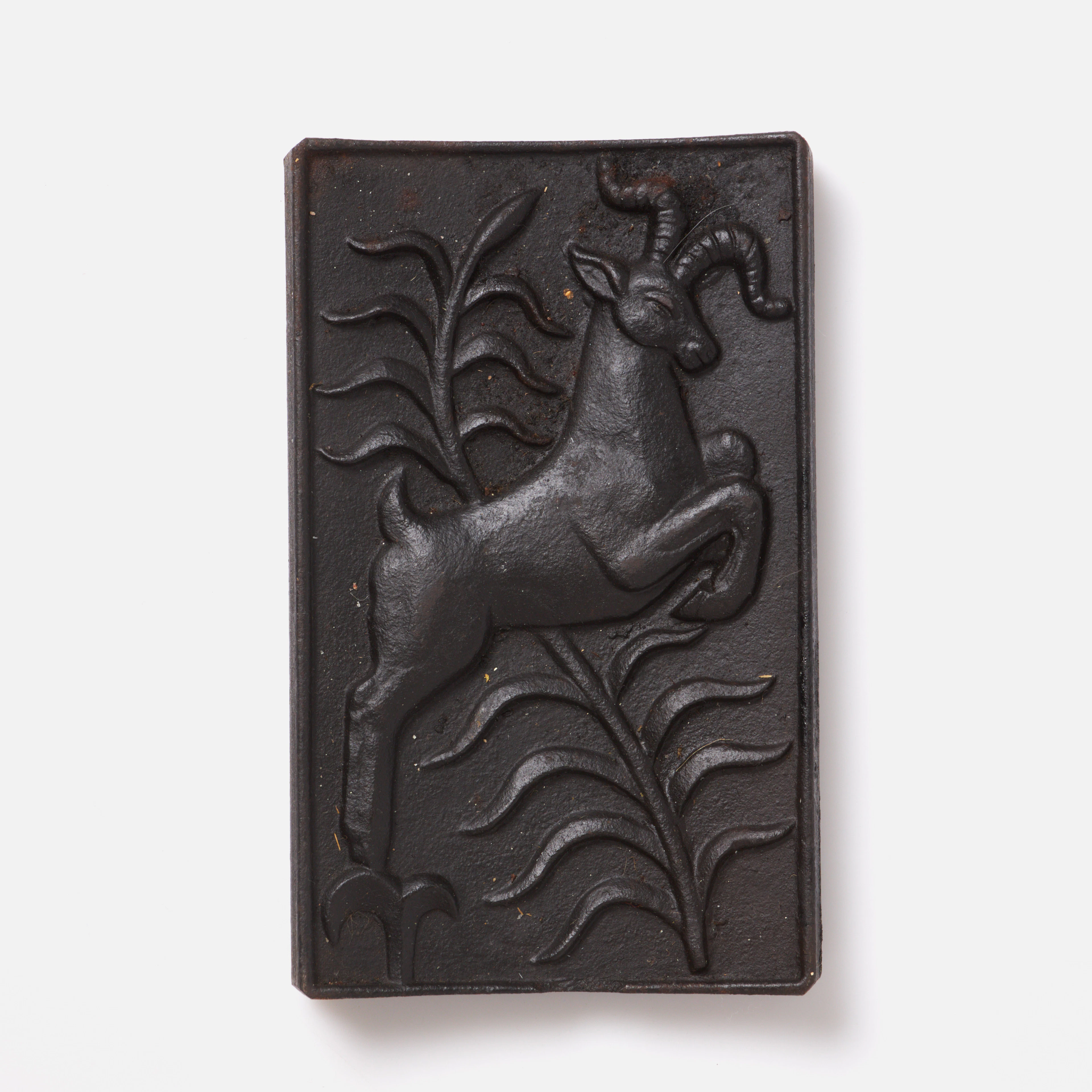
ANNA PETRUS. Relief, gjutjärn, Näfveqvarns bruk, Swedish Grace, formgiven
10/21/2026
€1,187.31
Est.: €898.82


OCT 27 | 4:00 PM
¡Lleva tu subasta a coleccionistas de todo el mundo!
Publica ahoraAl suscribirte, aceptas la política de privacidad. Cancela tu suscripción en cualquier momento.
Barnebys HQ
Brahegatan 10
BOX 5038
114 37 Stockholm
