



Todas las subastas / Arte, Pintura & obra gráfica / 19th C. Virgo Lactans Oil on Panel - Manner of Rogier van der Weyden

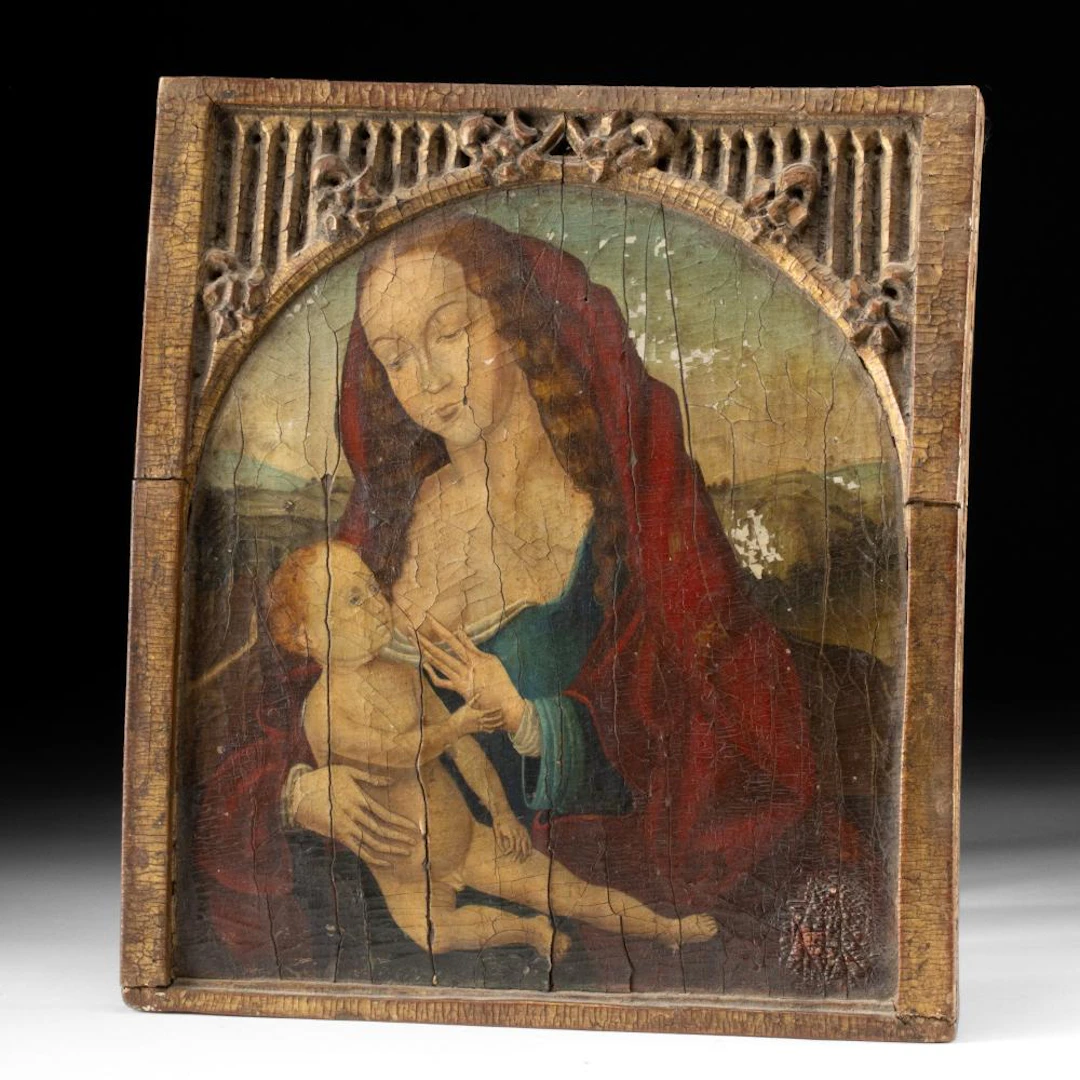
Western Europe, manner of Rogier van der Weyden. A devotional oil on wood panel of the Virgo Lactans, painted in the manner of the Early Netherlandish master Rogier van der Weyden. The Virgin bows her head over the Child, and her long fingers rest at her breast as he nurses. He lies across her lap, twisting in the lively, unselfconscious way of a real infant. A deep red mantle falls around her and opens to show a blue sleeve. Behind them, a pale sea-green sky fades into soft hills. An arched top frames the scene, and the spandrels are carved in relief with gilt Gothic tracery and foliate crockets, so the panel imitates the integral frames of fifteenth-century Flemish altarpieces. Analysis found zinc in the pigment throughout, which places the painting in the nineteenth century, when the Flemish Primitives were being rediscovered. A wax seal is on the reverse. Rogier van der Weyden (c. 1399/1400-1464) trained with Robert Campin in Tournai and became official city painter of Brussels in 1436. His Virgins are recognizable by their downcast eyes, elongated hands, and controlled melancholy, which made his compositions some of the most copied and adapted in Northern Europe for generations. The Virgo Lactans, the Virgin nursing the Christ Child, was a favored private devotional subject. It stressed Christ's humanity and the Virgin's role as intercessor and nourisher of the faithful. In the early nineteenth century, collectors and critics rediscovered fifteenth-century Flemish painting. The Boisseree brothers' collection of early Netherlandish and German pictures, bought by Ludwig I of Bavaria in 1827, and Gustav Waagen's 1822 study of the van Eyck brothers helped revive interest. Crowe and Cavalcaselle's The Early Flemish Painters followed in 1857. Painters and restorers answered the new demand with panels that recreated the style, palette, and Gothic framing of the "Primitives." Zinc white was sold as a watercolor from 1834 and became common in oil from the 1840s. It is a dependable chemical marker that separates these later works from their fifteenth-century models. Item # 199036
Estimación:€266.97
Ir a la subastaVer todos los artículos deArtemis Fine ArtsoArte, Pintura & obra gráfica
Estimación:
€266.97
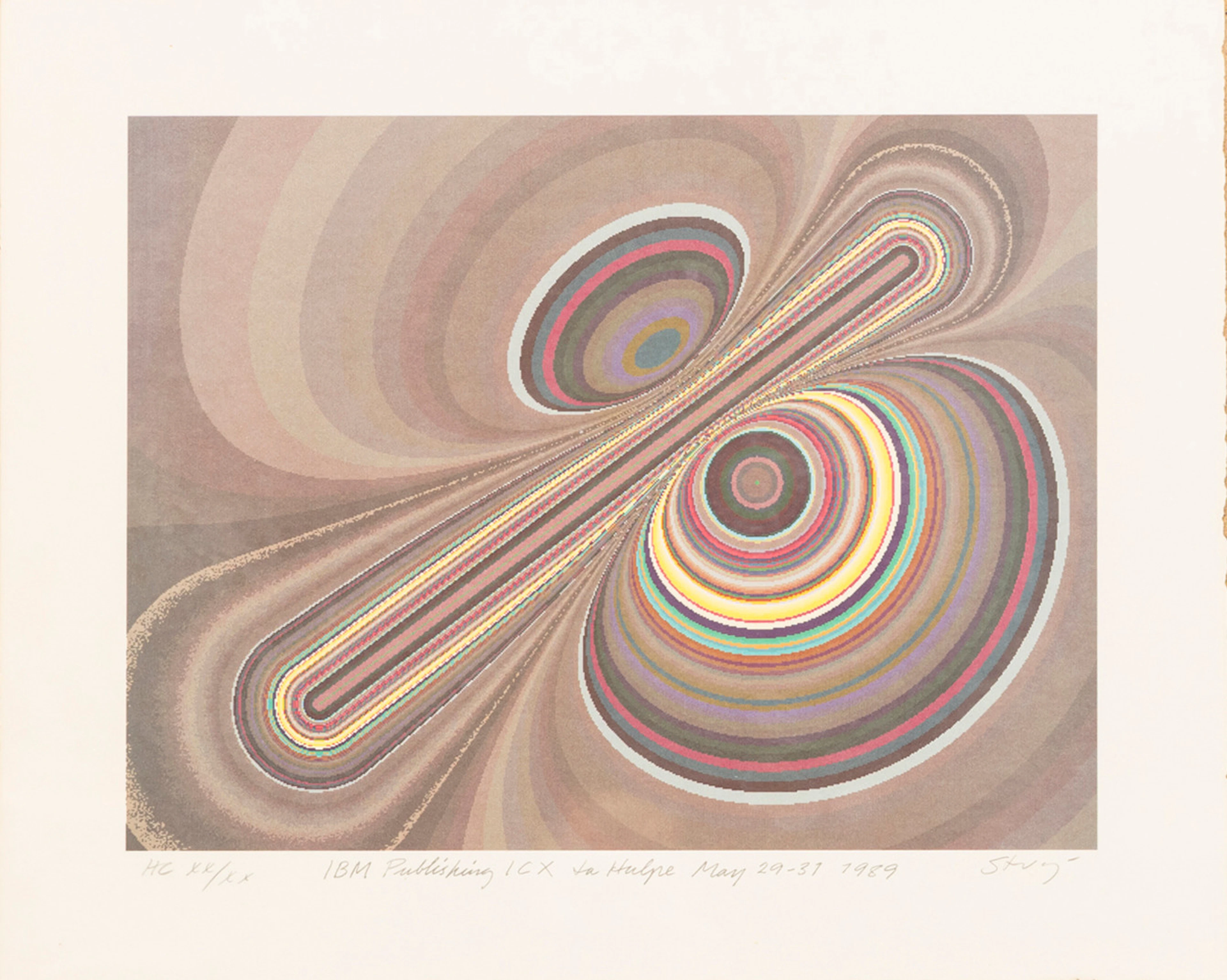
STURE JOHANNESSON. "La hulpe May", färglitografi, signerad, numrerad
10/15/2026
€35.91
Est.: €89.46
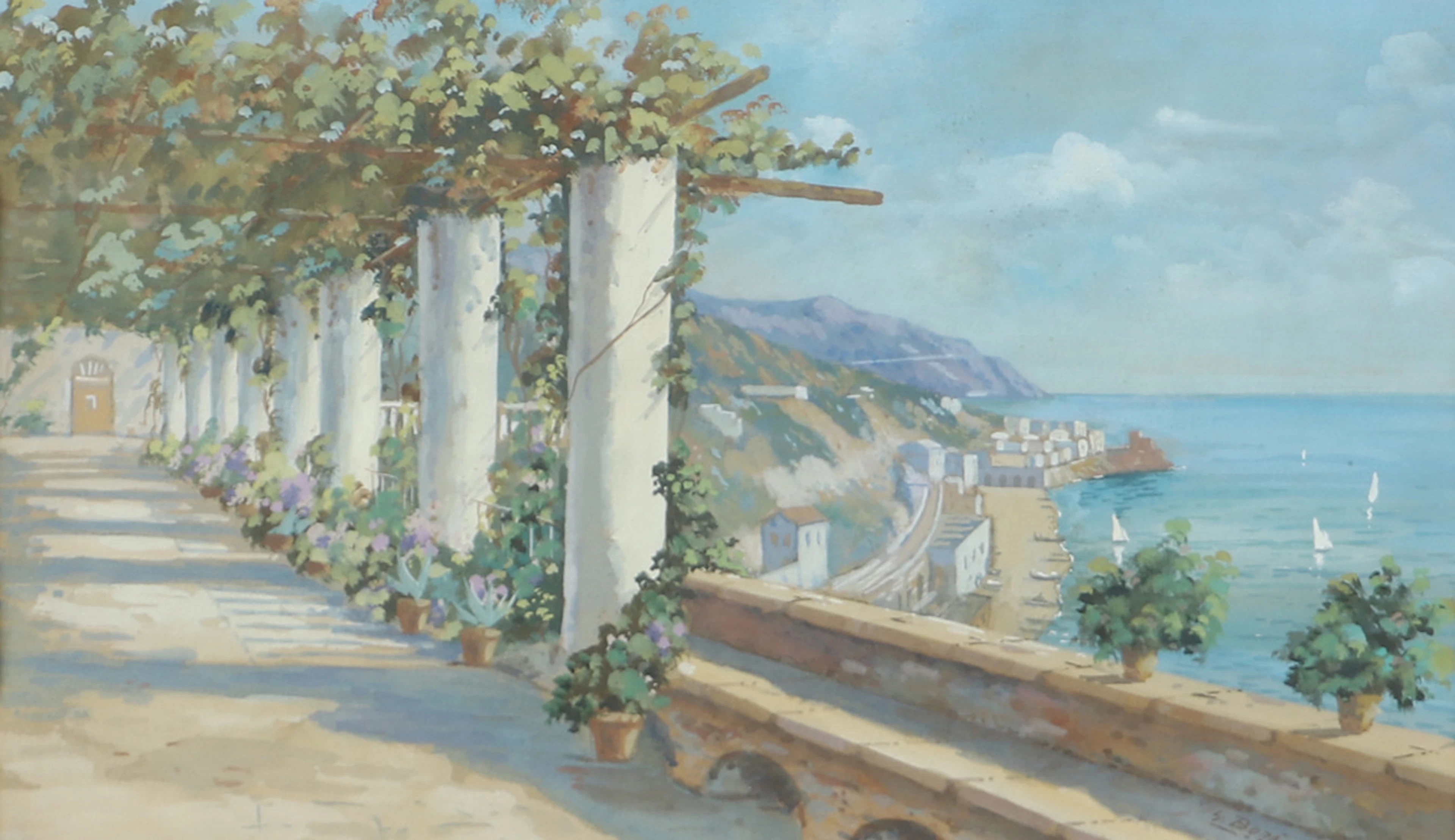
OIDENTIFIERAD KONSTNÄR. Sydländskt kustparti, akvarell, signerad Bora.
10/15/2026

€26.93
Est.: €35.71
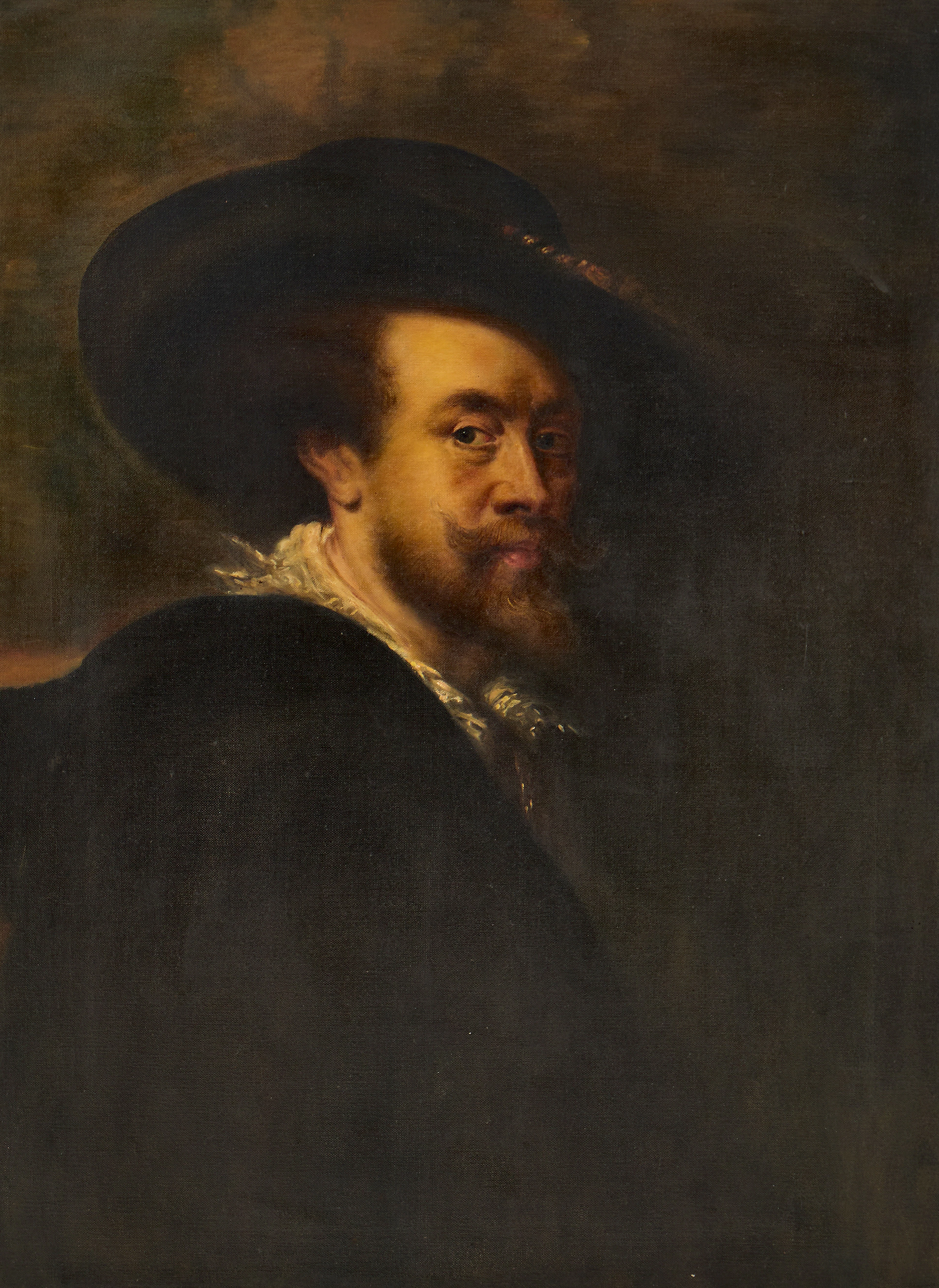
PETER PAUL RUBENS (Flandern, 1577-1640): Kopia efter, Självporträtt
10/15/2026
€269.33
Est.: €357.87


OCT 27 | 4:00 PM
¡Lleva tu subasta a coleccionistas de todo el mundo!
Publica ahoraAl suscribirte, aceptas la política de privacidad. Cancela tu suscripción en cualquier momento.
Barnebys HQ
Brahegatan 10
BOX 5038
114 37 Stockholm
